
Laboratory / Benchtop Thin Film Equipment
Description
Laboratory/Benchtop Thin Film Equipment is designed to deposit thin layers of material onto a substrate. These devices are compact and suitable for use in laboratory settings, allowing for precise control over the deposition process to create films with specific properties and thicknesses.
Working Principle
The working principle of thin film equipment involves various deposition techniques such as chemical vapor deposition (CVD) and physical vapor deposition (PVD). In CVD, a precursor gas is introduced into a chamber where it reacts with an energy source, typically heat, to form a thin film coating. PVD, on the other hand, involves the evaporation or sputtering of atoms from a source, which then condense onto the substrate to form a thin film. These processes are useful because they allow for the creation of films with precise thickness and composition, which are essential for various technological applications .
Applications
Thin film equipment is used in a wide range of applications. Specific examples include semiconductor manufacturing, where it is used to create integrated circuits; flat panel display manufacturing for screens; and optical coatings for lenses and mirrors. Additionally, it is employed in the production of cutting tools and wear components, magnetic storage devices, and in medical and research settings for surface analysis .
Advantages over other Thin Film Equipment
Laboratory/Benchtop Thin Film Equipment offers several advantages over larger industrial systems. These include the ability to conduct experiments on a smaller scale, which is ideal for research and development purposes. The compact size allows for easier integration into laboratory environments, and the equipment often provides high precision and control over the deposition process, which is crucial for developing new materials and technologies.
Limitations
One limitation of laboratory/benchtop thin film equipment is its reduced throughput compared to larger industrial systems. This means that while it is excellent for small-scale experiments and prototyping, it may not be suitable for large-scale production. Additionally, the range of materials that can be processed may be limited compared to more extensive systems that can handle a broader array of materials and deposition techniques.
Considerations
When considering the purchase and use of laboratory/benchtop thin film equipment, several factors should be taken into account. Initial costs can be significant, although they are generally lower than those of industrial-scale equipment. Operating expenses, including maintenance and replacement parts, should also be considered. The durability and accuracy of the equipment are crucial for ensuring consistent results, and potential users should evaluate the equipment's capabilities in terms of precision and control. Additionally, the cost and availability of consumables, such as precursor gases and target materials, should be factored into the overall cost of operation.

from Nikon Metrology
Thin film conductive coatings are effective in eliminating charging with non-conductive materials or enhancing secondary electron emission. JEOL ’s Smart Coater is a fully automated sputter coater that applies a fine grained gold or platinum (option) coating on samples for imaging in a... [See More]
- Type: Batch; Laboratory or Benchtop
- Applications: Research / Surface Analysis
- Process: Physical Vapor Deposition; DC Magnetron Sputtering
- Materials Processed: Metal
from Plasma Etch, Inc.
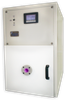
The all aluminum chamber features over 240 square inches of active processing surface with the three level standard configuration. The clean design features an industrial powder coated frame to guard your processing environment from contamination. [See More]
- Type: Laboratory or Benchtop
- Applications: Research / Surface Analysis; Printed Circuit Boards
- Process: Plasma Etching and Cleaning
- Materials Processed: Tungsten; Metal; Gallium Arsenide or Compound Semiconductors; Precious Metals

from Plasma Etch, Inc.
As in all Plasma Etch systems a capacitive parallel plate design is used for the most effective plasma generation. Competitive units with glass/quartz barrel chambers cannot penetrate the vacuum containment vessel and therefore are restricted to inductive coupling using an RF coil wrapped around the... [See More]
- Type: Laboratory or Benchtop
- Applications: MEMS; Photovoltaic or solar cell; Research / Surface Analysis; Semiconductors; Medical; Printed Circuit Boards
- Process: Plasma Etching and Cleaning
- Materials Processed: Tungsten; Metal; Gallium Arsenide or Compound Semiconductors; Precious Metals
from Plasma Etch, Inc.
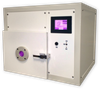
Our welded aluminum vacuum chamber encloses a generous 500 square inches of active plasma processing surface. Surface modification with Plasma Etch yields increased bond strength and cleanliness of most any surface material. [See More]
- Type: Laboratory or Benchtop
- Applications: Research / Surface Analysis; Printed Circuit Boards
- Process: Plasma Etching and Cleaning
- Materials Processed: Tungsten; Metal; Gallium Arsenide or Compound Semiconductors; Precious Metals