
Computer Radiation Detectors
Last Updated: February 12, 2025
Description
Computer radiation detectors are devices designed to sense and measure radiation, particularly those associated with radioactive decay. These detectors are essential for identifying and quantifying various types of radiation, including photons, electrons, and atomic ions. They are typically classified based on their physical form (gas, liquid, solid), the nature of the signal they produce (ions, current, light), or their intended purpose, such as simple detection or spectroscopy .
Working Principle
Computer radiation detectors operate by utilizing different physical principles to detect radiation. For instance, solid-state detectors use a reverse-bias p-n junction diode. When a particle passes through the junction, it excites electrons, creating holes in the valence band. These electrons and holes move towards opposite materials, generating a current pulse that can be measured. This principle allows for the detection and differentiation of various types of radiation, such as alpha, beta, and gamma rays .
Applications
Radiation detectors are widely used in radiotherapy to ensure the safe and accurate delivery of radiation treatments. They play a crucial role in quality assurance of equipment and verification of treatment delivery. Specific examples include the use of ionization chambers, semiconductor detectors, and thermoluminescent detectors for point measurements, as well as radiographic film and electronic portal imagers for area measurements .
Advantages over other Radiation Detectors
Solid-state detectors, a type of computer radiation detector, offer several advantages over other types. They are modern semiconductor instruments capable of distinguishing between different types of radiation, such as alpha, beta, and gamma rays. This capability makes them highly versatile and efficient for various detection needs .
Limitations
One limitation of computer radiation detectors, particularly those using semiconductor technology, is their sensitivity to environmental conditions. Factors such as temperature and humidity can affect their performance and accuracy. Additionally, the complexity of these devices may lead to higher initial costs and maintenance requirements compared to simpler detection systems .
Considerations
When considering the use of computer radiation detectors, several factors should be taken into account. Initial costs can be significant due to the advanced technology involved. Operating expenses may also be higher, particularly if the detectors require frequent calibration or maintenance. Durability and accuracy are critical, as these devices must reliably perform under various conditions. Replacement and maintenance costs should be factored into the overall budget, as these can impact the long-term viability of using such detectors .
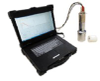
from Electro Optical Components, Inc.
A Scintillator Detector is used to measure charged particles and gamma rays. The scintillations produced by these charged particles and gamma rays in a phosphor are detected and amplified by a photomultiplier, giving an electrical output signal. [See More]
- Computer Interface: Computer Interface
- Types of Ionizing Radiation Detected: Gamma Ray
- Types of Radiation Detectors: Scintillation Detector
- Display Options: Digital Display

from Teledyne DALSA
Teledyne DALSA's Rad-icon product family of large-area digital X-ray detectors offers users a high-speed, high-performance X-ray imaging detector with a fast, reliable PC interface (Camera Link) for easy integration. The Rad-icon product line leverages Teledyne DALSA's advanced CMOS image sensing... [See More]
- Computer Interface: Computer Interface
- Computer Interface Options: Serial Interface
- Types of Ionizing Radiation Detected: X-Ray
- Operating Temp: 50 to 104
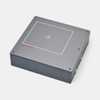
from Hamamatsu Photonics Europe
Photosensitive area: 140.0 × 122.8 mm. The C16401SK-51 is a highly reliable flat panel sensor for non-destructive inspection and radiography. High quality digital X-ray images can be captured in real time. Features. - Photosensitive area: 140.0 × 122.8 mm. - High-speed imaging. - Low... [See More]
- Computer Interface: Computer Interface
- Types of Ionizing Radiation Detected: X-Ray

from Electro Optical Components, Inc.
Detection of radioactive materials. Reliable detection of low activities. Energy range of gamma radiation: 40 keV – 3 MeV. Sensitivity for gamma radiation: 662 keV, typical 2.4 cps/ μSv/h. Threshold setting range for photon. Radiation: 0.15 – 3.60 μSv/h. Dose rate range: 10^3to 40... [See More]
- Computer Interface: Computer Interface
- Types of Radiation Detectors: Geiger-Mueller Counter
- Detector Style: Portable Detector
- Types of Ionizing Radiation Detected: Gamma Ray

from Teledyne DALSA
Teledyne DALSA ’s Rad-Xcam performance exceeds the existent industry benchmarks for legacy amorphous silicon and emerging IGZO technologies by providing higher frame rates and image quality at low dose, lower lag and increased signal-to-noise ratio. The Rad-Xcam detectors are designed to... [See More]
- Computer Interface: Computer Interface
- Types of Ionizing Radiation Detected: X-Ray
- Detector Style: Fixed Installation

from Electro Optical Components, Inc.
Features: Fixing method : Panel Insertion. Power : AC 100 ~ 240V (50/60Hz. Display : Absolute Optical Power. (Max. 100 mW/cm2). Output. 2 Relay (NO &COM, NC &COM). 4-20 mA Current (Option). RS485 Communication (Option). Applications: UV Purification (Water, Air). UV Curing. UV Lamp/LED... [See More]
- Computer Interface: Computer Interface
- Output Options: Analog Voltage Signal; Analog Current Signal
- Detector Style: Fixed Installation
- Local Interface: Digital Front Panel
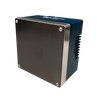
from Teledyne DALSA
X-ray Imaging in the Least Accessible Spaces. The RadEye XR is an ultra-high resolution industrial dynamic detector. The RadEye XR detectors are designed to address the most demanding needs of Industrial inspection, biomedical and scientific applications. The CameraLink HS ™ interface allows... [See More]
- Computer Interface: Computer Interface
- Types of Ionizing Radiation Detected: X-Ray
- Types of Radiation Detectors: Scintillation Detector
- Type of Monitoring: For Area Monitoring

from Bruker Corporation
The deliberate or accidental release of radioactive material is an increasing threat to modern society. Terrorists fabricating and detonating a dirty bomb with radiological material is a common scenario for emergency services. Radiological material can be easily obtained from medical waste, research... [See More]
- Computer Interface: Computer Interface
- Types of Ionizing Radiation Detected: Gamma Ray (optional feature)
- Detector Style: Fixed Installation (optional feature)
- Detector Output: Dose Rate (optional feature)

from MOXTEK, Inc.
Our MXDPP-50 Digital Pulse Processor (DPP) is ideal for analytical x-ray and gamma-ray instruments such as; Silicon Drift Detector (SDD), Si-PIN, CdTe, Si(Li), and Ge detectors. MXDPP-50 is designed to digitize detector output signals, achieving high throughput, with excellent pile-up rejection. Our... [See More]
- Computer Interface: Computer Interface
- Types of Ionizing Radiation Detected: X-Ray
- Detector Style: Detector Sensing Element Only; Portable Detector
- Computer Interface Options: Serial Interface
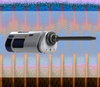
from Oxford Instruments
Ultim Extreme Silicon Drift Detector is a breakthrough solution for ultra high resolution FEG-SEM applications and delivers solutions beyond conventional micro- and nano-analysis. The Ultim Extreme is a windowless 100 mm2 version of Ultim designed to maximize sensitivity and spatial resolution. It... [See More]
- Computer Interface: Computer Interface
- Types of Ionizing Radiation Detected: X-Ray
- Detector Style: Fixed Installation
from Ultra Energy
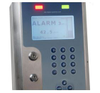
Low-cost area gamma monitor: single or dual detectors, wide dynamic range (suitable for a variety of applications), detector measurement options, including GM sensors, ionization chambers, and scintillation detectors, Ethernet communications. The CMS Gamma is a new generation continuous monitoring... [See More]
- Computer Interface: Computer Interface
- Types of Radiation Detectors: Ionization Chamber (optional feature); Geiger-Mueller Counter (optional feature); Scintillation Detector (optional feature)
- Detector Style: Fixed Installation
- Types of Ionizing Radiation Detected: Gamma Ray

from Sentinel
FEATURES. Rugged and Reliable. Nylon holster or optional see-through holster. Removable rubber sleeve for extra protection. Water resistant. Low power technology (600 hour operation). LCD Screen can be rotated 180o. Battery life indicator. Large display with backlight. Top alarm indication (Can be... [See More]
- Computer Interface: Computer Interface
- Types of Radiation Detectors: Geiger-Mueller Counter; Dosimeter
- Detector Style: Portable Detector
- Types of Ionizing Radiation Detected: Gamma Ray; X-Ray
from Oxford Instruments
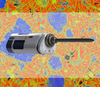
Ultim Max is the next generation of Silicon Drift Detectors (SDD). Combining the largest sensor sizes with Extreme electronics to deliver unparalleled speed and sensitivity. The large SDD sensors of Ultim Max allows up to 17x more data to be collected in the same time with no loss of accuracy. [See More]
- Computer Interface: Computer Interface
- Types of Ionizing Radiation Detected: X-Ray
- Detector Style: Fixed Installation
from Ultra Energy
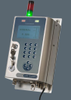
CMS Gamma is a compact, mains-powered, continuous monitoring station for measurement of gamma dose rate, providing essential, reliable information to personnel. It is designed for building, area and process monitoring in nuclear facilities. [See More]
- Computer Interface: Computer Interface
- Types of Radiation Detectors: Ionization Chamber (optional feature); Geiger-Mueller Counter (optional feature); Scintillation Detector (optional feature)
- Detector Style: Fixed Installation
- Types of Ionizing Radiation Detected: Gamma Ray
from Sentinel
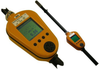
TELETECTOR 6112M & 6150ADT. The Teletector 6112M and 6150ADT (consists of 6150AD5/6 and 6150AD-t) are microprocessor controlled dose rate meters with a telescope to measure gamma radiation and to detect beta radiation. Two GM counting tubes serve as detectors. The stainless steel telescope can... [See More]
- Computer Interface: Computer Interface
- Types of Radiation Detectors: Geiger-Mueller Counter; Dosimeter
- Detector Style: Portable Detector
- Types of Ionizing Radiation Detected: Beta Particles; Gamma Ray

from Oxford Instruments
Windowless Detector Windowless detectors provide more counts at all energies with unrivalled low energy performance. Collection efficiency is significantly improved compared to detectors of a similar solid angle that need to use a thin window. Sensitivity to N Ka is increased almost 3x Sensitivity... [See More]
- Computer Interface: Computer Interface
- Types of Ionizing Radiation Detected: X-Ray
- Detector Style: Fixed Installation