
Warning Lights Information
Last revised: January 30, 2025
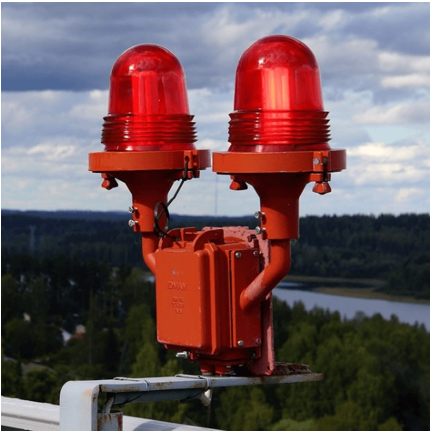
Warning lights provide a visual indication of a hazardous situation. Some warning lights may be available as audio/visual alarm combinations.
Applications
Applications for warning lights may include:
- security
- burglary or theft
- fire
- machine failure or malfunction
- process monitoring
- power distribution
- confined space or personal safety
- smoke
- structural failure
- vehicle safety
Types
Warning lights are available in many types. Safety strobe lights are flash lamps that produce high-intensity, short-duration light pulses by electric discharge in a gas. Revolving emergency lights are often available in colors and for mounting on vehicles. Flashing lights alternate between on and off when in the powered position. Light bars are warning packages often containing one or more strobe light bars or revolving or flashing lights. Light panels are alarm systems where the visual indication is provided by a panel display lit with lamps or bulbs. Special types of warning lights may be (or may contain) a digital display (like that of an LED warning light or LCD) or a computer or video monitor.
Features
The flash rate represents the number of times the strobe or flashing light flashes in one minute. Flashing alarms may consist of a single flash of the lamp, double flash, triple flash, quad flash, or more. Visual alarms that do not flash provide a continuous visual output. The alarm may provide built-in synchronization. NFPA 72 requires visual appliances to flash in synchronization in rooms or areas where there are two or more visual devices that are not a minimum of 55 feet apart. NFPA 72 requires that fire alarm signals be distinctive in sound from other signals and used for that purpose only. This is known as the three-pulse temporal pattern. The power of the lamp/bulb is measured in watts (W). Warning lights may be available in a number of colors to represent different alarm levels. The lens color may be clear, red, amber, yellow, green, blue, purple, or another special or proprietary color. AC or DC voltage supplies the visual alarm. A feature of some warning lights is battery backup.
Warning lights are often equipped with a number of other features, which may include:
- acknowledge or silence
- explosion-proof housings
- intrinsically safe operation warning lights
- outdoor ratings
- selectable candela
- submersible housings
Warning Lights FAQs
How do different types of warning lights impact safety in various engineering applications?
The impact of different types of warning lights on safety in various engineering applications can be understood through several key points:
Types and Features of Warning Lights
Warning lights come in various forms, such as flashing lights, light bars, and light panels. They may include digital displays like LED or LCD screens and can be equipped with features like explosion-proof housings and intrinsically safe operation, which are crucial for specific environments.
Pedestrian Safety
In-pavement flashing warning lights at pedestrian crosswalks provide early warnings to drivers, enhancing pedestrian safety. However, their effectiveness depends on reliability; if the system is unreliable, it may lead to increased conflicts and higher vehicle speeds approaching the crosswalk.
Traffic Safety
Traffic lights serve as hazard indicators, significantly reducing accidents by informing drivers when it is safe to proceed. They are particularly effective in managing intermittent hazards and those that are difficult to observe, such as solvent vapor concentrations in industrial settings.
Applications and Effectiveness
Warning lights are used to warn, guide, regulate, or illuminate, depending on the application. Their effectiveness is measured by how well they achieve these goals in various contexts, such as road safety.
How does intrinsically safe operation in warning lights work?
Intrinsically safe operation in warning lights is a safety feature designed to prevent ignition in hazardous environments where flammable gases, vapors, or dust may be present. Here's how it works:
Intrinsic Safety (IS) Concept
Intrinsic safety is a protection technique used to ensure that electrical equipment is safe to operate in hazardous areas. It involves limiting the energy, both electrical and thermal, available for ignition to a level below that which could ignite a specific hazardous atmospheric mixture.
Components of Intrinsically Safe Systems
An intrinsically safe system typically includes a power supply, an intrinsic safety barrier, and the instrument being powered. The intrinsic safety barrier limits the energy to a safe level, ensuring that even in the event of a fault, the energy is insufficient to cause ignition.
Advantages of Intrinsically Safe Systems
These systems offer significant advantages over other protection methods, such as flameproof or explosion-proof enclosures. For instance, maintenance can be performed without the need to establish a gas-free zone or insulate circuits, which simplifies operations in hazardous areas.
Applications
Intrinsically safe warning lights are used in industries with potentially explosive environments, such as oil and gas production, chemical manufacturing, and mining. These lights are designed to operate safely without the risk of igniting flammable substances.
What are the reliability issues of in-pavement flashing warning lights?
The reliability issues of in-pavement flashing warning lights primarily revolve around the performance of their activation systems. Here are some key points:
Activation System Reliability
The effectiveness of in-pavement flashing warning lights is heavily dependent on the reliability of their activation systems. If the system is unreliable, it can lead to situations where the lights flash without a pedestrian present, or fail to flash when needed.
Impact on Driver Behavior
Unreliable activation can result in increased vehicle speeds as drivers may become accustomed to the lights flashing without a pedestrian present, reducing their attentiveness to actual pedestrian crossings. This can lead to an increase in conflicts at crosswalks.
Installation Considerations
For these systems to be effective, they should be installed in locations where additional advanced warning to drivers is necessary, such as unusual crosswalk locations or areas with many competing visual stimuli. Proper installation can mitigate some reliability issues by ensuring the system is used where it is most needed.
What are the differences between intrinsically safe and explosion-proof equipment?
The differences between intrinsically safe and explosion-proof equipment are primarily based on their methods of preventing ignition in hazardous environments. Here's a detailed comparison:
Intrinsic Safety (IS)
Concept: Intrinsic safety is a protection technique that limits the energy available for ignition to a level below that which could ignite a specific hazardous atmospheric mixture. This is achieved by ensuring that the electrical and thermal energy in the system is insufficient to cause ignition, even in fault conditions.
Components: An intrinsically safe system typically includes a power supply, an intrinsic safety barrier, and the instrument being powered. The intrinsic safety barrier is crucial as it limits the energy to a safe level.
Advantages: Intrinsically safe systems allow for maintenance without the need to establish a gas-free zone or insulate circuits, simplifying operations in hazardous areas.
Applications: These systems are used in industries with potentially explosive environments, such as oil and gas production, chemical manufacturing, and mining.
Explosion-Proof Equipment
Concept: Explosion-proof equipment is designed to contain any explosion that may occur within the device, preventing it from igniting the surrounding atmosphere. This is typically achieved through robust enclosures that can withstand and contain an internal explosion.
Design: Explosion-proof equipment often involves sealed or magnetically coupled control units to prevent the escape of flames or hot gases that could ignite the external environment.
Maintenance: Unlike intrinsically safe systems, explosion-proof equipment may require more complex maintenance procedures, such as establishing a gas-free zone before performing work on the equipment.
What are the reliability issues of in-pavement flashing warning lights?
The reliability issues of in-pavement flashing warning lights primarily concern the performance of their activation systems. Here are some key points:
Activation System Reliability
The effectiveness of in-pavement flashing warning lights is heavily dependent on the reliability of their activation systems. If the system is unreliable, it can lead to situations where the lights flash without a pedestrian present, or fail to flash when needed.
Impact on Driver Behavior
Unreliable activation can result in increased vehicle speeds as drivers may become accustomed to the lights flashing without a pedestrian present, reducing their attentiveness to actual pedestrian crossings. This can lead to an increase in conflicts at crosswalks.
Installation Considerations
For these systems to be effective, they should be installed in locations where additional advanced warning to drivers is necessary, such as unusual crosswalk locations or areas with many competing visual stimuli. Proper installation can mitigate some reliability issues by ensuring the system is used where it is most needed.
What are the key features of explosion-proof housings in warning lights?
The key features of explosion-proof housings in warning lights are designed to ensure safety in hazardous environments by containing any potential explosions within the device. Here are the main features:
Containment of Explosions
Explosion-proof housings are built to withstand and contain any internal explosion, preventing it from igniting the surrounding atmosphere. This is achieved through robust enclosures that can resist high pressure or explosions without suffering breakage or permanent deformation.
Mechanical Strength
The housings must be strong enough to contain an explosion without breaking. This involves testing with a static overpressure applied for a specific duration to ensure the enclosure's integrity.
Prevention of Ignition
The design must prevent any surface temperatures from exceeding the ignition temperature of the gases or vapors present in the environment. This is crucial to avoid igniting the hazardous atmosphere.
Sealed Enclosures
Explosion-proof housings are often sealed to prevent the escape of flames or hot gases that could ignite the external environment. This sealing also helps in maintaining the integrity of the enclosure under fault conditions.
Compliance with Standards
These housings must comply with specific standards, such as CSA C22.2 NO 30 and UL 1203, which detail the construction and testing requirements for explosion-proof enclosures.
These features collectively ensure that explosion-proof housings in warning lights can safely operate in environments with flammable gases, vapors, or dust, thereby enhancing safety in such hazardous locations.
What are the advantages of using intrinsically safe systems over explosion-proof systems?
The advantages of using intrinsically safe systems over explosion-proof systems are primarily related to their design and operational benefits in hazardous environments. Here are the key advantages:
Energy Limitation
Intrinsically safe systems limit the energy, both electrical and thermal, available for ignition to a level below that which could ignite a specific hazardous atmospheric mixture. This ensures safety by preventing ignition even in fault conditions.
Maintenance Simplicity
Maintenance of intrinsically safe systems is simpler compared to explosion-proof systems. There is no need to establish a gas-free zone or insulate circuits before performing calibration or other work on the devices. This reduces downtime and simplifies operations in hazardous areas.
Operational Flexibility
Intrinsically safe systems allow for easier and safer operation in environments with potentially explosive atmospheres. They do not require heavy and robust enclosures like explosion-proof systems, which can be cumbersome and more challenging to work with.
Safety Assurance
These systems are designed to ensure that the electrical circuits and wiring will not cause sparking or arcing, and cannot store sufficient energy to ignite a flammable gas or vapor. This provides a high level of safety assurance in hazardous locations.
Cost-Effectiveness
Due to the simpler design and maintenance requirements, intrinsically safe systems can be more cost-effective in the long run, especially in environments where frequent maintenance is necessary.
These advantages make intrinsically safe systems particularly suitable for industries such as oil and gas production, chemical manufacturing, and mining, where safety and operational efficiency are critical.
Warning Lights Media Gallery
References
Electronics360—IoT World Goes All-in on Smart Cities
GlobalSpec—Active Barrier and Power Supply
GlobalSpec—Pressure Measurement Theory and Application Guide
GlobalSpec—Explosion Proof Heaters
GlobalSpec—Pedestrian Crosswalk Safety: Evaluating In-Pavement, Flashing Warning Lights
- Alabama
- Arkansas
- Arizona
- California
- Colorado
- Connecticut
- Florida
- Georgia
- Illinois
- Indiana
- Louisiana
- Massachusetts
- Maryland
- Michigan
- Minnesota
- Missouri
- North Carolina
- North Dakota
- New Hampshire
- New Jersey
- New York
- Ohio
- Oregon
- Pennsylvania
- Rhode Island
- South Carolina
- Tennessee
- Texas
- Virginia
- Washington
- Wisconsin
- AC Voltage
- ARINC / Avionics
- Amber
- Audio / Visual Alarm Combination
- Blue
- Clear
- Continuous Indication
- DC / Battery
- Double Flash
- Explosion Proof
- Flange Mount
- Flashing Light
- Flush Mount
- Green
- Intrinsically Safe
- Lamp / Bulb Panel Display
- Light Bar
- MIL-SPEC / Military
- Machine Failure
- Outdoor Rated / Weatherproof
- Pole Mount
- Process Monitoring
- Purple
- Red
- Revolving Light
- Safety
- Single Flash
- Strobe Light
- Vehicle Safety
- Yellow
- missile warning systems
- amber revolving warning lights
- amber vehicle warning lights
- crane warning lights
- helicopter terrain avoidance warning systems
- laser warning lights
- laser warning systems
- lightning warning systems
- machine warning lights
- missile approach warning systems
- proximity warning systems
- radar warning systems
- red rotating warning lights
- traffic warning lights
- UV missile warning systems
- x ray warning lights