Digital Imaging
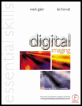
Provides a comprehensive practical guide to the entire digital chain, from capture -- with coverage of digital cameras, to output -- with extensive information on image adjustments and colour management.
 TABLE OF CONTENTS
 To develop an understanding of the principles behind the mechanisms of digital capture.
To create a recource for objective comparisons between digital cameras.
To foster an appreciation of when digital is the preferred choice for image capture.
Research and evaluate the choices available in digital capture devices, including:
high end cameras
mega pixel cameras
scanning backs
point and shoot cameras
The ability to perform any digital manipulation requires image data to be ' captured' and then entered into a computer system. This can be achieved by using either of the following:
A digital camera for initial capture with the data then transferred onto a computer, via direct link or storage card.
A traditional camera using film, then at some later stage scanning the image and transferring the data onto a computer.
Whilst both methods result in a similar data file which can be said to represent the image as ' seen' by the camera and indeed the photographer, they actually produce data that have important differences. To understand these differences, let us first examine the processes involved.
Any image taken on film will exhibit the general characteristics of that particular film emulsion, namely:
grain, tonality, colour and sharpness
When this image is scanned, these particular characteristics are overlaid with any characteristics (or limitations) that belong to the particular scanning hardware or software. The image file will then be a combination of all these particular attributes, resulting...