Fiber Optic Reference Guide: A Practical Guide to Communications Technology, Third Edition
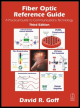
This guide is an ideal primer for newcomers to the fiber optics industry as well as a useful reference guide for seasoned fiber optics veterans.
 TABLE OF CONTENTS
 Advantages of fiber optic systems such as light weight, small size, large bandwidth, and EMI immunity make these systems applicable to a wide range of fields and uses.
The broadcast industry is at the threshold of two major technological revolutions. The first is the rapid move to digitized video. The second is a move to some form of enhanced definition television such as HDTV (high-definition television) or enhanced NTSC (National Television Standards Committee). The combination of these two revolutions make fiber optic technology inevitable. Fiber optic links can support both video and audio broadcast transmissions as well as data transmission. Video transport signal types include multichannel (4, 12, 40, 60, 80 channels are common), point-to-point RS-250, and digitized video (NTSC, CCIR 656, EU95, SMPTE 259). Audio transport signal types include the multichannel audio snake, point-to-point CD quality (stereo), and digitized audio.
As CD technology revolutionized the audio industry, digitized video is revolutionizing the broadcast industry. Because of the bandwidth required to transmit digital video, fiber is the clear choice in this application, especially in the studio environment. However, high levels of compression using standards such as MPEG will undoubtedly be used for mass distribution of digital video. The low bandwidth of MPEG compressed applications, typically 19.4 Mb/s, makes fiber unnecessary.
The first all-digital video broadcast occurred at the 1994 Winter Olympics. Fiber optic links were selected to connect distant outside events such as the downhill ski events and the cross-country ski events to the production studio. The...