Gas Well Testing Handbook
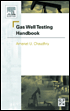
Offering a thorough understanding of gas well test analysis basics, this book focuses on practical field application, where over 100 field examples are presented to illustrate basic methods for analysis.
 TABLE OF CONTENTS
 Ideally, pressure should be recorded continuously during a transient test. Best results are obtained when the bottom-hole pressure is measured, although surface pressures often can be converted to bottom-hole values if adequate information is available about the wellbore system. It is usually beneficial to record bottom-hole, tubing-head, and casing-head pressures during a well test. That combination of data can provide information about wellbore effects, such as storage, and leaking packers or tubing. Such surface pressures data may be valuable in verifying correct operation of the down-hole pressure gauge. This appendix will describe a method to determine bottom-hole pressure from wellhead pressure.
The procedure for this method is as follows:
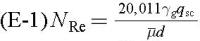
Calculate the Reynolds number:
Estimate friction factor f :

Calculate F 2:
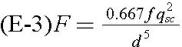
Find the ratio

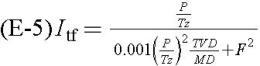
Estimate I tf:
Calculate  :
:

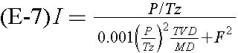
Estimate I mf:
Calculate P mf:

Compare P mf and  . If not close enough, set = P wf and go to 4.
Repeat until abs (P wf ? ) < 0 .001 or any other tolerance preferred. When the tolerance is met, the pressure calculated in step 8 is correct.
Example E 1 Calculating the Flowing Bottom-Hole Pressure Using Cullendar and Smith Method
Given: Well depth = 10,000 ft; gas gravity = 0.75; formation temperature = 245 F; wellhead temperature = 110 F; roughness = 0.0006 inches; = 0 .012 cP; d = 2.441 inches;