Electromagnetics for High-Speed Analog and Digital Communication Circuits

Chapter 3: Resistance

You may be tempted to skip this chapter. After all, resistors are pretty elementary, right? Actually, below the surface resistors are complicated beasts. In fact, resistors apparently defy one of the Newton s fundamental law of physics, as charges in resistors move with constant velocity when subjected to an external force. We will probe into the inner workings of resistors in order to answer this riddle.

3.1 Ohm s Law

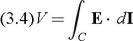
Let s begin with the venerable Ohm s Law. Is it trivial that V = I R? Perhaps all that is going on is that


where we have kept the linear term in the Taylor series expansion of the voltage current relationship. [1] If this is the case, what s the range of validity of the above approximation. What s surprising is that Ohm s Law is valid over an enormous range.

Note that Ohm s Law is also equivalently expressed as


We assert that the ratio between the voltage and current in a conductor is always constant. We see this stems from J = ? E


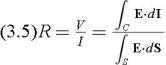
The ratio is called the resistance


What is disturbing about Ohm s Law is that current, which is proportional to the velocity, is proportional to the electric field, which is imparting a force on the charge. Is Newton rolling in his grave?

Conductivity of a gas

Electrical conduction is due to the motion of positive and negative charges. For water with pH = 7, the concentration of hydrogen H + ions (and OH ?) is


Typically, the concentration...

UNLIMITED FREE
ACCESS
TO THE WORLD'S BEST IDEAS

SUBMIT
Already a GlobalSpec user? Log in.

This is embarrasing...

An error occurred while processing the form. Please try again in a few minutes.

Customize Your GlobalSpec Experience

Category: Resistors
Finish!
Privacy Policy

This is embarrasing...

An error occurred while processing the form. Please try again in a few minutes.