Machinery's Handbook Pocket Companion

Cutting Tools for Turning

CUTTING TOOLS


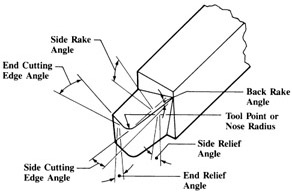
Figure 1: Terms Applied to Single-point Turning Tools

Figure 2: Lead Angle on Single-point Turning Tool

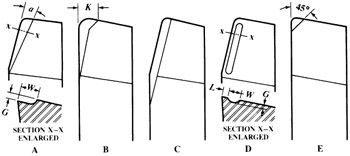
Figure 3: Different Forms of Chipbreakers for Turning Tools

Chipbreakers

Angular Shoulder Type: Angle a between the shoulder and cutting edge may vary from 6 to 15 degrees or more, 8 degrees being a fair average. The ideal angle, width W and depth G, depend upon the speed and feed, the depth of cut, and the material. As a general rule, width W, at the end of the tool, varies from to inch, and the depth G may range from to inch. The shoulder radius equals depth G. If the tool has a large nose radius, the corner of the shoulder at the nose end may be beveled off, as illustrated at B, to prevent it from coming into contact with the work. The width K for type B should equal approximately 1.5 times the nose radius.

Parallel Shoulder Type: Diagram C shows a design with a chipbreaking shoulder that is parallel with the cutting edge. With this form, the chips are likely to come off in short curled sections. The parallel form may also be applied to straight tools which do not have a side cutting-edge angle. The tendency with this parallel shoulder form is to force the chips against the work and damage it.

Groove Type: This type (diagram D) has a groove in the face of...

UNLIMITED FREE
ACCESS
TO THE WORLD'S BEST IDEAS

SUBMIT
Already a GlobalSpec user? Log in.

This is embarrasing...

An error occurred while processing the form. Please try again in a few minutes.

Customize Your GlobalSpec Experience

Category: Cutting Tool Inserts
Finish!
Privacy Policy

This is embarrasing...

An error occurred while processing the form. Please try again in a few minutes.