More Practical Filters and Couplers: A Collection from Applied Microwave & Wireless

With additional articles on filter and coupler design, this collection focuses on tunable structures and couplers.
 TABLE OF CONTENTS
 The primary reason for choosing Invar as the base material for the filter cavities lies in its thermal properties. Since the filters were required to operate from ?34 to +71 degrees Celsius, dimension changes with temperature could have appreciable detrimental effects on performance through resonant frequency shift. The resonant wavelength of a cylindrical cavity is given by Equation 2,
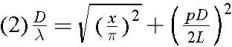
where D is the cavity diameter, L is the length, x is a zero of the Bessel function dependent on the circular mode being considered, as is the mode index p. For the TE111 mode, s=1.841. The resonant frequency of the cavity is expressed as given in Equation 3,

where c is the velocity of light in the cavity interior. Taking the natural log of the above, differentiating and reducing the result yields Equation 4,

which shows the relative change in resonant frequency of a cavity for small changes in the diameter and/or length of the cavity.
Since small cavity dimensional changes result from temperature changes due to the linear coefficient of thermal expansion (CTE) of the material from which the cavity is made, where,


Equation 4 can then be written simply as,

This expression relates the relative change in the resonant frequency of a microwave cavity to a change in its thermal environment [2].
Since the filters are tuned at room temperature, 20 degrees Celsius, and the operating temperature range is ?34 to +71 degrees Celsius, a worst case frequency shift analysis for Invar...