More Practical Filters and Couplers: A Collection from Applied Microwave & Wireless
With additional articles on filter and coupler design, this collection focuses on tunable structures and couplers.
 TABLE OF CONTENTS
 By David L.Harris
From APPLIED MICROWAVE & WIRELESS, VOL. 2, NO. 4, WINTER 1990
When developing a new spectrum analyzer, the need arose for an electronically tunable magnetic resonance filter with at least a 6 to 33 GHz tuning range and a 100 MHz pass-band. Since no such device was readily available, we decided to develop the filter for this application. To extend the tuning range beyond the limits of the conventional 20 GHz YIG (Yttrium-Iron-Garnet) filter designs, solutions to three problems had to be found.
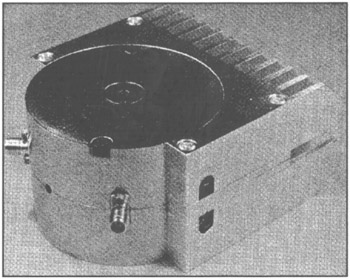
The first problem is the premature saturation of the traditional tuning magnet design. The traditional design limits linear tuning to frequencies below about 26 GHz. The second problem is the self-resonance of the filter s resonator coupling structure. The frequency of this self-resonance must be well above the highest operating frequency of the filter. A third problem, that of widening the filter s pass-band from the 20 to 30 MHz of conventional YIG filters to more than 100 MHz, was solved by others in the industry by using ferrite materials other than YIG. Figure 1 shows the prototype 4 to 40 GHz, 100 MHz bandwidth filter embodying these three solutions.
Tuning Magnet Design Tuning magnets for YIG filters customarily have been similar to the one shown in Figure 2a. They are constructed of a closed cylindrical outer shell of low hysteresis nickel-iron alloy and have internal pole pieces separated by a small air...