More Practical Filters and Couplers: A Collection from Applied Microwave & Wireless
With additional articles on filter and coupler design, this collection focuses on tunable structures and couplers.
 TABLE OF CONTENTS
 By Steve Maas
From APPLIED MICROWAVE & WIRELESS, VOL. 11, NO. 11, NOVEMBER 1999
This article describes an approach to the design of VHF lumped-element hybrid couplers that have broad bandwidth and do not require perfect magnetic coupling between the inductors. This design may be a useful alternative in cases where nearly ideal coupling cannot be achieved.
The classical design for a lumped-element VHF quadrature hybrid was described 20 years ago by Ho and Furlow [1, 2]. This circuit, shown in Figure 1, uses a pair of perfectly coupled inductors (i.e., having a unity coupling coefficient) and two capacitors.

The simple single-section coupler, however, is narrowband, but the bandwidth can be increased substantially by connecting two of them by transmission lines. Unfortunately, the transmission lines can be uncomfortably long, especially at low frequencies.
Design equations for this coupler are fairly simple. We first define the coupling ratio, k:
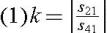
The design equations are:
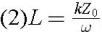

where L and C are as shown in the figure, and ? is the center frequency.
Since the magnetic coupling must be perfect, the mutual inductance of the coupled inductors must equal the self inductance, L. In practice, tight coupling is achieved by winding the coils as a twisted pair of wires on a ferrite toroid.