
Wireless Scales and Balances
Last Updated: April 1, 2025
Description
Wireless scales and balances are advanced weighing devices that incorporate wireless technology to transmit weight data to remote displays or computer systems. These devices are designed to provide accurate weight measurements without the need for physical connections, allowing for greater flexibility and ease of use in various settings.
Working Principle
Wireless scales and balances operate by using load cells, which convert mechanical force into an electrical signal. This signal is then processed and transmitted wirelessly to a receiver, such as a computer or a remote display. The wireless capability allows for seamless integration into existing systems and facilitates real-time data monitoring and management. These devices are particularly useful in environments where mobility and flexibility are essential, as they eliminate the need for cumbersome cables and allow for easy relocation and setup.
Applications
Wireless scales and balances are used in a variety of applications. For instance, in industrial settings, they can be integrated into production lines for in-motion weighing, where items are weighed as they move along a conveyor belt. In laboratory environments, wireless balances can be used for precise measurements in research and development processes, where data can be directly transmitted to laboratory information management systems (LIMS) for analysis. Additionally, they are employed in logistics and shipping industries to weigh packages and transmit data directly to inventory management systems, streamlining operations and reducing manual data entry errors.
Advantages over other Scales and Balances
One of the primary advantages of wireless scales and balances is their ability to transmit data without physical connections, which reduces clutter and enhances safety by eliminating tripping hazards associated with cables. They also offer greater flexibility in placement and use, as they can be easily moved and set up in different locations without the need for reconfiguration. Furthermore, wireless scales can be integrated with various software systems for automated data collection and analysis, improving efficiency and accuracy in data management.
Limitations
Despite their advantages, wireless scales and balances have certain limitations. They may be susceptible to interference from other wireless devices, which can affect data transmission and accuracy. Additionally, they require a reliable power source, such as batteries, which need regular maintenance and replacement to ensure continuous operation. The initial cost of wireless scales can also be higher compared to traditional wired scales, which may be a consideration for budget-conscious users.
Considerations
When selecting wireless scales and balances, it is important to consider factors such as initial costs, which can be higher due to the advanced technology involved. Operating expenses should also be evaluated, including the cost of batteries and potential maintenance of wireless components. Durability is another key consideration, as these devices need to withstand various environmental conditions depending on their application. Accuracy is paramount, and users should ensure that the wireless scales meet the required precision standards for their specific use case. Lastly, replacement and maintenance costs should be factored into the decision-making process, as these can impact the overall cost of ownership over time.
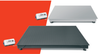
from Minebea Intec GmbH
The exceptionally user-friendly floor scale with robust industrial design. -Large, bright display for easy and comfortable weighing. -Instant stabilisation. -Highly developed battery with exceptional operating time. -Easy charging via USB-C [See More]
- Interface: Serial; USB; Wireless
- Capacity: 3308 to 6615
- Type: Counting Scale; Floor Scale; Other Scale; Multi-Purpose
- Width: 39.37 to 59.06