
Network / Fieldbus Input Temperature Controllers
Last Updated: April 1, 2025
Description
Network/Fieldbus Input Temperature Controllers are devices designed to regulate and maintain a specific temperature within a system by receiving input signals from various sensors. These controllers are capable of integrating with network systems, allowing for centralized control and monitoring of temperature across multiple devices or locations.
Working Principle
Network/Fieldbus Input Temperature Controllers operate by receiving input signals from temperature sensors such as thermocouples or resistive thermal devices (RTDs). These signals are processed to determine the current temperature, which is then compared to a desired setpoint. The controller adjusts the output to maintain the temperature at the setpoint, often using PID (Proportional, Integral, Derivative) control for precise regulation. The integration with network systems, such as Ethernet or PROFIBUS, allows for enhanced control capabilities and simplified connectivity, making them useful for complex industrial environments where centralized monitoring and control are essential.
Applications
Network/Fieldbus Input Temperature Controllers are used in a variety of industrial applications. For example, they are employed in manufacturing processes where precise temperature control is critical, such as in the production of semiconductors or pharmaceuticals. They are also used in HVAC systems for large buildings, where centralized control of multiple zones is necessary to maintain comfort and efficiency.
Advantages over other Temperature Controllers
One significant advantage of Network/Fieldbus Input Temperature Controllers is their ability to integrate with existing network systems, providing centralized control and monitoring capabilities. This integration simplifies the management of multiple controllers and enhances the overall efficiency of the system. Additionally, the use of standard network protocols like Ethernet allows for easier installation and maintenance compared to traditional standalone controllers.
Limitations
A limitation of Network/Fieldbus Input Temperature Controllers is their reliance on network infrastructure, which can be a point of vulnerability if the network experiences downtime or connectivity issues. Additionally, the initial setup and configuration of these controllers can be more complex compared to simpler, standalone temperature controllers, requiring specialized knowledge and expertise.
Considerations
When considering Network/Fieldbus Input Temperature Controllers, it is important to evaluate the initial costs, which may be higher due to the need for network integration and potentially more sophisticated hardware. Operating expenses can be influenced by the complexity of the network and the need for regular maintenance to ensure reliable connectivity. Durability and accuracy are generally high, given the advanced technology used in these controllers, but replacement and maintenance costs should be factored into the overall cost of ownership.

from OMEGA Engineering, Inc.
The wiSeries 1/8 DIN Panel Meter & Controller can monitor up to eight (8) wireless sensors. The compact instrument connects directly to an Ethernet network and the Internet and features OMEGA ’s award-winning embedded Web Server. It is easily configured and monitored with a Web browser... [See More]
- Type: Fieldbus / Network Input
- Control: Limit; Linear
- Controller Type: Environmental; HVAC; Humidity
- Features: Rate Indication/ Control; PC-Based
from CHINO Works America Inc.
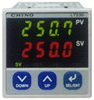
Small general type with 4-digit display of measured value. New overshoot suppression function. Models LT230 digital indicating controllers feature many functions including newly developed PID algorithms and an overshoot suppression function. [See More]
- Type: DC Voltage Inputs; Fieldbus / Network Input; MODBUS
- Interface: Digital Front Panel
- Control: Linear; PID
- Inputs: 1

from Florite International, Inc.
The 900 Series is an economic one loop microcomputer-based instrument incorporating user selectable digital and analog inputs, as well as analog and relay outputs. Other 900 Series features include .005% high accuracy PID, batch, and dose control functions. Additionally, the 900 Series encompasses... [See More]
- Type: DC Voltage Inputs; Current Loop (Transmitter) Excitation; Resistive/ Potentiometer Inputs; Switch / Relay Input; Frequency Inputs; Serial / Digital Input; Fieldbus / Network Input; Screw Terminal
- Control: Limit; Linear; Feedforward; PID
- Controller Type: Laboratory
- Features: PLC; Multi-Function; Datalogger; Is a Chart Recorder; Rate Indication/ Control; Totalizing (Length or Roll Diameter) Indication/ Control

from Russells Technical Products
Russells BlueStar ™ color touch screen controller is a powerful state of the art chamber controller/microprocessor that makes programming your test chamber a breeze. Take control of your Russells chamber with a touch of the finger. BlueStar ™ is packed with features that you would not... [See More]
- Type: DC Voltage Inputs; Current Loop (Transmitter) Excitation; Switch / Relay Input; Fieldbus / Network Input
- Features: Datalogger; Is a Chart Recorder; Rate Indication/ Control; Totalizing (Length or Roll Diameter) Indication/ Control; PC-Based
- Control: Limit
- Form Factor: Stand-Alone
from CHINO Works America Inc.
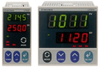
General type with simple operationNew overshoot suppression function. Models LT350 and LT370 digital indicating controllers feature all functions, which are necessary for various control applications, including newly developed PID algorithms and an overshoot suppression function. [See More]
- Type: DC Voltage Inputs; Fieldbus / Network Input; MODBUS
- Interface: Digital Front Panel
- Control: Linear; PID
- Inputs: 1

from Florite International, Inc.
The Florite Model 990X is an innovative, technically superior, high quality and reliable microcomputer-based controller suitable for any commercial or industrial application. The instruments user configurable screw-terminal channels enable any mix of up to eight inputs and or outputs regardless of... [See More]
- Type: DC Voltage Inputs; Current Loop (Transmitter) Excitation; Resistive/ Potentiometer Inputs; Switch / Relay Input; Frequency Inputs; Serial / Digital Input; Fieldbus / Network Input; Screw Terminal, DA15
- Control: Limit; Linear; Feedforward; PID
- Controller Type: Laboratory
- Features: PLC; Multi-Function; Datalogger; Is a Chart Recorder; Rate Indication/ Control; Totalizing (Length or Roll Diameter) Indication/ Control
from CHINO Works America Inc.
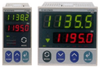
High function type with 5-digit display of measured value. New overshoot suppression function "JyroNavi". Models LT450 and LT470 digital indicating controllers feature all functions, which are necessary for various control applications, including newly developed PID algorithms and a learning type... [See More]
- Type: DC Voltage Inputs; Fieldbus / Network Input; MODBUS
- Interface: Digital Front Panel
- Control: Linear; PID
- Inputs: 1