
SCSI Interface Single Board Computers (SBC)
Description
SCSI Interface Single Board Computers (SBCs) are compact computing devices that integrate a SCSI interface to connect and manage multiple peripheral devices. These SBCs are designed to facilitate communication between the computer system and various peripherals such as hard drives, CD-ROM drives, scanners, and printers. The SCSI interface allows these devices to be connected in a daisy-chain configuration, enabling efficient data transfer and device management.
Working Principle
SCSI Interface SBCs operate by utilizing the SCSI protocol, which is a parallel interface standard used for connecting and transferring data between computers and peripheral devices. The SCSI interface supports multiple devices on a single bus, with each device assigned a unique SCSI ID. This setup allows for simultaneous data transfers and efficient management of connected devices. The SCSI protocol's ability to handle large data blocks and high transfer rates makes it particularly useful for applications requiring fast and reliable data access.
Applications
SCSI Interface SBCs are commonly used in environments where multiple peripheral devices need to be managed efficiently. Specific examples include multimedia and video applications, where high data transfer rates are crucial for tasks such as non-linear editing and media server operations. Additionally, these SBCs are employed in industrial settings where robust and reliable data communication with various devices is essential.
Advantages over other Single Board Computers (SBCs)
One of the primary advantages of SCSI Interface SBCs over other SBCs is their ability to manage multiple devices on a single bus, thanks to the SCSI protocol's daisy-chaining capability. This feature allows for greater scalability and flexibility in system design. Furthermore, the high data transfer rates supported by the SCSI interface make these SBCs ideal for applications requiring rapid data access and processing.
Limitations
Despite their advantages, SCSI Interface SBCs have certain limitations. The complexity of the SCSI protocol and the need for specific configurations can make these systems more challenging to set up and maintain compared to other interfaces. Additionally, the cost of SCSI components and the requirement for specialized connectors and cables can increase the overall expense of implementing a SCSI-based system.
Considerations
When considering the use of SCSI Interface SBCs, it is important to evaluate the initial costs, which can be higher due to the need for specialized components and connectors. Operating expenses may also be elevated if the system requires frequent maintenance or upgrades. However, the durability and reliability of SCSI systems can offset these costs in environments where high data throughput and robust device management are critical. Additionally, the accuracy and efficiency of data transfers in SCSI systems can provide significant benefits in applications demanding high performance.
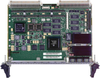
from Artesyn Embedded Power
The Artesyn Embedded Technologies MVME5100 series features the Freescale MPC7410 or MPC750 microprocessor with 32KB/32KB L1 cache. It uses the Artesyn PowerPlus II Architecture to support full PCI throughput of 264MB/s without starving the processor from its memory. Based on an integrated PCI... [See More]
- Hard Drive: SCSI
- Computer Bus: PCI; VME Bus; SCSI
- Processor / CPU: Freescale MPC7410 or MPC750
- CPU Speed: 400 to 500
from Trenton Systems, Inc.
UL recognized, for extended life-cycle requirements [See More]
- Hard Drive: IDE; SCSI
- Computer Bus: ISA/EISA; PCI
- Processor / CPU: Intel Pentium III
- CPU Speed: 1000

from Tri Map International, Inc.
The XPT 6090 Single Board Computer · Dual IntelR XEON Processor. · Hyper-Threading technology. · E7501 Chipset. · PCI/ISA & PCI-X. · Dual Gigabit Ethernet. · Supports up to 8GB of DDR 200/266 memory. · Enhanced ATI Video. · Dual Ultra SCSI [See More]
- Hard Drive: SCSI
- Computer Bus: ISA/EISA; PCI; PCI-X; Intel® E7501
- Processor / CPU: Intel® Xeon®
- CPU Speed: 2800

from Artesyn Embedded Power
The MVME5500 from Artesyn Embedded Technologies uses the MPC7457 processor running at 1 GHz, balanced with memory, dual independent local buses and I/O subsystems. The powerful Marvell system controller, with support for a 133 MHz host bus and a 133 MHz SDRAM memory bus, is well matched to the high... [See More]
- Hard Drive: SCSI
- Computer Bus: PCI; PMC Bus; VME Bus
- Processor / CPU: MPC7457 PowerPC® Processor
- CPU Speed: 1000

from Artesyn Embedded Power
The MVME6100 combines the Freescale MPC7457 PowerPC ® processor running with an AltiVec coprocessor and up to 320MB/s practical bandwidth to enable your technology refresh while maintaining backwards compatibility. OEMs in the military and aerospace, industrial automation and medical imaging... [See More]
- Hard Drive: SCSI
- Computer Bus: PCI; PMC Bus; VME Bus
- Processor / CPU: MPC7457 PowerPC® Processor
- CPU Speed: 1267

from Artesyn Embedded Power
The Artesyn Embedded Technologies MVME3100, featuring the system-on-chip Freescale MPC8540 processor, offers a growth path for VMEbus customers with applications on the previous generation of VME, specifically the MPC8240 and similar (MPC603 family) processors. The system-on-chip implementation... [See More]
- Hard Drive: SCSI
- Computer Bus: PCI; PCI-X; PMC Bus; USB; VME Bus
- Processor / CPU: Freescale MPC8540 PowerQUICC III – PowerPC e500 core
- CPU Speed: 833