
Signature or Spectra Gas Sensors
Description
Signature or Spectra Gas Sensors are designed to detect and measure the presence of various gases by analyzing their spectral signatures. These sensors provide outputs that are often in the form of a chromatogram, which represents the spectral signature of the gases present in the environment.
Working Principle
Signature or Spectra Gas Sensors operate by identifying the unique spectral signature of gases. This involves measuring the concentration of gases through spectral analysis, which can be achieved using various technologies such as infrared spectroscopy. The sensors are useful because they can provide precise and specific identification of gases, which is crucial for monitoring and safety applications.
Applications
Signature or Spectra Gas Sensors are used in a variety of applications where precise gas detection is necessary. For example, they can be employed in industrial settings to monitor emissions of gases like CO, CO2, and H2S. They are also used in environmental monitoring to detect pollutants and in safety systems to identify hazardous gas leaks.
Advantages over other Gas Sensors
One of the key advantages of Signature or Spectra Gas Sensors is their ability to provide specific and accurate identification of gases through their spectral signatures. This specificity is often superior to traditional gas sensors, which may not differentiate as effectively between different gases. Additionally, these sensors can offer long-term stability and resistance to contamination, which is a significant advantage over some metal-oxide sensors that may degrade over time due to environmental contaminants.
Limitations
A limitation of Signature or Spectra Gas Sensors is that they may require more complex and costly equipment compared to simpler gas detection technologies. The need for precise spectral analysis can also mean that these sensors are more sensitive to environmental conditions, which might affect their performance in certain settings.
Considerations
When considering the use of Signature or Spectra Gas Sensors, it is important to evaluate the initial costs, which can be higher due to the complexity of the technology. Operating expenses may also be elevated due to the need for regular calibration and maintenance to ensure accuracy. However, the durability and long-term stability of these sensors can offset some of these costs. Additionally, the accuracy and specificity they provide can be crucial for applications where precise gas detection is necessary, justifying the investment in more advanced technology.
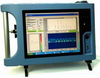
from Owlstone Inc.
Lonestar is a portable gas analyzer that can detect a broad range of analytes at part per billion concentrations, with high selectivity in just a few seconds. [See More]
- Measurement Type: %Volume; Trace; Signature
- Number of Gases Monitored: Multi
- Sensor Technology: PID
- Gas Types: Toxic; Combustible; Hydrocarbons; Methane (CH4) / Natural Gas (User Defined)
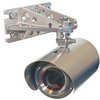
from Senscient Inc.
Reliable, rapid detectionof methane concentrations in pre-combustion ventilation systems at 0.5 to 5.0 meters. 100% continuous measurement of normal gas levels present in the combustion stream and rapid, accurate detection of breakthrough gas levels for optimum safety in combustion operations. Fully... [See More]
- Measurement Type: %LEL or %LFL; Trace; Leakage; Signature
- Number of Gases Monitored: Single
- Sensor Technology: Infrared; Enhanced Laser Diode Spectroscopy
- Gas Types: Combustible; Methane (CH4) / Natural Gas (0 to 100% LEL)

from Owlstone Inc.
FAIMS is a high speed, gas phase ion separation technique. When interfaced to a Mass Spectrometer, the FAIMS chip provides an additional separation stage, making it suitable for a applications ranging from drug development to proteomics. The FAIMS ion filter is orthogonal to both LC and MS, so has... [See More]
- Measurement Type: %Volume; Trace; Signature
- Number of Gases Monitored: Multi
- Sensor Technology: PID
- Gas Types: Toxic; Combustible; Hydrocarbons; Methane (CH4) / Natural Gas (User Defined)