
Ozone (O3) Gas Sensors
Description
Ozone (O3) gas sensors are devices designed to detect and measure the concentration of ozone gas in the environment. These sensors provide real-time data on ozone levels, which is crucial for monitoring air quality and ensuring safety in various settings.
Working Principle
Ozone gas sensors typically operate based on electrochemical or solid-state sensing technologies. In electrochemical sensors, a chemical reaction occurs within the sensor when ozone is present, producing an electrical output proportional to the ozone concentration. Solid-state sensors, on the other hand, use metal oxides that change their electrical resistance in the presence of ozone. These sensors are useful because they offer a reliable means to detect ozone, which is a harmful pollutant at ground level, contributing to respiratory problems and other health issues.
Applications
Ozone gas sensors are used in a variety of applications. For instance, they are employed in industrial settings to monitor ozone levels in processes where ozone is used for disinfection or oxidation. They are also used in environmental monitoring stations to track air quality and ensure compliance with health and safety regulations. Additionally, these sensors are utilized in residential and commercial air purifiers to ensure the safe operation of ozone-generating devices.
Advantages over other Gas Sensors
Ozone gas sensors, particularly those using electrochemical technology, are advantageous due to their low power requirements and lower detection limits, making them suitable for portable and battery-operated devices. They are also less affected by interfering gases, which enhances their specificity and reliability in detecting ozone compared to other gas sensors.
Limitations
One limitation of ozone gas sensors, especially those based on electrochemical technology, is their narrower temperature and pressure range. This can affect the accuracy of measurements in environments where these conditions vary significantly. Additionally, the sensors may require frequent calibration to maintain accuracy over time.
Considerations
When selecting ozone gas sensors, several factors should be considered. Initial costs can vary depending on the technology and features of the sensor. Operating expenses may include power consumption and the need for periodic calibration. Durability is another consideration, as sensors exposed to harsh environments may require more frequent replacement. Accuracy is critical, especially in applications where precise ozone measurements are necessary for safety and compliance. Maintenance costs, including sensor replacement and calibration, should also be factored into the overall cost of ownership.
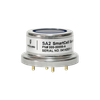
from Safeguard Analytics
Model SA2-O3 smart sensor modules are designed to detect and monitor ozone gas in ambient air. The modules consist of an electrochemical gas detection sensor and a micro-processor-based signal conditioning circuit. The signal conditioning circuits includes embedded temperature compensation and... [See More]
- Gas Types: Toxic; O3 (0-1.00 ppm to 0-500 ppm)
- Number of Gases Monitored: Single
- Sensor Technology: Electrochemical
- Measurement Type: Trace
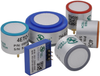
from Electro Optical Components, Inc.
SemeaTech, a world leader in sensing technologies, offers a full line of electrochemical sensors for detecting hazardous materials and gases for work safety and environmental protection. SemeaTech has built a wide network of industry experts and technologists to provide the company with guidance for... [See More]
- Gas Types: O3 (0-1000 ppm)
- Number of Gases Monitored: Single
- Sensor Technology: Electrochemical
- Measurement Type: Trace
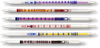
from Sensidyne, LP
Detector tubes provide fast, economical monitoring for a wide variety of target gases and vapors. Their direct reading capability provides on-the-spot results eliminating laboratory turnaround time. The tubes are typically calibrated in one of three commonly used units of concentration. [See More]
- Gas Types: Toxic; Combustible; O3 (100-1000 ppm)
- Number of Gases Monitored: Single
- Sensor Technology: Electrochemical; Gas Chromatography
- Measurement Type: Trace

from Conspec Controls Inc.
CONSPEC Controls Multi-Channel Controller is a microprocessor-based multi-analog input controller. The P2259/60 was designed to be an independent stand-alone controller but can integrate into any type of data acquisition system. The Controller can provide up to eight channels of remote monitoring... [See More]
- Gas Types: Combustible; Aerosols; NH3; AsH3; Br2; CO2; CO; Cl2; ClO2; B2H6; F; GeH4; Refrigerants; Hydrocarbons; H2; HCl; HCN; HF; H2Se; H2S; NO; NO2; O2; O3; PH3; SiH4; SO2; SF6
- Number of Gases Monitored: Multi
- Sensor Technology: Catalytic; Electrochemical; Infrared; PID; Thermal Conductivity
- Measurement Type: %LEL or %LFL; %Volume; Trace
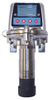
from Honeywell Analytics, Inc.
Highest performance fixed flammable and toxic gas detector with a choice of communication outputs, accessories and installation flexibility. Apex takes the best elements of gas detection design and combining them into one unit. Apex provides the highest performance, installation flexibility, a wide... [See More]
- Gas Types: Toxic; Combustible; NH3 (0-50 PPM / 0-1000 PPM); AsH3 (0-0.2 PPM); Br2 (0-0.4 PPM); CO (0-100 PPM / 0-500 PPM); Cl2 (0-2 PPM / 0-15 PPM); ClO2 (0-0.4 PPM); B2H6 (0-0.4 PPM); F (0-4 PPM); GeH4 (0-0.8 PPM); Hydrocarbons (0-100% LEL); H2 (0-1000 PPM); HCl (0-20 PPM); HCN (0-20 PPM); HF (0-12 PPM); H2S (0-15 PPM / 0-100 PPM); NO (0-100 PPM); NO2 (0-12 PPM); O2 (0-21 % v/v); O3 (0-4 PPM); PH3 (0-1.2 PPM); SiH4 (0-20 PPM); SO2 (0-8 PPM / 0-50 PPM) (Many other toxic gases- see datasheet)
- Number of Gases Monitored: Multi
- Sensor Technology: Catalytic; Electrochemical
- Measurement Type: %LEL or %LFL; %Volume; Trace
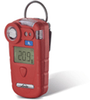
from Linde North America, Inc.
G-TECTA ™ SG is a fully functional premium single gas instrument, water and dust resistant, with one button operation and a choice of 28 sensors to suit almost every application. The lightweight and robust design combined with full download and data logging capability offers the ideal single... [See More]
- Gas Types: Toxic; Combustible; NH3; CO2; CO; Cl2; ClO2; Hydrocarbons; H2; HCN; HF; H2S; Methane (CH4) / Natural Gas; NO; NO2; O3; PH3; SO2
- Measurement Type: %LEL or %LFL
- Number of Gases Monitored: Single
- Operating Temperature: -4 to 149
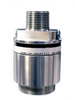
from RainWise, Inc.
Rainwise offers customized turnkey weather monitoring solution. [See More]
- Gas Types: Toxic (optional feature); Combustible (optional feature); NH3 (Contact Factory); AsH3 (Contact Factory); Br2 (Contact Factory); CO (Contact Factory); Cl2 (Contact Factory); ClO2 (Contact Factory); B2H6 (Contact Factory); F (Contact Factory); GeH4 (Contact Factory); H2 (Contact Factory); HCl (Contact Factory); HCN (Contact Factory); HF (Contact Factory); H2Se (Contact Factory); H2S (Contact Factory); NO (Contact Factory); NO2 (Contact Factory); O2 (Contact Factory); O3 (Contact Factory); PH3 (Contact Factory); SiH4 (Contact Factory); SO2 (Contact Factory)
- Number of Gases Monitored: Single
- Sensor Technology: Electrochemical
- Measurement Type: %LEL or %LFL; Trace

from FIS Inc.
SP Series - Ozone Enviromental Monitoring Sensor [See More]
- Gas Types: Combustible; O3
from Global Detection Systems Corp.
The GDS-49 is a two-wire loop-powered 4-20mA sensor transmitter designed to detect a wide range of toxic gases at ppm levels. The current loop output is compatible with the C1 Protector, C2 Protector, C2 Quad Protector or C64 Protector Controllers, the GASMAX II or GASMAX CX gas monitors or any... [See More]
- Gas Types: Toxic; Combustible; NH3 (0-100 ppm); AsH3 (0-1 ppm); CO (0-300/1000 ppm); Cl2 (0-5/50 ppm); ClO2 (0-1 ppm); F (0-1 ppm); H2 (0-2000 ppm); HCl (0-30 ppm); HCN (0-50 ppm); HF (0-10 ppm); H2S (0-50/100 ppm); NO (0-100/500 ppm); NO2 (0-5/50 ppm); O2 (0-25%); O3 (0-1 ppm); SiH4 (0-50 ppm); SO2 (0-20/100 ppm) (COCI2 0-1ppm N2H4 0-1ppm TBM 0-14ppm)
- Number of Gases Monitored: Multi
- Sensor Technology: Electrochemical
- Measurement Type: %LEL or %LFL (optional feature); Trace (optional feature)

from Terra Universal, Inc.
Complete, easy-to-use sampling and analysis system. Detects and measures hazardous gases and vapors. Certified by the Safety Equipment Institute (SEI). Ideal for monitoring performance of Terra Exhaust Purification Filters. The most cost effective solution to air sampling and analysis. This Toxic... [See More]
- Gas Types: Toxic; O3 (0.05 to 30 PPM)
- Number of Gases Monitored: Single
- Sensor Technology: Colorimetric Stain
- Measurement Type: Trace
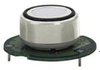
from Sensidyne, LP
Minimum Indicated Concentration .............. 0.07 ppm. Repeatability .............................................. ± 2% of reading. Accuracy * ................................................. ± 2% of full scale. Zero Drift ................................................... < 5%... [See More]
- Gas Types: Toxic; O3 (0-2ppm)
- Number of Gases Monitored: Single
- Sensor Technology: Electrochemical
- Measurement Type: Trace

from Conspec Controls Inc.
CONSPEC's Single Channel Controllers are single point monitoring and control processors, which are housed in a NEMA 4-4X weatherproof non-metallic enclosure and are designed to monitor and display any voltage or current input signal from any instrument, including CONSPEC's EZ-CAL Toxic and... [See More]
- Gas Types: Toxic; Combustible; Aerosols; NH3 (0-50, 100, 200, 500ppm); AsH3; Br2 (0-10ppm); CO2 (0-2000ppm, 10000ppm 0-2%, 0-5%, 0-100%); CO (0-50, 100, 200, 500, 1000, 10000, 50000); Cl2 (0-10, 20ppm); ClO2 (0-5 ppm); B2H6; F; GeH4; Refrigerants; Hydrocarbons (0-100% LEL or 0-100% Vol.); H2 (0-2000, 10,000ppm 0-4%); HCl (0-25, 100, 150ppm); HCN; HF; H2Se; H2S (0-25, 50, 100, 200ppm); NO (0-50, 100ppm); NO2 (0-20ppm); O2 (0-25, 100%); O3 (0-2, 5ppm); PH3; SiH4; SO2 (0-10, 100, 1000, 2000ppm); SF6
- Number of Gases Monitored: Single
- Sensor Technology: Catalytic; Electrochemical; Infrared; PID; Thermal Conductivity
- Measurement Type: %LEL or %LFL; %Volume; Trace
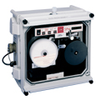
from Honeywell Analytics, Inc.
A fast response device detecting down to ppb of toxic gases, providing physical evidence of a gas event. This use-anywhere, fast response monitor is specific to your target gas only. Until now, the big concern with basic units for toxic gas monitoring was that environmental conditions or other... [See More]
- Gas Types: Toxic; Combustible; NH3 (2.6-75 PPM); AsH3 (15-150 PPB); Br2 (11-300 PPB); Cl2 (0.05-1.5 PPM); ClO2 (11-300 PPB); B2H6 (31-300 PPB); GeH4 (141-600 PPB); HCl (0.5-15 PPM); HCN (1.1-30 PPM); HF (0.6-9 PPM); H2Se (20-150 PPB); H2S (1.1-30 PPM); NO2 (0.3-9 PPM); O3 (31-300 PPB); PH3 (32-900 PPB); SiH4 (0.5-15 PPB); SO2 (0.2-6 PPM) (Many other toxic gases- see datasheet)
- Number of Gases Monitored: Single
- Sensor Technology: Chemcassette. Pyrolyzer option.
- Measurement Type: Trace
from Linde North America, Inc.
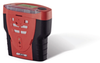
G-TECTA ™ 4GP is an extremely robust 4 gas instrument with built in pump and charger. The single button operation and full data management allows the users to effectively manage their gas detection requirements with confidence. G-TECTA 4GP has infrared communication, full functional capability... [See More]
- Gas Types: Toxic; Combustible; NH3; CO; Cl2; H2; HCN; HF; H2S; Methane (CH4) / Natural Gas; NO; NO2; O2; O3; PH3; SO2
- Measurement Type: %LEL or %LFL
- Number of Gases Monitored: Multi
- Operating Temperature: -4 to 131