
Bromine (Br2) Gas Sensors
Description
Bromine (Br2) gas sensors are designed to detect the presence of bromine gas in the environment. These sensors are crucial for monitoring and ensuring safety in areas where bromine gas might be present, providing real-time data on gas concentrations to prevent exposure to harmful levels.
Working Principle
Bromine gas sensors typically operate using electrochemical principles, similar to those found in batteries. They consist of a gas-permeable membrane, an electrolyte, and a sensing electrode. When bromine gas comes into contact with the sensor, it reacts with the electrolyte, causing a change in electrical current that is measured and translated into a gas concentration reading. This principle allows for high sensitivity and specificity in detecting bromine gas, making these sensors useful for maintaining safe environments.
Applications
Bromine gas sensors are used in various industrial settings where bromine is utilized or produced. For example, they are employed in chemical manufacturing plants where bromine is a raw material or byproduct. They are also used in laboratories that handle bromine for research purposes, ensuring that any leaks or accidental releases are quickly detected and addressed.
Advantages over other Gas Sensors
Electrochemical sensors, like those used for bromine detection, offer high sensitivity and linear output, making them effective for detecting low concentrations of bromine gas. They are also relatively easy to handle and can be more cost-effective compared to other technologies such as laser-based sensors, which might be more expensive and complex to operate.
Limitations
One limitation of bromine gas sensors, particularly those using electrochemical technology, is their limited shelf life. They can also be subject to interference from other gases, which might affect their accuracy. Additionally, their performance can be impacted by extreme environmental conditions, such as very dry or very hot environments, which can shorten the sensor's lifetime.
Considerations
When considering bromine gas sensors, it is important to evaluate the initial costs, which can vary depending on the technology and manufacturer. Operating expenses should also be considered, as sensors may require regular calibration and maintenance to ensure accuracy. Durability is another factor, as sensors exposed to harsh conditions may need more frequent replacement. Lastly, the accuracy of the sensor is crucial, especially in environments where precise measurements are necessary to ensure safety. Regular maintenance and timely replacement of sensors are essential to maintain their reliability and effectiveness.
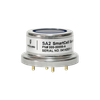
from Safeguard Analytics
Model SA2-Br2 smart sensor modules are designed to detect and monitor bromine gas in ambient air. The modules consist of an electrochemical gas detection sensor and a micro-processor-based signal conditioning circuit. The signal conditioning circuits includes embedded temperature compensation and... [See More]
- Gas Types: Br2 (0-20.0 ppm to 0-1,000 ppm)
- Number of Gases Monitored: Single
- Sensor Technology: Electrochemical
- Measurement Type: Trace
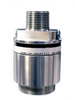
from RainWise, Inc.
Rainwise offers customized turnkey weather monitoring solution. [See More]
- Gas Types: Toxic (optional feature); Combustible (optional feature); NH3 (Contact Factory); AsH3 (Contact Factory); Br2 (Contact Factory); CO (Contact Factory); Cl2 (Contact Factory); ClO2 (Contact Factory); B2H6 (Contact Factory); F (Contact Factory); GeH4 (Contact Factory); H2 (Contact Factory); HCl (Contact Factory); HCN (Contact Factory); HF (Contact Factory); H2Se (Contact Factory); H2S (Contact Factory); NO (Contact Factory); NO2 (Contact Factory); O2 (Contact Factory); O3 (Contact Factory); PH3 (Contact Factory); SiH4 (Contact Factory); SO2 (Contact Factory)
- Number of Gases Monitored: Single
- Sensor Technology: Electrochemical
- Measurement Type: %LEL or %LFL; Trace

from Conspec Controls Inc.
CONSPEC Controls Multi-Channel Controller is a microprocessor-based multi-analog input controller. The P2259/60 was designed to be an independent stand-alone controller but can integrate into any type of data acquisition system. The Controller can provide up to eight channels of remote monitoring... [See More]
- Gas Types: Combustible; Aerosols; NH3; AsH3; Br2; CO2; CO; Cl2; ClO2; B2H6; F; GeH4; Refrigerants; Hydrocarbons; H2; HCl; HCN; HF; H2Se; H2S; NO; NO2; O2; O3; PH3; SiH4; SO2; SF6
- Number of Gases Monitored: Multi
- Sensor Technology: Catalytic; Electrochemical; Infrared; PID; Thermal Conductivity
- Measurement Type: %LEL or %LFL; %Volume; Trace

from Sensidyne, LP
Detector tubes provide fast, economical monitoring for a wide variety of target gases and vapors. Their direct reading capability provides on-the-spot results eliminating laboratory turnaround time. The tubes are typically calibrated in one of three commonly used units of concentration. [See More]
- Gas Types: Toxic; Combustible; Br2 (.1 ppm)
- Number of Gases Monitored: Single
- Sensor Technology: Electrochemical; Gas Chromatography
- Measurement Type: Trace

from Terra Universal, Inc.
Complete, easy-to-use sampling and analysis system. Detects and measures hazardous gases and vapors. Certified by the Safety Equipment Institute (SEI). Ideal for monitoring performance of Terra Exhaust Purification Filters. The most cost effective solution to air sampling and analysis. This Toxic... [See More]
- Gas Types: Toxic; Br2 (1 to 20 PPM)
- Number of Gases Monitored: Single
- Sensor Technology: Colorimetric Stain
- Measurement Type: Trace
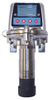
from Honeywell Analytics, Inc.
Highest performance fixed flammable and toxic gas detector with a choice of communication outputs, accessories and installation flexibility. Apex takes the best elements of gas detection design and combining them into one unit. Apex provides the highest performance, installation flexibility, a wide... [See More]
- Gas Types: Toxic; Combustible; NH3 (0-50 PPM / 0-1000 PPM); AsH3 (0-0.2 PPM); Br2 (0-0.4 PPM); CO (0-100 PPM / 0-500 PPM); Cl2 (0-2 PPM / 0-15 PPM); ClO2 (0-0.4 PPM); B2H6 (0-0.4 PPM); F (0-4 PPM); GeH4 (0-0.8 PPM); Hydrocarbons (0-100% LEL); H2 (0-1000 PPM); HCl (0-20 PPM); HCN (0-20 PPM); HF (0-12 PPM); H2S (0-15 PPM / 0-100 PPM); NO (0-100 PPM); NO2 (0-12 PPM); O2 (0-21 % v/v); O3 (0-4 PPM); PH3 (0-1.2 PPM); SiH4 (0-20 PPM); SO2 (0-8 PPM / 0-50 PPM) (Many other toxic gases- see datasheet)
- Number of Gases Monitored: Multi
- Sensor Technology: Catalytic; Electrochemical
- Measurement Type: %LEL or %LFL; %Volume; Trace