
Arsine (AsH3) Gas Sensors
Description
Arsine (AsH3) gas sensors are specialized devices designed to detect the presence of arsine gas in various environments. These sensors are crucial for monitoring and ensuring safety in areas where arsine gas might be present, providing real-time data on gas concentrations to prevent exposure to toxic levels.
Working Principle
Arsine gas sensors typically operate on principles similar to those found in other gas detection technologies, such as electrochemical or solid-state sensing. In electrochemical sensors, the detection process involves a chemical reaction between arsine gas and the sensor's electrode, resulting in an electrical signal proportional to the gas concentration. Solid-state sensors, on the other hand, may use metal oxide semiconductors that change their electrical resistance in the presence of arsine gas. These sensors are useful because they provide high sensitivity and specificity, allowing for the detection of arsine at very low concentrations, which is critical for safety in industrial and laboratory settings.
Applications
Arsine gas sensors are used in a variety of applications, particularly in industries where arsine gas is a byproduct or used in processes. For example, they are employed in semiconductor manufacturing, where arsine is used as a doping agent. They are also used in the production of certain types of glass and in the metallurgical industry, where arsine can be released during the processing of metals like arsenic-containing ores.
Advantages over other Gas Sensors
Arsine gas sensors, particularly those using electrochemical detection methods, offer high sensitivity and specificity for arsine gas, which is crucial given the toxic nature of arsine. Compared to other gas sensors, they can detect arsine at lower concentrations, providing an essential safety measure in environments where even trace amounts of arsine can be hazardous.
Limitations
One limitation of arsine gas sensors, especially those based on electrochemical technology, is their susceptibility to environmental conditions such as humidity and temperature extremes, which can affect their accuracy and lifespan. Additionally, these sensors may have a limited shelf life and can be subject to interference from other gases, which might lead to false readings.
Considerations
When selecting and using arsine gas sensors, several considerations should be taken into account. Initial costs can vary depending on the technology and sensitivity required. Operating expenses may include regular calibration and maintenance to ensure accuracy. Durability is a concern, as sensors exposed to harsh conditions may require more frequent replacement. Accuracy is paramount, so choosing a sensor with a proven track record for reliability in the specific environmental conditions of use is essential. Replacement and maintenance costs should also be factored into the overall cost of ownership, as these can add up over time, especially in demanding industrial settings.
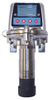
from Honeywell Analytics, Inc.
Highest performance fixed flammable and toxic gas detector with a choice of communication outputs, accessories and installation flexibility. Apex takes the best elements of gas detection design and combining them into one unit. Apex provides the highest performance, installation flexibility, a wide... [See More]
- Gas Types: Toxic; Combustible; NH3 (0-50 PPM / 0-1000 PPM); AsH3 (0-0.2 PPM); Br2 (0-0.4 PPM); CO (0-100 PPM / 0-500 PPM); Cl2 (0-2 PPM / 0-15 PPM); ClO2 (0-0.4 PPM); B2H6 (0-0.4 PPM); F (0-4 PPM); GeH4 (0-0.8 PPM); Hydrocarbons (0-100% LEL); H2 (0-1000 PPM); HCl (0-20 PPM); HCN (0-20 PPM); HF (0-12 PPM); H2S (0-15 PPM / 0-100 PPM); NO (0-100 PPM); NO2 (0-12 PPM); O2 (0-21 % v/v); O3 (0-4 PPM); PH3 (0-1.2 PPM); SiH4 (0-20 PPM); SO2 (0-8 PPM / 0-50 PPM) (Many other toxic gases- see datasheet)
- Number of Gases Monitored: Multi
- Sensor Technology: Catalytic; Electrochemical
- Measurement Type: %LEL or %LFL; %Volume; Trace
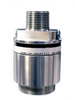
from RainWise, Inc.
Rainwise offers customized turnkey weather monitoring solution. [See More]
- Gas Types: Toxic (optional feature); Combustible (optional feature); NH3 (Contact Factory); AsH3 (Contact Factory); Br2 (Contact Factory); CO (Contact Factory); Cl2 (Contact Factory); ClO2 (Contact Factory); B2H6 (Contact Factory); F (Contact Factory); GeH4 (Contact Factory); H2 (Contact Factory); HCl (Contact Factory); HCN (Contact Factory); HF (Contact Factory); H2Se (Contact Factory); H2S (Contact Factory); NO (Contact Factory); NO2 (Contact Factory); O2 (Contact Factory); O3 (Contact Factory); PH3 (Contact Factory); SiH4 (Contact Factory); SO2 (Contact Factory)
- Number of Gases Monitored: Single
- Sensor Technology: Electrochemical
- Measurement Type: %LEL or %LFL; Trace
from Global Detection Systems Corp.
The GDS-49 is a two-wire loop-powered 4-20mA sensor transmitter designed to detect a wide range of toxic gases at ppm levels. The current loop output is compatible with the C1 Protector, C2 Protector, C2 Quad Protector or C64 Protector Controllers, the GASMAX II or GASMAX CX gas monitors or any... [See More]
- Gas Types: Toxic; Combustible; NH3 (0-100 ppm); AsH3 (0-1 ppm); CO (0-300/1000 ppm); Cl2 (0-5/50 ppm); ClO2 (0-1 ppm); F (0-1 ppm); H2 (0-2000 ppm); HCl (0-30 ppm); HCN (0-50 ppm); HF (0-10 ppm); H2S (0-50/100 ppm); NO (0-100/500 ppm); NO2 (0-5/50 ppm); O2 (0-25%); O3 (0-1 ppm); SiH4 (0-50 ppm); SO2 (0-20/100 ppm) (COCI2 0-1ppm N2H4 0-1ppm TBM 0-14ppm)
- Number of Gases Monitored: Multi
- Sensor Technology: Electrochemical
- Measurement Type: %LEL or %LFL (optional feature); Trace (optional feature)

from Sensidyne, LP
Detector tubes provide fast, economical monitoring for a wide variety of target gases and vapors. Their direct reading capability provides on-the-spot results eliminating laboratory turnaround time. The tubes are typically calibrated in one of three commonly used units of concentration. [See More]
- Gas Types: Toxic; Combustible; AsH3 (.02 ppm)
- Number of Gases Monitored: Single
- Sensor Technology: Electrochemical; Gas Chromatography
- Measurement Type: Trace

from Terra Universal, Inc.
Complete, easy-to-use sampling and analysis system. Detects and measures hazardous gases and vapors. Certified by the Safety Equipment Institute (SEI). Ideal for monitoring performance of Terra Exhaust Purification Filters. The most cost effective solution to air sampling and analysis. This Toxic... [See More]
- Gas Types: Toxic; AsH3 (5 to 160 PPM)
- Number of Gases Monitored: Single
- Sensor Technology: Colorimetric Stain
- Measurement Type: Trace

from Conspec Controls Inc.
CONSPEC Controls Multi-Channel Controller is a microprocessor-based multi-analog input controller. The P2259/60 was designed to be an independent stand-alone controller but can integrate into any type of data acquisition system. The Controller can provide up to eight channels of remote monitoring... [See More]
- Gas Types: Combustible; Aerosols; NH3; AsH3; Br2; CO2; CO; Cl2; ClO2; B2H6; F; GeH4; Refrigerants; Hydrocarbons; H2; HCl; HCN; HF; H2Se; H2S; NO; NO2; O2; O3; PH3; SiH4; SO2; SF6
- Number of Gases Monitored: Multi
- Sensor Technology: Catalytic; Electrochemical; Infrared; PID; Thermal Conductivity
- Measurement Type: %LEL or %LFL; %Volume; Trace
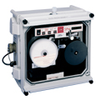
from Honeywell Analytics, Inc.
A fast response device detecting down to ppb of toxic gases, providing physical evidence of a gas event. This use-anywhere, fast response monitor is specific to your target gas only. Until now, the big concern with basic units for toxic gas monitoring was that environmental conditions or other... [See More]
- Gas Types: Toxic; Combustible; NH3 (2.6-75 PPM); AsH3 (15-150 PPB); Br2 (11-300 PPB); Cl2 (0.05-1.5 PPM); ClO2 (11-300 PPB); B2H6 (31-300 PPB); GeH4 (141-600 PPB); HCl (0.5-15 PPM); HCN (1.1-30 PPM); HF (0.6-9 PPM); H2Se (20-150 PPB); H2S (1.1-30 PPM); NO2 (0.3-9 PPM); O3 (31-300 PPB); PH3 (32-900 PPB); SiH4 (0.5-15 PPB); SO2 (0.2-6 PPM) (Many other toxic gases- see datasheet)
- Number of Gases Monitored: Single
- Sensor Technology: Chemcassette. Pyrolyzer option.
- Measurement Type: Trace

from Sensidyne, LP
Minimum Indicated Concentration .............. 0.04 ppm. Repeatability .............................................. ± 2% of reading. Accuracy * ................................................. ± 2% of full scale. Zero Drift ................................................... < 5%... [See More]
- Gas Types: Toxic; Combustible; AsH3 (0-1ppm)
- Number of Gases Monitored: Single
- Sensor Technology: Electrochemical
- Measurement Type: Trace

from Conspec Controls Inc.
CONSPEC's Single Channel Controllers are single point monitoring and control processors, which are housed in a NEMA 4-4X weatherproof non-metallic enclosure and are designed to monitor and display any voltage or current input signal from any instrument, including CONSPEC's EZ-CAL Toxic and... [See More]
- Gas Types: Toxic; Combustible; Aerosols; NH3 (0-50, 100, 200, 500ppm); AsH3; Br2 (0-10ppm); CO2 (0-2000ppm, 10000ppm 0-2%, 0-5%, 0-100%); CO (0-50, 100, 200, 500, 1000, 10000, 50000); Cl2 (0-10, 20ppm); ClO2 (0-5 ppm); B2H6; F; GeH4; Refrigerants; Hydrocarbons (0-100% LEL or 0-100% Vol.); H2 (0-2000, 10,000ppm 0-4%); HCl (0-25, 100, 150ppm); HCN; HF; H2Se; H2S (0-25, 50, 100, 200ppm); NO (0-50, 100ppm); NO2 (0-20ppm); O2 (0-25, 100%); O3 (0-2, 5ppm); PH3; SiH4; SO2 (0-10, 100, 1000, 2000ppm); SF6
- Number of Gases Monitored: Single
- Sensor Technology: Catalytic; Electrochemical; Infrared; PID; Thermal Conductivity
- Measurement Type: %LEL or %LFL; %Volume; Trace