
Intrinsically Safe Gas Sensors
Description
Intrinsically Safe Gas Sensors are designed to detect the presence of gases in potentially hazardous environments. These sensors are engineered to operate safely in areas where explosive gases may be present, ensuring that they do not ignite the gases they are meant to detect.
Working Principle
Intrinsically Safe Gas Sensors work by limiting the electrical and thermal energy available in the sensor circuit to a level below that which could ignite a hazardous atmosphere. This is achieved by using low-power electronics and ensuring that the sensors cannot store enough energy to cause a spark. The sensors often employ various detection technologies, such as infrared (IR) or electrochemical sensing, to identify the presence of specific gases. Their utility lies in their ability to provide reliable gas detection without posing a risk of ignition, making them essential for safety in explosive environments.
Applications
Intrinsically Safe Gas Sensors are commonly used in industries where flammable gases are present. For example, in the oil and gas industry, these sensors are used to monitor gas levels in offshore oil rigs and storage tanks to prevent explosions. They are also employed in chemical plants to detect leaks of hazardous gases and in mining operations to ensure the safety of workers by monitoring for the presence of explosive gases.
Advantages over other Gas Sensors
One of the key advantages of Intrinsically Safe Gas Sensors is their ability to operate safely in explosive environments without the risk of igniting the gases they detect. This makes them preferable in settings where safety is a critical concern. Additionally, these sensors are often more compact and portable compared to explosion-proof sensors, which require heavy and robust housings to contain potential explosions.
Limitations
A limitation of Intrinsically Safe Gas Sensors is that they are typically designed for low-power applications, which may restrict their use in environments requiring high-power detection capabilities. Additionally, they may not be suitable for all types of gases or detection scenarios, particularly where high sensitivity or rapid response times are required.
Considerations
When considering Intrinsically Safe Gas Sensors, it is important to evaluate the initial costs, which can be higher due to the specialized design and certification requirements. Operating expenses may be lower due to their energy-efficient design, but factors such as durability, accuracy, and maintenance costs should also be considered. Regular calibration and maintenance are essential to ensure the sensors remain accurate and reliable over time. Replacement costs should also be factored in, as the sensors may need to be replaced periodically to maintain optimal performance.
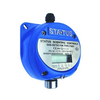
from Dynament
Dynament ’s intrinsically safe fixed gas detectors are specifically engineered for use in hazardous environments where there is a potential risk of explosion due to flammable gases or vapours. These environments may result from industrial processes in sectors such as water treatment,... [See More]
- Features: Hazardous Environment; Intrinsically Safe
- Gas Types: Toxic; Combustible; Hydrocarbons; O2
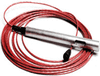
from MO2 Inc.
The DHP is available with SDI-12 or RS-485 outputs. The DHP-485 can be configured with 0-5 volt or 4-20mA output as well as having remote access capability. The DHP is capable of being interfaced with most commercial data loggers, PLCs and samplers. Typical applications for the DHP are leak... [See More]
- Features: Hazardous Environment; Intrinsically Safe
- Number of Gases Monitored: Single
- Sensor Technology: Fiber Optic Chemical Sensor
- Measurement Type: Trace; Leakage
from Global Detection Systems Corp.
The GDS-49 is a two-wire loop-powered 4-20mA sensor transmitter designed to detect a wide range of toxic gases at ppm levels. The current loop output is compatible with the C1 Protector, C2 Protector, C2 Quad Protector or C64 Protector Controllers, the GASMAX II or GASMAX CX gas monitors or any... [See More]
- Features: Hazardous Environment; Intrinsically Safe
- Number of Gases Monitored: Multi
- Sensor Technology: Electrochemical
- Measurement Type: %LEL or %LFL (optional feature); Trace (optional feature)
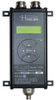
from H2scan, Corp.
H2scan's HY-ALERTA ™ 1600 Intrinsically Safe Area Hydrogen Monitor provides hydrogen-specific leak detection and measurement for hydrogen concentrations as low as 4000 ppm and can be scaled to any concentration up to 5% hydrogen by volume, a range representing 10% to 125% of hydrogen's low... [See More]
- Features: Intrinsically Safe
- Number of Gases Monitored: Single
- Sensor Technology: Hydrogen-Specific Sensor Technology
- Measurement Type: %Volume; Leakage

from Sensidyne, LP
Detector tubes provide fast, economical monitoring for a wide variety of target gases and vapors. Their direct reading capability provides on-the-spot results eliminating laboratory turnaround time. The tubes are typically calibrated in one of three commonly used units of concentration. [See More]
- Features: Intrinsically Safe
- Number of Gases Monitored: Single
- Sensor Technology: Electrochemical; Gas Chromatography
- Measurement Type: Trace

from Terra Universal, Inc.
Complete, easy-to-use sampling and analysis system. Detects and measures hazardous gases and vapors. Certified by the Safety Equipment Institute (SEI). Ideal for monitoring performance of Terra Exhaust Purification Filters. The most cost effective solution to air sampling and analysis. This Toxic... [See More]
- Features: Intrinsically Safe
- Number of Gases Monitored: Single
- Sensor Technology: Colorimetric Stain
- Measurement Type: Trace
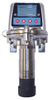
from Honeywell Analytics, Inc.
Highest performance fixed flammable and toxic gas detector with a choice of communication outputs, accessories and installation flexibility. Apex takes the best elements of gas detection design and combining them into one unit. Apex provides the highest performance, installation flexibility, a wide... [See More]
- Features: Hazardous Environment; Intrinsically Safe
- Number of Gases Monitored: Multi
- Sensor Technology: Catalytic; Electrochemical
- Measurement Type: %LEL or %LFL; %Volume; Trace

from Det-Tronics
The Det-Tronics GT3000 line of electrochemical fixed-point toxic-gas detectors provides continuous monitoring of the atmosphere for potentially hazardous toxic gas leaks or oxygen depletion. The GT3000 family currently includes sensors that detect each of the following gases (additional gases added... [See More]
- Features: Hazardous Environment; Intrinsically Safe
- Number of Gases Monitored: Multi
- Sensor Technology: Electrochemical
- Measurement Type: %Volume; Trace

from H2scan, Corp.
H2scan's HY-OPTIMA ™ 1700 series in-line, real time hydrogen-specific process analyzers are designed for ease of use, interface flexibility and true process control. The HY-OPTIMA ™ 1700 series is an ATEX certified Intrinsically Safe (IS) device that incorporates our patented solid-state... [See More]
- Features: Intrinsically Safe
- Number of Gases Monitored: Single
- Sensor Technology: Semiconductor; Solid State Sensor
- Measurement Type: %Volume

from Sensidyne, LP
Minimum Indicated Concentration .............. 0.4 ppm. Repeatability .............................................. ± 10% of reading. Accuracy * ................................................. ± 10% of reading. Zero Drift ................................................... < 5%... [See More]
- Features: Intrinsically Safe
- Number of Gases Monitored: Single
- Sensor Technology: Electrochemical
- Measurement Type: Trace
from Sensidyne, LP
Minimum Indicated Concentration .............. 0.4 ppm. Repeatability .............................................. ± 10% of reading. Accuracy * ................................................. ± 10% of full scale. Zero Drift ................................................... <... [See More]
- Features: Intrinsically Safe
- Number of Gases Monitored: Single
- Sensor Technology: Electrochemical
- Measurement Type: Trace
from Sensidyne, LP
Minimum Indicated Concentration .............. 0.4 ppm. Repeatability .............................................. ± 10% of reading. Accuracy * ................................................. ± 10% of reading. Zero Drift ................................................... < 5%... [See More]
- Features: Intrinsically Safe
- Number of Gases Monitored: Single
- Sensor Technology: Electrochemical
- Measurement Type: Trace
from Sensidyne, LP
Minimum Indicated Concentration .............. 0.4 ppm. Repeatability .............................................. ± 10% of reading. Accuracy * ................................................. ± 10% of reading. Zero Drift ................................................... < 5%... [See More]
- Features: Intrinsically Safe
- Number of Gases Monitored: Single
- Sensor Technology: Electrochemical
- Measurement Type: Trace
from Sensidyne, LP
Minimum Indicated Concentration .............. 4 %LEL. Repeatability .............................................. ± 2% of reading. Accuracy * ................................................. ± 2% of full scale. Zero Drift ................................................... 5% change... [See More]
- Features: Intrinsically Safe
- Number of Gases Monitored: Multi
- Sensor Technology: Infrared
- Measurement Type: %LEL or %LFL
from Sensidyne, LP
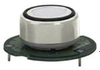
Minimum Indicated Concentration .............. 2 ppm. Repeatability .............................................. ± 2% of reading. Accuracy * ................................................. ± 2% of full scale. Span Drift .................................................. < 10%... [See More]
- Features: Intrinsically Safe
- Number of Gases Monitored: Single
- Sensor Technology: Electrochemical
- Measurement Type: Trace

from Sensidyne, LP
Minimum Indicated Concentration .............. 0.04 ppm. Repeatability .............................................. ± 2% of reading. Accuracy * ................................................. ± 2% of full scale. Zero Drift ................................................... < 5%... [See More]
- Features: Intrinsically Safe
- Number of Gases Monitored: Single
- Sensor Technology: Electrochemical
- Measurement Type: Trace
from Sensidyne, LP
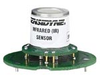
Minimum Indicated Concentration .............. 0.07 %vol. Repeatability .............................................. ± 2% of reading. Accuracy * ................................................. ± 2% of full scale. Zero Drift ................................................... <... [See More]
- Features: Intrinsically Safe
- Number of Gases Monitored: Single
- Sensor Technology: Infrared
- Measurement Type: %Volume

from Sensidyne, LP
Minimum Indicated Concentration .............. 4 ppm. Repeatability .............................................. ± 2% of reading. Accuracy * ................................................. ± 2% of full scale. Zero Drift ................................................... < 5%... [See More]
- Features: Intrinsically Safe
- Number of Gases Monitored: Single
- Sensor Technology: Electrochemical
- Measurement Type: Trace
from Sensidyne, LP
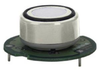
Minimum Indicated Concentration .............. 0.03 ppm. Repeatability .............................................. ± 2% of reading. Accuracy * ................................................. ± 2% of full scale. Zero Drift ................................................... < 5%... [See More]
- Features: Intrinsically Safe
- Number of Gases Monitored: Single
- Sensor Technology: Electrochemical
- Measurement Type: Trace
from Sensidyne, LP
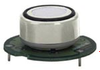
Chlorine, 0-100 ppm [See More]
- Features: Intrinsically Safe
- Number of Gases Monitored: Single
- Sensor Technology: Electrochemical
- Measurement Type: Trace
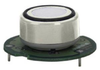
from Sensidyne, LP
Minimum Indicated Concentration .............. 0.16 ppm. Repeatability .............................................. ± 2% of reading. Accuracy * ................................................. ± 2% of full scale. Zero Drift ................................................... < 5%... [See More]
- Features: Intrinsically Safe
- Number of Gases Monitored: Single
- Sensor Technology: Electrochemical
- Measurement Type: Trace
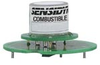
from Sensidyne, LP
Minimum Indicated Concentration .............. 4 %LEL. Repeatability .............................................. ± 2% of reading. Accuracy * ................................................. ± 3% 0-50 %LEL,. ± 5% 50-100 %LEL. Zero Drift... [See More]
- Features: Intrinsically Safe
- Number of Gases Monitored: Multi
- Sensor Technology: Catalytic
- Measurement Type: %LEL or %LFL
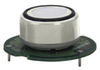
from Sensidyne, LP
Minimum Indicated Concentration .............. 0.04 ppm. Repeatability .............................................. ± 2% of reading. Accuracy * ................................................. ± 2% of full scale. Zero Drift ................................................... < 5%... [See More]
- Features: Intrinsically Safe
- Number of Gases Monitored: Single
- Sensor Technology: Electrochemical
- Measurement Type: Trace
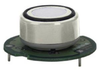
from Sensidyne, LP
Minimum Indicated Concentration .............. 0.4 ppm. Repeatability .............................................. ± 2% of reading. Accuracy * ................................................. ± 2% of full scale. Zero Drift ................................................... < 5%... [See More]
- Features: Intrinsically Safe
- Number of Gases Monitored: Single
- Sensor Technology: Electrochemical
- Measurement Type: Trace

from Sensidyne, LP
Minimum Indicated Concentration .............. 0.4 ppm. Repeatability .............................................. ± 2% of reading. Accuracy * ................................................. ± 2% of full scale. Zero Drift ................................................... < 5%... [See More]
- Features: Intrinsically Safe
- Number of Gases Monitored: Single
- Sensor Technology: Electrochemical
- Measurement Type: Trace

from Sensidyne, LP
Minimum Indicated Concentration .............. 0.07 ppm. Repeatability .............................................. ± 2% of reading. Accuracy * ................................................. ± 2% of full scale. Zero Drift ................................................... < 5%... [See More]
- Features: Intrinsically Safe
- Number of Gases Monitored: Single
- Sensor Technology: Electrochemical
- Measurement Type: Trace

from Sensidyne, LP
Minimum Indicated Concentration .............. 4 ppm. Repeatability .............................................. ± 2% of reading. Accuracy * ................................................. ± 2% of full scale. Zero Drift ................................................... < 5%... [See More]
- Features: Intrinsically Safe
- Number of Gases Monitored: Single
- Sensor Technology: Electrochemical
- Measurement Type: Trace
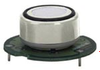
from Sensidyne, LP
Minimum Indicated Concentration .............. 0.4 ppm. Repeatability .............................................. ± 2% of reading. Accuracy * ................................................. ± 2% of full scale. Zero Drift ................................................... < 5%... [See More]
- Features: Intrinsically Safe
- Number of Gases Monitored: Single
- Sensor Technology: Electrochemical
- Measurement Type: Trace
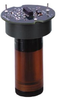
from Sensidyne, LP
Minimum Indicated Concentration .............. 0.4 ppm. Repeatability .............................................. ± 2% of reading. Accuracy * ................................................. ± 2% of full scale. Zero Drift ................................................... < 5%... [See More]
- Features: Intrinsically Safe
- Number of Gases Monitored: Single
- Sensor Technology: Electrochemical
- Measurement Type: Trace

from Sensidyne, LP
Minimum Indicated Concentration .............. 0.04 ppm. Repeatability .............................................. ± 5% of reading. Accuracy * ................................................. ± 10% of full scale. Zero Drift ................................................... <... [See More]
- Features: Intrinsically Safe
- Number of Gases Monitored: Single
- Sensor Technology: Electrochemical
- Measurement Type: Trace
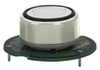
from Sensidyne, LP
Minimum Indicated Concentration .............. 4 ppm. Repeatability .............................................. ± 2% of reading. Accuracy * ................................................. ± 2% of full scale. Zero Drift ................................................... < 5%... [See More]
- Features: Intrinsically Safe
- Number of Gases Monitored: Single
- Sensor Technology: Electrochemical
- Measurement Type: Trace
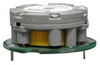
from Sensidyne, LP
Minimum Indicated Concentration .............. 4 %LEL. Repeatability .............................................. ± 2% of reading. Accuracy * ................................................. ± 2% of full scale. Zero Drift ................................................... < 5%... [See More]
- Features: Intrinsically Safe
- Number of Gases Monitored: Single
- Sensor Technology: Electrochemical
- Measurement Type: %LEL or %LFL
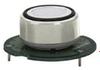
from Sensidyne, LP
Minimum Indicated Concentration .............. 31 ppm. Repeatability .............................................. ± 2% of reading. Accuracy * ................................................. ± 2% of full scale. Zero Drift ................................................... < 5%... [See More]
- Features: Intrinsically Safe
- Number of Gases Monitored: Single
- Sensor Technology: Electrochemical
- Measurement Type: Trace