
380 Three Phase Uninterruptible Power Supplies (UPS)
Description
A 380 Three Phase Uninterruptible Power Supply (UPS) is designed to provide continuous, reliable power to critical systems and sensitive loads. It ensures that these systems remain operational during power interruptions, voltage sags, swells, spikes, and harmonics. The UPS maintains a stable power supply by switching to battery power when the main power source fails, thus preventing data loss and equipment damage.
Working Principle
The 380 Three Phase UPS operates by continuously converting incoming AC power into DC power to charge its batteries. This DC power is then converted back into AC power to supply connected devices. This double-conversion process ensures a consistent and clean power output, regardless of the quality of the incoming power. The UPS is particularly useful in environments where power quality is crucial, as it provides voltage regulation and protection against a wide range of power disturbances.
Applications
Three Phase UPS systems are commonly used in environments where power reliability is critical. Specific examples include:
- Data Centers: To ensure continuous operation of servers and prevent data loss.
- Medical Facilities: To provide backup power for life-supporting systems and sensitive medical equipment.
- Industrial Processing: To maintain the operation of critical machinery and prevent production downtime.
- Telecommunications: To ensure uninterrupted communication services.
Advantages over other Three Phase Uninterruptible Power Supplies (UPS)
The 380 Three Phase UPS offers several advantages over other types of UPS systems:
- Low Total Harmonic Distortion (THDi): With THDi =5%, it reduces the need to oversize generators and other input components, leading to cost savings .
- Consistent Power Quality: The double-conversion process provides a near-perfect power output, making it ideal for environments with poor power conditions .
Limitations
While the 380 Three Phase UPS provides excellent power protection, it has some limitations:
- Higher Initial Costs: The advanced technology and components used in these systems can lead to higher upfront costs compared to simpler UPS systems.
- Complex Installation: The installation process can be more complex, requiring careful planning and potentially professional assistance.
Considerations
When considering a 380 Three Phase UPS, several factors should be taken into account:
- Initial Costs: Evaluate the budget for purchasing and installing the UPS, considering the potential cost savings from reduced downtime and equipment protection.
- Operating Expenses: Consider the energy efficiency of the UPS, as this will impact ongoing electricity costs.
- Durability and Maintenance: Assess the expected lifespan of the UPS and the frequency and cost of maintenance required to ensure reliable operation.
- Replacement Costs: Plan for eventual replacement of batteries and other components, factoring these costs into the total cost of ownership.
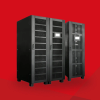
from Shenzhen Xingkerong Technology Co., Ltd
Home // All Collections // UPS Power // Customized 3 Phase 220V/380V/440V/480V/ Low Frequency Industrial Grade 200kva UPS with Isolation Transformer [See More]
- Voltage: 120 (optional feature); 208 (optional feature); 220 (optional feature); 240 (optional feature); 277 (optional feature); 346 (optional feature); 380; 480 (optional feature); 600 (optional feature); 120/240 (optional feature); 120/208 (optional feature); 220/380 (optional feature); 240/480 (optional feature); 277/480 (optional feature); 347/600 (optional feature)
- Volt-Amp Rating: 200
- Protection: Transient; Power Failure; Short Circuit; Under Voltage; Unbalanced Loads
- Half Load Runtime: 150
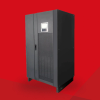
from Shenzhen Xingkerong Technology Co., Ltd
Home // All Collections // UPS Power // High Capacity UPS 400kva/600kva 3 Phase 480V Price Power Backup Uninterrupted Power Supply Ups 480kw Ups for Server [See More]
- Voltage: 120 (optional feature); 208 (optional feature); 220 (optional feature); 240 (optional feature); 277 (optional feature); 346 (optional feature); 380; 480 (optional feature); 600 (optional feature); 120/240 (optional feature); 120/208 (optional feature); 220/380 (optional feature); 240/480 (optional feature); 277/480 (optional feature); 347/600 (optional feature)
- Volt-Amp Rating: 200
- Protection: Transient; Power Failure; Short Circuit; Under Voltage; Unbalanced Loads
- Half Load Runtime: 150

from Eaton | Power Quality
The energy-efficient Eaton 9390 UPS provides backup power and scalable battery runtimes in a small footprint for mid-size data centers, medical equipment and other critical systems. With the groundbreaking Energy Saver System, the 9390 operates at 99% UPS efficiency and can pay for itself in three... [See More]
- Voltage: 208; 380; 480; 600; 415 Volts
- Volt-Amp Rating: 20 to 160
- Protection: Transient; Power Failure; Short Circuit; Surge; Voltage Sags; Under Voltage; Unbalanced Loads
- Wires: 3-Wire; 4-Wire

from Huawei Technologies Co., Ltd.
This modular UPS is designed for large and medium data centers. All modules are hot-swappable, and each cabinet has a maximum capacity of 800 kVA. Maintenance or capacity expansion can be completed in approximately 5 minutes. Efficiency is 96.5% at 20% load and 97% at 40% load. For a reliable,... [See More]
- Voltage: 380; 400V/415V
- Volt-Amp Rating: 50 to 800
- Protection: Under Voltage
- Operating Temperature: 32 to 104

from SOCOMEC
Specially engineered to power and protect typical industrial equipments such as motors, motor speed drivers, lamps, non linear loads, welding equipments, power supplies, MASTERYS IP+ is also perfectly able to supply control equipments like programmable controllers, sensors and measurement apparatus... [See More]
- Voltage: 380; 400 V (380/415 V configurable)
- Protection: Transient; Power Failure; Voltage Sags; Unbalanced Loads
- Technology: On-line (Double-conversion)
- Volt-Amp Rating: 10 to 80

from SOCOMEC
The solution for. • Industry. • Processes. • Infrastructure. • Healthcare. • Service sector. • Telecommunications. Advantages Optimum load protection. • Permanent operation in VFI mode (online double conversion). • The inverter isolation transformer provides... [See More]
- Voltage: 380; 380 V - 400 V - 415 V (configurable)
- Protection: Transient; Power Failure; Voltage Sags
- Technology: On-line (Double-conversion)
- Volt-Amp Rating: 80 to 200