
240 Three Phase Uninterruptible Power Supplies (UPS)
Description
A 240 Three Phase Uninterruptible Power Supply (UPS) is designed to provide continuous, reliable power to critical systems by maintaining a stable power supply during interruptions or fluctuations in the main power source. It ensures that sensitive equipment receives a consistent and high-quality power supply, preventing disruptions and potential damage caused by power disturbances.
Working Principle
Three-phase UPS systems operate by integrating with existing electrical systems to offer power conditioning, backup protection, and power distribution for loads that require three-phase power. They typically function in one of three modes: on-line or double-conversion, line-interactive, and off-line or standby. In an on-line UPS, the load is continuously powered by a converter that receives input from a DC supply, ensuring zero transition time during power failures. Line-interactive systems work in parallel with the AC power, stepping in fully only when the AC input fails. Off-line systems rely on the power line until a failure occurs, at which point a battery-powered inverter takes over to supply power. These systems are crucial for maintaining uptime and system availability, especially in environments where power quality is critical.
Applications
Three-phase UPS systems are widely used in various sectors where power reliability is paramount. Specific applications include medical facilities, where they support life-saving equipment; data centers, ensuring the integrity of data storage and computer systems; and industrial processing plants, where they maintain continuous operation of critical machinery. They are also essential in telecommunications to keep communication lines operational during power outages and in emergency equipment to ensure readiness at all times.
Advantages over other Three Phase Uninterruptible Power Supplies (UPS)
One significant advantage of certain three-phase UPS systems is their low input Total Harmonic Distortion (THDi), which can be less than or equal to 5%. This feature reduces the need to oversize generators, breakers, and other input components, leading to cost savings. Additionally, on-line or double-conversion UPS systems provide seamless power transition, which is critical for applications that cannot tolerate even the slightest power interruption.
Limitations
Despite their advantages, three-phase UPS systems can have limitations. They may require significant initial investment and installation costs, especially for high-capacity units. The complexity of installation and maintenance can also be a challenge, requiring specialized knowledge and skills. Furthermore, the efficiency of these systems can vary, potentially leading to higher operating expenses if not properly managed.
Considerations
When selecting a 240 Three Phase UPS, it is essential to consider factors such as initial costs, which can be substantial depending on the system's capacity and features. Operating expenses should also be evaluated, as they can vary based on the system's efficiency and the cost of electricity. Durability and reliability are crucial, as these systems must operate continuously in critical applications. Additionally, the accuracy of power delivery and the costs associated with replacement and maintenance should be factored into the decision-making process to ensure long-term value and performance.

from GUTOR Electronic LLC
With PFC, harmonic distortion at the input to the UPS is minimized (THDi ≤ 5%), while UPS efficiency is greatly increased (up to 94% efficiency), saving both energy and cost. The PXP is designed to operate in harsh environments and to withstand extremes in temperature, humidity, and mechanical... [See More]
- Voltage: 220; 240
- Volt-Amp Rating: 5 to 160
- Technology: On-line (Double-conversion)
- Interfaces: Serial; Ethernet
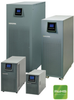
from SOCOMEC
The solution for. • Professional workstations. • Server and corporate networks. • Storage systems. • Industrial automation. • Security systems. • Telecom systems. Advantages High protection and availability. • True online double conversion technology (VFI) assures... [See More]
- Voltage: 208; 220; 240; 230 V
- Protection: Transient; Power Failure; Voltage Sags
- Technology: On-line (Double-conversion)
- Volt-Amp Rating: 1 to 10
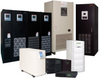
from Toshiba America, Inc.
Single-phase UPS models range from 1 to 22 kVA, while three-phase single module systems range from 13.5 to 2,000 kW, and three-phase parallel module systems are available in 90 to 16,000 kW. These systems are suitable for a wide range of applications including datacenters, telecommunication, retail,... [See More]
- Voltage: 208; 220; 240; 120/208
- Watt Rating: 13.5 to 16000
- Volt-Amp Rating: 1 to 22
- Wires: 4-Wire