
220 Three Phase Uninterruptible Power Supplies (UPS)
Description
A 220 Three Phase Uninterruptible Power Supply (UPS) is designed to provide continuous, reliable power to critical systems and sensitive loads. It ensures that these systems remain operational during power interruptions, voltage sags, swells, spikes, and harmonics. The UPS maintains a stable power supply, preventing disruptions that could affect the performance and safety of essential equipment.
Working Principle
Three-phase UPS systems operate by integrating with existing electrical systems to offer power conditioning, backup protection, and power distribution for loads that require three-phase power. There are three main types of three-phase UPS systems: on-line or double-conversion, line-interactive, and off-line or standby. In an on-line UPS, the load is continuously powered by a converter that receives input from a DC supply, which includes a battery and a large charger. This setup ensures zero transition time from normal to backup mode. Line-interactive UPS systems work in parallel with conditioned AC power, handling full load power only when the AC input fails. Off-line UPS systems typically derive power directly from the power line and switch to battery power when the main power fails. These systems are crucial for maintaining uptime and system availability, especially in environments where power quality is critical.
Applications
Three-phase UPS systems are widely used in various applications that demand high reliability and power quality. Specific examples include medical facilities where they support life-supporting systems, data centers that require uninterrupted power for servers and storage systems, and industrial processing plants where they ensure continuous operation of critical machinery. They are also essential in telecommunications to maintain network operations during power outages and in emergency equipment to provide backup power during crises.
Advantages over other Three Phase Uninterruptible Power Supplies (UPS)
One of the key advantages of a 220 Three Phase UPS is its ability to deliver a regulated sinusoidal output voltage with low total harmonic distortion (THD), independent of changes in input voltage or load. This feature reduces the need to oversize generators, breakers, and other input components, leading to cost savings. Additionally, the on-line operation of these UPS systems ensures zero transition time, which is critical for applications that cannot tolerate even brief power interruptions.
Limitations
While 220 Three Phase UPS systems offer numerous benefits, they also have limitations. These systems can be complex to install and require careful consideration of the electrical infrastructure to ensure compatibility and optimal performance. They may also involve higher initial costs compared to simpler UPS systems, and their maintenance can be more demanding due to the complexity of the components involved.
Considerations
When considering a 220 Three Phase UPS, it is important to evaluate several factors. Initial costs can be significant, so it's crucial to assess the budget and the specific power requirements of the application. Operating expenses, including energy consumption and maintenance, should also be factored into the decision-making process. The durability and reliability of the UPS are vital, as they directly impact the system's ability to provide continuous power. Additionally, the accuracy of the power output and the costs associated with replacement and maintenance should be considered to ensure long-term efficiency and effectiveness.

from GUTOR Electronic LLC
With PFC, harmonic distortion at the input to the UPS is minimized (THDi ≤ 5%), while UPS efficiency is greatly increased (up to 94% efficiency), saving both energy and cost. The PXP is designed to operate in harsh environments and to withstand extremes in temperature, humidity, and mechanical... [See More]
- Voltage: 220; 240
- Volt-Amp Rating: 5 to 160
- Technology: On-line (Double-conversion)
- Interfaces: Serial; Ethernet
from SOCOMEC
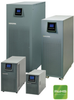
The solution for. • Professional workstations. • Server and corporate networks. • Storage systems. • Industrial automation. • Security systems. • Telecom systems. Advantages High protection and availability. • True online double conversion technology (VFI) assures... [See More]
- Voltage: 208; 220; 240; 230 V
- Protection: Transient; Power Failure; Voltage Sags
- Technology: On-line (Double-conversion)
- Volt-Amp Rating: 1 to 10
from Toshiba America, Inc.
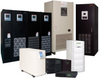
Single-phase UPS models range from 1 to 22 kVA, while three-phase single module systems range from 13.5 to 2,000 kW, and three-phase parallel module systems are available in 90 to 16,000 kW. These systems are suitable for a wide range of applications including datacenters, telecommunication, retail,... [See More]
- Voltage: 208; 220; 240; 120/208
- Watt Rating: 13.5 to 16000
- Volt-Amp Rating: 1 to 22
- Wires: 4-Wire