
Thermo-Electric Cooler Heat Sinks
Last Updated: April 1, 2025
Description
Thermo-Electric Cooler (TEC) Heat Sinks are devices that function as miniature solid-state heat pumps. They are designed to provide localized cooling to devices that require cold temperatures for proper operation. These heat sinks absorb heat from one side and dissipate it on the other, effectively managing thermal conditions in various systems.
Working Principle
Thermo-Electric Cooler Heat Sinks operate based on the Peltier effect, where an electric current is passed through two different conductors, causing heat to be absorbed at one junction and released at the other. This process allows TECs to transfer heat from one side of the device to the other, providing cooling without the need for moving parts or refrigerants. This makes them particularly useful for precise temperature control in sensitive applications.
Applications
Thermo-Electric Cooler Heat Sinks are used in a variety of applications. In space missions, they are employed to cool components such as low noise amplifiers, star trackers, and infrared sensors, as seen in spacecraft like the Hubble Space Telescope and various other missions . On Earth, they are used in automotive and marine mini-refrigerators and night-vision devices .
Advantages over other Heat Sinks
One of the main advantages of Thermo-Electric Cooler Heat Sinks over traditional heat sinks is their ability to provide precise temperature control without moving parts, which reduces the risk of mechanical failure. Additionally, when combined with cooling fans, TECs can enhance cooling capacity and improve heat dissipation efficiency .
Limitations
Thermo-Electric Cooler Heat Sinks have limitations, including their dependency on electrical power to operate, which can lead to higher energy consumption compared to passive heat sinks. They may also have limited cooling capacity compared to more traditional refrigeration methods, making them less suitable for applications requiring significant heat removal.
Considerations
When considering the use of Thermo-Electric Cooler Heat Sinks, it is important to evaluate initial costs, which can be higher due to the complexity of the technology. Operating expenses should also be considered, as TECs require a continuous power supply. Durability is generally high due to the lack of moving parts, but accuracy in temperature control can vary based on the specific design and application. Replacement and maintenance costs are typically lower than those of mechanical cooling systems, but the overall efficiency and suitability should be assessed based on the specific thermal management needs of the application.
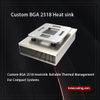
from ToneCooling Technology Co., Ltd
The BGA 2518 is a type of CPU socket used for Intel Xeon D processors. These processors are often found in embedded systems and other applications where space is at a premium. Effective cooling is essential to maintain the performance and reliability of BGA 2518 CPUs, especially in demanding... [See More]
- Device: Thermo-Electric Cooler
- W: 84
- L: 120
- H: 28.5

from TONGYU Technology Co., Ltd.
Name: CPU Liquid Cooler. Item No.: TY-C03. Material: C1100. Appearance: No oxidation, inner and outer surfaces clean, no impurities. Parameters: 200PSIto detect leak. Application: PC Liquid cooling, CPU heatsink, water cooling, thermoelectric cooling system. Custom Design: Available [See More]
- Device: Thermo-Electric Cooler; Liquid Cooler
- Material: Copper; C1100