
Vapor Cooler Heat Sinks
Last Updated: April 1, 2025
Description
Vapor cooler heat sinks are devices designed to manage and dissipate heat from electronic components. They function by transferring thermal energy away from high-temperature areas to maintain optimal operating temperatures for electronic devices.
Working Principle
Vapor cooler heat sinks operate on the principle of phase change and heat spreading. They typically consist of a sealed chamber containing a working fluid. When heat is applied, the fluid vaporizes, absorbing heat in the process. The vapor then moves to a cooler area within the chamber, where it condenses back into a liquid, releasing the absorbed heat. This cycle of evaporation and condensation allows for efficient heat transfer and distribution, making vapor cooler heat sinks particularly useful for managing hot spots and enhancing the overall thermal performance of electronic devices.
Applications
Vapor cooler heat sinks are commonly used in applications where efficient heat dissipation is critical. Specific examples include:
- Mobile Devices: To manage the heat generated by processors and other components in smartphones and tablets.
- Gaming Consoles: To ensure optimal performance and prevent overheating during intensive gaming sessions.
- Enterprise Applications: In servers, networking, and telecom equipment where high-performance cooling is essential.
- Industrial Equipment: For managing heat in machinery and electronic controls.
- Medical Devices: To maintain the reliability and accuracy of sensitive medical equipment.
Advantages over other Heat Sinks
Vapor cooler heat sinks offer several advantages over traditional heat sinks:
- Enhanced Heat Spreading: They provide superior heat spreading capabilities, making all fins attached to the heat sink as efficient as possible.
- Higher Thermal Conductivity: They enable much higher effective thermal conductivities compared to materials like graphite.
- Efficiency in Hot Spot Management: Vapor cooler heat sinks are particularly effective in managing hot spots, which can be a limitation for other types of heat sinks.
Limitations
Despite their advantages, vapor cooler heat sinks have some limitations:
- Complexity: The design and manufacturing process can be more complex compared to traditional heat sinks.
- Cost: They may be more expensive due to the materials and technology involved.
- Customization Requirements: They often need to be customized for specific applications, which can increase lead times and costs.
Considerations
When considering vapor cooler heat sinks, several factors should be taken into account:
- Initial Costs: The upfront cost can be higher due to the advanced technology and materials used.
- Operating Expense: While they are efficient, the operating costs should be evaluated in the context of the specific application.
- Durability: Vapor cooler heat sinks are generally durable, but their performance can be affected by the quality of the materials and manufacturing processes.
- Maintenance and Replacement Costs: These devices typically require minimal maintenance, but replacement costs can be significant if the system fails or needs upgrading.
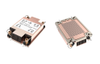
from ToneCooling Technology Co., Ltd
This compact TC-LGA4189 CPU cooler combines a vapor chamber (VC) soaking plate with copper fins to provide efficient cooling for Intel Xeon processors in space-constrained server environments. It ’s designed for reliable thermal management in 1U and 2U chassis. Advanced Phase-Change Vapor... [See More]
- Device: Active Heat Sink; Vapor Cooler
- W: 78
- L: 113
- H: 25

from Rego Electronics Inc.
A vapor chamber is a high-end thermal management device that can rapidly spread heat from a small source to a large platform of area. A properly designed vapor chamber with heat sink can improve the thermal performance by 10- 30% over copper, and heat pipe based solutions. A vapor chamber is much... [See More]
- Device: Vapor Cooler
- W: ? to 400
- L: ? to 400
- H: ? to 3

from Wanbang Technology (Guangdong Dongguan) Co., LTD.
We provide OEM CNC machined heat sink, modest price, short lead time and good quality. [See More]
- Device: Passive Heat Sink; Vapor Cooler; Cold Plate
- Mounting: Holes
- Heat sink Fin Style:: Round; Elliptical; Straight; Machined
- Material: Aluminum