
Right Hand Helical Gears
Last Updated: April 1, 2025
Description
Right Hand Helical Gears are mechanical components designed to transmit torque between shafts. They feature angled gear teeth that engage gradually, allowing for a smoother and quieter operation compared to other types of gears. These gears are characterized by their right-hand orientation, which refers to the direction in which the gear teeth are cut.
Working Principle
The working principle of Right Hand Helical Gears involves the gradual engagement of angled gear teeth. As the gears rotate, contact starts at one end of the gear tooth and increases until the input and output teeth are fully engaged. This design allows for a greater load-carrying capacity because more gear teeth share the load at any given time, reducing stress and wear on the gears. The gradual engagement also contributes to smoother and quieter operation, making them useful in applications where noise reduction is important. Additionally, the helical design allows for bi-directional operation and can handle higher thrust loads while maintaining lower operating temperatures .
Applications
Right Hand Helical Gears are commonly used in gear reducers, which are essential in various industrial applications. They are particularly useful in situations where torque needs to be transmitted between parallel or perpendicular shafts. Specific examples include their use in conveyor systems, automotive transmissions, and industrial machinery where smooth and quiet operation is crucial .
Advantages over other Helical Gears
One of the advantages of Right Hand Helical Gears over other helical gears is their ability to handle higher thrust loads while maintaining lower operating temperatures. This makes them suitable for applications requiring high precision and durability. Additionally, their bi-directional capability allows for more versatile applications compared to gears that only operate in one direction .
Limitations
A notable limitation of Right Hand Helical Gears is the complexity involved in their machining and finishing processes, which can lead to higher maintenance costs. The angled contact surfaces of the gears also generate axial thrust loads, necessitating the use of thrust bearings to prevent misalignment in the transmission system .
Considerations
When considering the use of Right Hand Helical Gears, it is important to factor in initial costs, which may be higher due to the complex design and manufacturing processes. Operating expenses can also be significant, given the need for regular maintenance to ensure optimal performance and longevity. Durability is generally high, but the gears require precise alignment and lubrication to minimize wear and extend service life. Replacement and maintenance costs should be anticipated, as the complexity of the gear design can make these processes more challenging and costly .
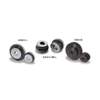
from Stock Drive Products & Sterling Instrument - SDP/SI
You May Also Need: Shafts. Bearings. Couplings. Helical gears are comparable to spur gears, but due to the higher contact ratio, they are quieter, vibrate less, and experience less friction. Helical gear pairs have the same helix angle but opposite threads (left-hand and right-hand). Helical gears... [See More]
- Direction: Right
- Pressure Angle: 20°
- Number of Teeth: 13
- OD: 30.6

from ATLANTA Drive Systems, Inc.
Welcome to the widest range of standard racks & pinions in the World! Consisting of both helical & straight (spur) tooth versions, in an assortment of sizes, materials and quality levels, to meet almost any axis drive requirements. These drives are perfect for a wide range of applications,... [See More]
- Direction: Right
- Design: Metric
- Number of Teeth: 75
- Pressure Angle: 20°