
Cast Iron Helical Gears
Last Updated: April 1, 2025
Description
Cast iron helical gears are mechanical components designed to transmit torque between shafts. They feature angled gear teeth that engage gradually, allowing for a smooth transfer of power. These gears are known for their durability and ease of manufacture due to the properties of cast iron.
Working Principle
Helical gears operate by transmitting torque between parallel or perpendicular input and output shafts. The angled teeth engage gradually, starting at one end of the gear tooth and increasing as the gears rotate until fully engaged. This gradual engagement allows for a greater load-carrying capacity, as more gear teeth share the load at any given time. This results in lower stress and reduced wear on the gears, enabling smoother and quieter operation compared to other gear types like spur gears. However, the angled contact surfaces generate axial thrust loads, which must be countered by thrust bearings to prevent misalignment.
Applications
Specific applications for cast iron helical gears include their use in gear reducers, where they are valued for their ability to handle high loads and provide smooth, quiet operation. They are commonly found in industrial machinery where durability and reliability are critical.
Advantages over other Helical Gears
Cast iron helical gears offer the advantage of durability and ease of manufacture. The material's inherent properties make these gears robust and capable of withstanding significant wear and tear, which can be beneficial in heavy-duty applications.
Limitations
One of the primary limitations of cast iron helical gears is the complexity involved in their machining and finishing, which can lead to higher maintenance costs. Additionally, the axial thrust generated by the angled teeth requires the use of thrust bearings to prevent misalignment, adding to the complexity and potential cost of the system.
Considerations
When considering cast iron helical gears, it is important to account for initial costs, which may be higher due to the complexity of manufacturing. Operating expenses can also be significant, given the need for regular maintenance to manage wear and axial thrust. However, the durability of cast iron can lead to a longer lifespan, potentially offsetting some of these costs. Accuracy in gear alignment and installation is crucial to prevent misalignment and ensure optimal performance. Replacement and maintenance costs should also be factored into the overall cost of ownership, as these can be substantial over the gear's operational life.
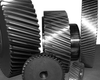
from Circle Gear & Machine Co., Inc.
Circle Gear & Machine Company Co. offers extensive manufacturing capabilities for helical gears in diverse sizes, types, base materials, and shaft types. We can produce large-scale helical gears, measuring up to 120" in diameter. Diametrical pitch can run to 1.25, with up to a 20 module. The... [See More]
- Material: Aluminum; Brass; Bronze; Cast Iron; Steel; Stainless; Acetal; Delrin; Nylon; Polycarbonate; Ductile Iron; Polyester
- OD: 120
- Design: English
- Face Width: 120.00
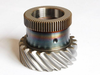
from Shenzhen Besta Precision Machinery Co., Ltd.
Besta offers extensive manufacturing capabilities for helical gears in diverse sizes, types, base materials, and shaft types. We can produce large-scale helical gears, measuring up to 1200mm in diameter. Diametrical pitch can run to 1.25, with up to a 20 module. The minimum diametrical pitch of... [See More]
- Material: Aluminum; Brass; Bronze; Cast Iron; Steel; Stainless; Acetal; Delrin; Nylon; Polycarbonate
- Module: 0.5 - 25
- Design: Metric
- OD: 1600