
Aluminum Helical Gears
Last Updated: April 1, 2025
Description
Aluminum helical gears are mechanical components designed to transmit torque between shafts. They feature angled gear teeth that engage gradually, allowing for a smooth transfer of power. These gears are typically used in systems where low gear inertia and some resiliency are required.
Working Principle
Helical gears work by transmitting torque between parallel or perpendicular input and output shafts. The angled teeth of the gears engage gradually, starting at one end of the gear tooth and increasing as the gears rotate until fully engaged. This gradual engagement allows for a greater load-carrying capacity, as more gear teeth share the load at any given time. This results in lower stress and reduced wear on the gears, enabling smoother and quieter operation compared to other types of gears, such as spur gears.
Applications
Aluminum helical gears are used in applications where low inertia and smooth operation are critical. Specific examples include precision instruments and devices where weight reduction is important, such as aerospace components or lightweight robotics. They are also suitable for environments where corrosion resistance is necessary, given aluminum's natural resistance to corrosion.
Advantages over other Helical Gears
Aluminum helical gears offer the advantage of low inertia, which is beneficial in applications requiring quick acceleration and deceleration. This makes them particularly useful in high-speed applications where minimizing the weight of moving parts is crucial. Additionally, aluminum's natural corrosion resistance provides an advantage in environments where exposure to moisture or chemicals is a concern.
Limitations
One limitation of aluminum helical gears is their lower strength compared to gears made from harder materials like steel. This can limit their use in high-load applications. Additionally, aluminum gears may require more frequent maintenance or replacement due to wear, especially in applications involving high torque or heavy loads.
Considerations
When considering aluminum helical gears, it's important to evaluate initial costs, which may be higher due to the complexity of machining and finishing. Operating expenses can also be influenced by the need for regular maintenance and potential replacement costs due to wear. Durability and accuracy are generally lower compared to steel gears, so applications should be carefully assessed to ensure that aluminum is the appropriate material choice. Additionally, the use of thrust bearings and high-pressure lubricants may be necessary to counteract axial thrust and ensure proper alignment during operation.
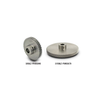
from Stock Drive Products & Sterling Instrument - SDP/SI
You May Also Need: Shafts. Bearings. Couplings. Helical gears are comparable to spur gears, but due to the higher contact ratio, they are quieter, vibrate less, and experience less friction. Helical gear pairs have the same helix angle but opposite threads (left-hand and right-hand). Helical gears... [See More]
- Material: Aluminum; AGMA Q10 / Aluminum
- Design: English
- Number of Teeth: 100
- Pressure Angle: 20°
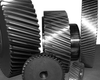
from Circle Gear & Machine Co., Inc.
Circle Gear & Machine Company Co. offers extensive manufacturing capabilities for helical gears in diverse sizes, types, base materials, and shaft types. We can produce large-scale helical gears, measuring up to 120" in diameter. Diametrical pitch can run to 1.25, with up to a 20 module. The... [See More]
- Material: Aluminum; Brass; Bronze; Cast Iron; Steel; Stainless; Acetal; Delrin; Nylon; Polycarbonate; Ductile Iron; Polyester
- OD: 120
- Design: English
- Face Width: 120.00

from York Industries, Inc.
York manufactures custom spur gears, helical gears, worms, worm gears, gear racks and sprockets to your specifications in prototype through production quantities. Our pitch capacity ranges from 6 DP to 120 DP, including metric (module) pitches. We work with a variety of materials, including, steel,... [See More]
- Material: Aluminum; Brass; Bronze; Steel; Machined Plastic
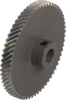
from Ondrives.US Corporation, formerly Rino Mechanical
Helical cut gears are similar to spur gears with their teeth cut at an angle. The most popular helical gear design is 45 degrees. Helical cut gears can have a right hand or a left hand gear helix. When 45 ° helical gears of the opposite hand operate together they will turn parallel shafts in... [See More]
- Material: Aluminum; Stainless
- Design: English
- Number of Teeth: 10 to 160
- Features: Anti-backlash
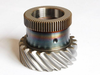
from Shenzhen Besta Precision Machinery Co., Ltd.
Besta offers extensive manufacturing capabilities for helical gears in diverse sizes, types, base materials, and shaft types. We can produce large-scale helical gears, measuring up to 1200mm in diameter. Diametrical pitch can run to 1.25, with up to a 20 module. The minimum diametrical pitch of... [See More]
- Material: Aluminum; Brass; Bronze; Cast Iron; Steel; Stainless; Acetal; Delrin; Nylon; Polycarbonate
- Module: 0.5 - 25
- Design: Metric
- OD: 1600