
Acetal Helical Gears
Last Updated: April 1, 2025
Description
Acetal helical gears are a type of gear made from acetal plastic, known for its strength, durability, and low friction properties. These gears are designed to transmit torque between shafts that are either parallel or at an angle to each other. The helical design features angled teeth, which allows for a more gradual engagement between the gears, resulting in smoother operation.
Working Principle
Helical gears work by having their teeth cut at an angle to the face of the gear. This angled design allows the teeth to engage gradually as the gears rotate, starting contact at one end of the tooth and increasing until fully engaged. This gradual engagement reduces stress and wear on the gears, allowing them to carry greater loads compared to spur gears. The angled teeth also contribute to quieter and smoother operation, making them useful in applications where noise reduction is important.
Applications
Acetal helical gears are commonly used in applications where noise reduction and smooth operation are critical. Specific examples include automotive transmissions, where the quiet and efficient transfer of power is essential, and in household appliances like washing machines and dryers, where noise reduction is a priority.
Advantages over other Helical Gears
Acetal helical gears offer several advantages over metal helical gears. They are quieter in operation due to the inherent noise-dampening properties of plastic. Additionally, acetal gears are corrosion-resistant, making them suitable for environments where metal gears might degrade. They are also lighter, which can be beneficial in applications where weight is a concern.
Limitations
One limitation of acetal helical gears is their reduced strength compared to metal gears, which can limit their use in high-load applications. They are also more susceptible to temperature changes, which can affect their performance and dimensional stability. Additionally, acetal gears can be vulnerable to certain chemicals, which may cause degradation over time.
Considerations
When considering acetal helical gears, it's important to evaluate the initial costs, which are generally lower than metal gears due to the material and manufacturing processes. Operating expenses can be reduced due to their low maintenance requirements and durability. However, their accuracy might not match that of precision-machined metal gears, and replacement and maintenance costs should be considered in environments where chemical exposure or high temperatures are factors.
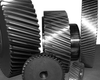
from Circle Gear & Machine Co., Inc.
Circle Gear & Machine Company Co. offers extensive manufacturing capabilities for helical gears in diverse sizes, types, base materials, and shaft types. We can produce large-scale helical gears, measuring up to 120" in diameter. Diametrical pitch can run to 1.25, with up to a 20 module. The... [See More]
- Material: Aluminum; Brass; Bronze; Cast Iron; Steel; Stainless; Acetal; Delrin; Nylon; Polycarbonate; Ductile Iron; Polyester
- OD: 120
- Design: English
- Face Width: 120.00
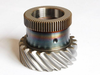
from Shenzhen Besta Precision Machinery Co., Ltd.
Besta offers extensive manufacturing capabilities for helical gears in diverse sizes, types, base materials, and shaft types. We can produce large-scale helical gears, measuring up to 1200mm in diameter. Diametrical pitch can run to 1.25, with up to a 20 module. The minimum diametrical pitch of... [See More]
- Material: Aluminum; Brass; Bronze; Cast Iron; Steel; Stainless; Acetal; Delrin; Nylon; Polycarbonate
- Module: 0.5 - 25
- Design: Metric
- OD: 1600