
Carbon / Alloy Steel Helical Gears
Last Updated: April 1, 2025
Description
Carbon and alloy steel helical gears are mechanical components designed to transmit torque between shafts. These gears feature angled teeth that engage gradually, allowing for a smoother transfer of power. The use of carbon and alloy steel in their construction provides these gears with enhanced strength and durability, making them suitable for handling significant loads.
Working Principle
Helical gears operate by transmitting torque between parallel or perpendicular shafts through their angled gear teeth. The gradual engagement of the teeth, starting at one end and increasing as the gears rotate, allows for a greater load-carrying capacity. This design reduces stress and wear on the gears, resulting in smoother and quieter operation compared to other gear types, such as spur gears. The angled contact surfaces, however, generate axial thrust loads that must be countered by thrust bearings to prevent misalignment.
Applications
Helical gears are commonly used in various industrial applications where smooth and quiet operation is essential. Specific examples include automotive transmissions, conveyor systems, and heavy machinery. Their ability to handle high loads and operate quietly makes them ideal for these demanding environments.
Advantages over Other Helical Gears
Carbon and alloy steel helical gears offer superior durability and corrosion resistance compared to those made from other materials. The addition of minerals to alloy steel can further harden the gear, enhancing its performance in harsh conditions. This makes them particularly advantageous in applications where long-term reliability and resistance to environmental factors are critical.
Limitations
One of the primary limitations of helical gears is the complexity involved in their machining and finishing, which can lead to higher maintenance costs. Additionally, the axial thrust generated by the angled teeth requires the use of thrust bearings, adding to the overall system complexity and potential points of failure.
Considerations
When selecting carbon or alloy steel helical gears, several factors should be considered:
- Initial Costs: The complexity of manufacturing helical gears can result in higher initial costs compared to simpler gear types.
- Operating Expense: The need for thrust bearings and high-pressure lubricants can increase operating expenses.
- Durability: The use of carbon and alloy steel provides excellent durability, making these gears suitable for long-term use in demanding applications.
- Accuracy: The precision required in the gear's design and manufacturing ensures efficient operation but may also increase costs.
- Replacement and Maintenance Costs: While durable, the complexity of helical gears can lead to higher maintenance and replacement costs over time, especially if not properly maintained.

from York Industries, Inc.
York manufactures custom spur gears, helical gears, worms, worm gears, gear racks and sprockets to your specifications in prototype through production quantities. Our pitch capacity ranges from 6 DP to 120 DP, including metric (module) pitches. We work with a variety of materials, including, steel,... [See More]
- Material: Aluminum; Brass; Bronze; Steel; Machined Plastic
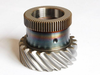
from Shenzhen Besta Precision Machinery Co., Ltd.
Besta offers extensive manufacturing capabilities for helical gears in diverse sizes, types, base materials, and shaft types. We can produce large-scale helical gears, measuring up to 1200mm in diameter. Diametrical pitch can run to 1.25, with up to a 20 module. The minimum diametrical pitch of... [See More]
- Material: Aluminum; Brass; Bronze; Cast Iron; Steel; Stainless; Acetal; Delrin; Nylon; Polycarbonate
- Module: 0.5 - 25
- Design: Metric
- OD: 1600
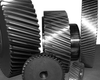
from Circle Gear & Machine Co., Inc.
Circle Gear & Machine Company Co. offers extensive manufacturing capabilities for helical gears in diverse sizes, types, base materials, and shaft types. We can produce large-scale helical gears, measuring up to 120" in diameter. Diametrical pitch can run to 1.25, with up to a 20 module. The... [See More]
- Material: Aluminum; Brass; Bronze; Cast Iron; Steel; Stainless; Acetal; Delrin; Nylon; Polycarbonate; Ductile Iron; Polyester
- OD: 120
- Design: English
- Face Width: 120.00

from ATLANTA Drive Systems, Inc.
Our Integrated Racks mount directly to most standard linear guides (HIWIN, IKO, INA, NSK, SKF, Star, THK, etc.), eliminating the need for additional machining and alignment, saving time and money. Key benefits include: Eliminates the need for a separate mounting surface for the rail. Additional... [See More]
- Material: Steel
- Design: Metric
- Number of Teeth: 288
- Direction: Right