
Products & Services
See also: Categories | Featured Products | Technical Articles | More Information-
Supplier: Ellsworth Adhesives
Description: DuPont MOLYKOTE® 7 Release Compound Clear White is a grease-like, dimethyl silicone compound that is used as a lubricant, preservative, and a release agent for mold, adhesives, rubber, metals, processing equipment, and plastic extruders. It offers versatility, heat
- Kinematic Viscosity (@ 40°C): 500,000 cSt
- Flash Point: 213.98 F
- Functions: Mold Release / Release Agent
-
Supplier: Ellsworth Adhesives
Description: DuPont MOLYKOTE® 7 Release Compound Clear White is a grease-like, dimethyl silicone compound that is used as a lubricant, preservative, and a release agent for mold, adhesives, rubber, metals, processing equipment, and plastic extruders. It offers versatility, heat
- Kinematic Viscosity (@ 40°C): 500,000 cSt
- Flash Point: 213.98 F
- Functions: Mold Release / Release Agent
-
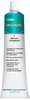
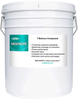
Industrial Lubricants - DuPont MOLYKOTE® 7 Release Compound White 18.1 kg Pail -- 7 CMPD 18.1KG PAILSupplier: Ellsworth Adhesives
Description: DuPont MOLYKOTE® 7 Release Compound Clear White is a grease-like, dimethyl silicone compound that is used as a lubricant, preservative, and a release agent for mold, adhesives, rubber, metals, processing equipment, and plastic extruders. It offers versatility, heat
- Kinematic Viscosity (@ 40°C): 500,000 cSt
- Flash Point: 213.98 F
- Functions: Mold Release / Release Agent
-
-
Supplier: Accuris
Description: COMPOUND, MOLD RELEASE, LIQUID
-
Supplier: Accuris
Description: Test method of the mold release film for thermosetting resin molds -- Fluorine containing compound mold release film
-
Supplier: Accuris
Description: Biodegradability - Organic compounds in an aqueous medium - Determination by analysis of released carbon dioxide
-
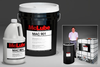
Supplier: McGee Industries, Inc. / McLube Division
Description: McLube 2100 is a colloidal dispersion of finely divided polytetrafluoroethylene (PTFE) particles in water. It has proven an excellent release and anti-stick coating for a variety of rubber compounds and plastic parts.
- Density / Specific Gravity (@15.6°C, 60°F): 1.01 specific gravity
- Type: Anti-Seize / Thread Compound, Fluid / Oil, Micro-dispersion
- Composition / Chemistry: Fluoropolymer / PTFE (e.g., Teflon®)
- Functions: Mold Release / Release Agent
-
Supplier: TFC Ltd.
Description: Loctite 8040 Freeze and Release Releases rusted, corroded and seized components by the shock – freezing effect Wick directly into the rust by capillary action Released parts remain lubricated and protected from corrosion
- Type: Anti-Seize / Thread Compound, Fluid / Oil
-
Supplier: McGee Industries, Inc. / McLube Division
Description: MAC-414 is a water based resin emulsion intended for use as a release coating in rubber molding processes and as an antitack coating for uncured rubber. This product represents an economically attractive replacement for the conventional release and antitack/antistick agents used in in
- Type: Anti-Seize / Thread Compound, Fluid / Oil
- Functions: Mold Release / Release Agent
- Features: Water Soluble / Emulsion
-
Supplier: Henkel Corporation - Industrial
Description: temperatures from room temperature to +275 °F (+135 °C). It chemically bonds to the mold surface to form a micro thin chemically resistant coating. It will release all natural and synthetic organic rubber compounds. Designed to form a semi-permanent release interface on mold
- Features: Mold Release / Release Agent, Synthetic / Semi-synthetic
-
Supplier: McGee Industries, Inc. / McLube Division
Description: MAC-901 is a water dilutable dispersion of solid active ingredients (polytetrafluoroethylene/PTFE) designed to furnish a release, antistick/antitack coating for rubber. It is particularly useful as a replacement for mica, talc, stearates and other similar powders used as antistick agents.
- Type: Anti-Seize / Thread Compound, Fluid / Oil, Micro-dispersion
- Composition / Chemistry: Fluoropolymer / PTFE (e.g., Teflon®)
- Functions: Mold Release / Release Agent
- Features: Water Soluble / Emulsion
-
Supplier: McGee Industries, Inc. / McLube Division
Description: Water based mold release agent supplied as a concentrate. PTFE colorless water based dispersion for general purpose and hard to release compounds. Excellent mold release agent for FKM, ECO, neoprene, and other organic rubber compounds and parts.
- Density / Specific Gravity (@15.6°C, 60°F): 1 specific gravity
- Type: Fluid / Oil, Micro-dispersion
- Composition / Chemistry: Fluoropolymer / PTFE (e.g., Teflon®)
- Functions: Mold Release / Release Agent
-
Supplier: Accuris
Description: SEALING COMPOUND-SINGLE COMPONENT, BUTYL RUBBER BASED, SOLVENT RELEASE TYPE (FOR BUILDINGS AND OTHER TYPES OF CONSTRUCTION)
-
Supplier: ACCRAbond, Inc.
Description: INSTAbond® 826 A low viscosity, two-component epoxy compound that cures at room temperature. High flexibility, high impact resistance, thermal shock, water/chemical resistance, and good mechanical properties. Wicking and air release capabilities of INSTAbond® 826 make it ideal for
- Features: Encapsulant / Potting Compound
- Chemical System: Epoxy (EP)
- Cure / Technology: Two Component System
-
Supplier: Dupont Molykote
Description: Silicone Fluid thickened with inert silica filler APPLICATIONS Automotive spark plug boots, steering and suspension boot seals, etc. FEATURES Lubricant for rubber and plastic O-ring gaskets, seals, and bushings. Chemical and/or water-resistant barrier coating. Sealant and release agent for
- Operating / Use Temperature: -40 to 399.2 F
- Density / Specific Gravity (@15.6°C, 60°F): 1 specific gravity
- Industry Applications: Automotive / Transportation
- Features: Grease / Gel Release, Lubricant
-
Supplier: SAE International
Description: compounds were identified to be potentially released during braking. The major constituents were phenols, aliphatic and aromatic hydrocarbons, and their derivatives. Some of the identified compounds are known to have adverse effects even with mutagenic and carcinogenic potency to
-
Supplier: Bluestar Silicones USA Corp.
Description: Tire Mold Release Coating Properties Viscosity 50 Description ready to use water-based coating designed for use in tire molds. It is a blend of polymers that cures at typical molding temperatures to form a clear, tough bond possessing excellent release and lubrication properties.
- Features: Aerosol / Spray
- Industry Applications: Automotive / Transportation
- Type: Water Soluble / Emulsion
-
Supplier: Bluestar Silicones USA Corp.
Description: Antifoam compound for industrial applications Description Antifoam compound giving high knockdown effect in alkaline media
- Function: Defoamer / Deaerator (Air Release)
- Form & Features: Liquid / Solution
- Applications: Pulp & Paper, Wood Products
-
Supplier: Ellsworth Adhesives
Description: DuPont MOLYKOTE® 316 Silicone Release Agent Clear is a one component, heat-stable silicone compound that is used as a release agent and lubricant for food and industrial applications. It prevents seizing, reduces the adhesion of dried foods and residues to equipment,
- Kinematic Viscosity (@ 40°C): 3 cSt
- Flash Point: 107.6 F
- Functions: Mold Release / Release Agent
- Composition / Chemistry: Silicone
-
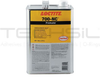
Supplier: Techsil Limited
Description: LOCTITE® FREKOTE 700-NC™ is a great all-purpose release agent. It releases epoxies, polyester resins, thermoplastics, rubber compounds and most other moulded polymers.
-
Supplier: Bluestar Silicones USA Corp.
Description: Versatile antifoam compound Properties Viscosity 1600 Description Versatile antifoam compound with good knock down effect
- Form & Features: Colloid / Dispersion, Liquid / Solution
- Function: Defoamer / Deaerator (Air Release)
-
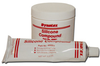
Supplier: DME Company
Description: Helps remove plastic residue from screws, barrels & end caps! Similar to Dow Corning 111 Operating Range: -40°F to +400°F Corrosion protectorant/Release agent Part# Size 1-4 5+ Chemically inactive - Non-solidifying Right from the tube or thin with mineral spirits Won't carbonize or harden
-
Supplier: Indium Corporation
Description: Indium sulfide (In2S3) is an orange-red to red colored powder with the sulfuric odor that is characteristic to all sulfides. It is insoluble in water and most organic solvents but decomposes in common mineral acids, releasing hydrogen sulfide gas. Indium sulfide is primarily used as a buffer layer
- Purity: 99.99 %
- Features: All Non-Metals, Other Metals (Al, In, Sn, Pb, etc.), Sulfides
- State of Matter: Powder
-
Supplier: R. S. Hughes Company, Inc.
Description: Loctite PC 3967 thread repair kit. Minimum to maximum operating temperatures are -65 F to +300 F. Formerly known as Loctite Form-A-Thread Stripped Thread Repair.
- Use Temperature: -65 to 300 F
- Features: Thread Locker / Retainer
-
Supplier: Bluestar Silicones USA Corp.
Description: Bluesil V-711 is a silica-thickened, high molecular weight dimethyl silicone compound. It is a non-curing grease-like paste with a tacky, stiff consistency. Bluesil V-711 possesses excellent dielectric properties and is useful for protecting and sealing electrical and mechanical equipment. It
- Flash Point: 500 F
- Density / Specific Gravity (@15.6°C, 60°F): 1.03 specific gravity
- Industry Applications: Automotive / Transportation, Electrical / Electronic
- Features: Bearings, Dielectric (Transformer / EDM), Lubricant, Specialty / Other
-
Supplier: Wacker Chemical Corp.
Description: use." Because this regulation contains limitations, compliance to the regulation is the responsibility of the user. Special features Good heat resistance High tear resistance Easily pigmented Excellent molding qualities Excellent release from mill or calender
- Tensile Strength (Break): 1,162 psi
- Elongation: 974 %
- Type: Elastomer / Rubber
- Features: Extrusion Grade Resin, Molding Resin, Unfilled
-
Supplier: Henkel Corporation - Industrial
Description: Water-based mould release emulsion for natural and synthetic polymers. Ideal for difficult-to-mould compounds. LOCTITE® FREKOTE R100 is a water-based release agent designed for application to mould surfaces pre-heated to between +60 and +182°C. The product bonds chemically to
- Use Temperature: 199 to 401 F
-
Supplier: SC Hydraulic Engineering Corporation
Description: SC Pressure Release Valves are available in normally open and normally closed configurations. All of the valves are air actuated and are compatible with most fluids including water and synthetic compounds. Seals are Buna-N as standard (-N). Substitute "-V" for Viton® seals or "-E" for
- Valve Size: 0.25 inch
- Pressure Rating: 5,000 psi
- Controlled Pressure Range: 5,000 psi
- Number of Ports/Ways: 2
-
Supplier: ASTM International
Description: 1.1 This test method covers the determination of the amount of volatile organic compound (VOC) released from applied solventborne automotive coatings that is available for delivery to a VOC control device. This is accomplished by measuring the weight loss of a freshly coated test panel
-
Supplier: Wacker Chemical Corp.
Description: Pourable, addition-curing, two-component silicone rubber that vulcanizes at room temperature. Special features very good flow excellent mould release; usually no further release agent required fast and non-shrink cure at room temperature which can be accelerated considerably by the
- Tensile Strength (Break): 725.184196785985 psi
- Elongation: 330 %
- Features: Casting Resin, Unfilled
- Type: Elastomer / Rubber
-
Supplier: Techsil Limited
Description: Techsil® Techwax Release Agent is a blend of waxes dispersed in fast drying CFC free solvent. Techwax has been designed to maintain high definition and easy mold release when using polyurethanes, polyester resins, GRP & silicone rubber. Techwax can be used in silicone rubber molds
-
Supplier: Chase Products Co.
Description: Silicone Mold Release Spray is a colorless, dry spray that reduces friction and buildup on molds without leaving an oily or greasy surface. Dries fast. Extends the life of equipment. Cuts cleanup time. This non-staining formula has a low surface tension and performs in temperatures from -47°F
- Operating / Use Temperature: -47 to 399 F
- Form: Aerosol
- Features: Coating, Other
- Location / Orientation: Exterior, Interior
-
Supplier: ASTM International
Description: 1.1 This test method describes the determination of the amount of volatile organic compound (VOC) released from applied waterborne automotive coatings that is available for delivery to a VOC control device. The determination is accomplished by measuring the weight loss of a freshly coated
-
Supplier: Techsil Limited
Description: release film RF-5215 can be easily be stripped and washed from the mold or model with water. Please note, this product is not recommended for use with resins containing water or giving off water during cure or with automotive finishes as damage may occur.












Find Suppliers by Category Top
Featured Products Top
-
 Battery systems generate heat during charging and discharging, and that heat becomes harder to manage as packs become more compact and energy-dense. If the heat cannot be released in time, it can affect performance, shorten service life, and increase safety risks (read more)
Browse Thermal Compounds and Thermal Interface Materials Datasheets for Dongguan Sheen Electronic Technology Co., Ltd. -
door controller manufacturer was dealing with a phase-change material that performed well in theory but created problems on the line. It had to be peeled from the release film extremely quickly, often (read more)
Browse Thermal Compounds and Thermal Interface Materials Datasheets for Dongguan Sheen Electronic Technology Co., Ltd. -
Superior Thermal Transfer from New Form-In-Place Gap Filler Fujipoly® America announces the release of its new (read more)
Browse Conductive Compounds Datasheets for Fujipoly® America Corp. -
hardened surface on one side for more complex assemblies. This special treatment can dramatically reduce elongation, tearing and damage during cutting and final assembly. It also allows for a more controlled release during re-work. Learn More (read more)
Browse Thermal Compounds and Thermal Interface Materials Datasheets for Fujipoly® America Corp. -
New 13-Watt Thermal Gap Filler Fujipoly® recently released Sarcon® GR130A, its newest high (read more)
Browse Thermal Compounds and Thermal Interface Materials Datasheets for Fujipoly® America Corp. -
In high-precision optical equipment, temperature control directly affects imaging quality, alignment accuracy, and long-term stability. Traditional silicone thermal pads offer good thermal conductivity but may release silicone oil, which can contaminate lenses (read more)
Browse Thermal Compounds and Thermal Interface Materials Datasheets for Dongguan Sheen Electronic Technology Co., Ltd. -
silicone-based thermal interface materials (TIMs) pose a significant hidden risk. Over time and under heat, they release volatile silicone vapors that condense on delicate lenses and laser emitters within the LiDAR assembly, leading to clouding, signal scattering, and measurement drift. This (read more)
Browse Thermal Compounds and Thermal Interface Materials Datasheets for Dongguan Sheen Electronic Technology Co., Ltd. -
Fujipoly® recently released SARCON® GR100A series, its newest high-performance, thermal gap filler pad. The highly conformable, gel-like sheets exhibit a thermal resistance as low as 0.05 K-in2/W at 72.5 PSI with a thermal conductivity of 10 W/m°K. SARCON® GR100A is (read more)
Browse Thermal Compounds and Thermal Interface Materials Datasheets for Fujipoly® America Corp. -
directly impacts the performance and lifespan of the devices. To solve this problem, SHEEN thermal conductive silicone sheets have been introduced into Bluetooth speaker designs, acting like an invisible pair of wings that allow the music to soar and release its true charm. SHEEN (read more)
Browse Thermal Compounds and Thermal Interface Materials Datasheets for Dongguan Sheen Electronic Technology Co., Ltd. -
Pharmaceutical Compounding Solutions for unparalleled visibility into the preparation of Compounded Sterile Products. In 2004, the United States Pharmacopeia issued chapter 797 (read more)
Browse Clean Benches Datasheets for Baker
Conduct Research Top
-
Volatile Organic Compounds
of the 1970 law occurred with the 1990 Clean Air Act Amendments, which are often referred to as the 1990 Clean Air Act. These revisions increased efforts to reduce emissions of volatile organic compounds (VOC) and hazardous air pollutants (HAP'S). Facilities releasing materials into the air must have
-
Controlled Release Moves Beyond Patent Extension
release (CR) provides a straightforward route to new products with reduced toxicity and side effects, more desirable pharmacokinetics and better patient compliance. Until recently, CR was viewed primarily as a lifecycle management tool, which some observers unjustly criticized as mere gaming
-
Fluon TM PTFE Micropowders Outperform Conventional Lubricant Additives for Rubber Compounds
Many natural rubber and synthetic elastomer products used in the automotive and consumer durable industries are compounded with lubricating additives for improved tribological performance as well as processing advantages. Products like O-rings, hoses, fan belts, strips, seals and gaskets require
-
3M TM Dynamar TM RA 5300 Rubber Process Additive for FKM Compounds
Based on experimental results described in this paper, the use of 3M TM Dynamar TM RA 5300 as a process aid in fluoroelastomer compounds. offers both processing and performance improvements over many commercial products typically used in the industry. Sharper edges and. smoother surfaces were
-
Air-Handling With Care Table III. Concentration of Gas Release After One Hour
filtered outside air is introduced into a room to dilute the concentration of compounds in that room. As the flow rate of air supplied to a suite increases, the compound concentration will be more diluted. However, this effect is nonlinear; the marginal effect of higher air change rates is small
-
Improving Incinerator Operation with Advanced Flue Gas Analysis
Sulfur plant tail gas incinerators are used to oxidize sulfur compounds that cannot be released directly into the atmosphere. These sulfur compounds include H2S, COS and CS2. Incinerators are operated at temperatures that are sufficient for oxidation of the sulfur compounds to SO2 as well
-
EETimes.com | Electronics Industry News for EEs & Engineering Managers
AMD set to release 750-MHz Athlon MPU TSMC's North American president resigns SEZ receives its biggest order from Taiwan's Nanya SVG gets first order for ProCell resist tool Mitel masses ASIC muscle for assault on communications market Low-power portfolio launches NanoAmp into new markets S3
-
Ask Andy: Use of Aqueous Cleaners and VOC Emission Enforcement
Volatile organic compounds (VOCs) are regulated at the federal and state levels because their environmental release results in photochemical reactions causing ground-level ozone, or smog, formation. Health impacts are also a concern, as VOCs have been implicated in various respiratory conditions.
More Information Top
 Indicates content that may require registration and/or purchase.

-
Directory of Microbicides for the Protection of Materials
5.3.2.1 Halogens and hypohalogenites and halogen release compounds [II, 21.2.] .
-
Plant-Plant Allelopathic Interactions II
For the released compounds and the treated and untreated leach- ates conventional biochemical techniques or metabolic profiling can be used to provide insight regarding the organic compounds that may be responsible for the observed effects.
-
Allelopathy
…allelopathy is evolutionary significant one should be able to show that a plant releases, synthesizes or allocates phytochemicals in order to affect the growth of other plants (see Siemens et al. 2002), not just that the released compounds have toxic effects on…
-
Deciphering Chemical Language of Plant Communication
• Understand how pollution can both influence plant volatile production and impact the efficiency of communication by released compounds .
-
Bioactive Food Packaging: Strategies, Quality, Safety
erties of natural phenols and released compounds .
-
Allelopathy
The incorporation to soil of fresh and dry tissues of S. deppei releases compounds that negatively affect the growth of tomato and induce oxidative damage in their leaves (Cruz-Ortega et al. 2008).
-
Introduction to Phytoremediation of Contaminated Groundwater
They reported the induc- tion of the gene nahG by plant- released compounds such as salicylate, with no expression observed in the presence of root exudates.
-
Handbook of Hydrocarbon and Lipid Microbiology
This bacterial movement can be passive via soil water fluxes, or active, via specific induction of flagellar activity by plant- released compounds (chemotaxis).