
IC Bus Interfaces and Controllers Information
Last revised: January 10, 2025
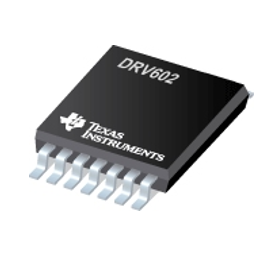
IC bus interfaces and bus controllers or bus masters are interfaces between most standard parallel-bus microcontrollers or microprocessors and the serial bus. There are many different types of IC bus interfaces and controllers. Examples include an IC bus interface, bus controller, bus interface unit and a USB interface.
An IC bus interface needs a common ground, which is the ground plane in circuit board applications and a separate wire in inter-circuit-board connections. A bus controller serves as an interface between most standard parallel-bus microcontrollers/microprocessors and the serial I2C bus.
A bus controller enables a parallel bus system to communicate bi-directionally with the I2C bus and is commonly referred to as the bus master. A bus interface unit is a part of a processor that interfaces with the rest of the PC parts.
A bus interface unit consists of a bus interface circuit which is responsible for responding to all signals that go to the processor, and generating all signals that go from the processor to other parts of a system. A USB interface connects more than computers and peripherals. A USB circuit controller can be used to connect with other people through the power of PC-telephone and video conferencing. Other IC bus interfaces and controllers are also commonly available.
What Do IC Bus Interfaces and Controllers Do?
There are several ways in which IC bus interfaces and bus controllers function. A normal IC bus interface controller chip controller provides the common interface needed for connection of HDD, CD and DVD drives or memory cards, such as CompactFlash, and a single channel for up to two devices in a master/slave configuration.
An advanced bus interface unit requires only two lines (clock and data) for full duplex communication between multiple devices and can run at a fairly low speed (100 kHz to 400 kHz). A USB bus is a bi-directional serial interface cable bus.
Data is transferred at three different rates over a maximum cable length of 4 meters over four wires, two of which carry data on a balanced twisted pair. A USB may operate at any speed from 10kbps to 400Mbps in one of three speed modes. IC bus interfaces and controllers are designed to meet most industry specifications.
How Are They Used?

IC bus interfaces and bus controllers are used in a variety of applications. A growing number of applications demand storage and connectivity for digital content. IC bus interfaces are applied to personal video recorders (PVRs), set top boxes (STBs), information appliances, home gateways, simple routers, and routers with network shared storage and/or printers.
Interfaces such as a USB and IDE are becoming standard for device connectivity and storage. IC bus interfaces and controllers must adhere to the American programming interface (API) standards.
Standards
MIL-M-38510/423 — Microcircuits, digital, Schottky TTL system controller and bus driver, monolithic silicon.
SMD 5962-99581 — Microcircuit, digital, CMOS, bus interface terminal controller, monolithic silicon.
IC Bus Interfaces and Bus Controllers FAQs
What are the main types of IC bus interfaces and their characteristics?
IC bus interfaces include I2C, USB, PCI, cPCI, and PCIe, each with unique characteristics such as data transfer rates, physical connections, and applications. For example, I2C is used for low-speed communication between microcontrollers and peripherals, while PCIe offers high bandwidth for connecting high-performance components like graphics cards and SSDs.
How do IC bus interfaces differ in terms of data transfer rates and applications?
Different IC bus interfaces support varying data transfer rates. I2C supports up to 400 kbit/s, USB ranges from 10 kbps to 400 Mbps, and PCIe provides dedicated bandwidth with rates depending on the number of lanes used. These differences make each interface suitable for specific applications, from consumer electronics to industrial systems.
What are the key differences between various types of IC bus interfaces and their applications in engineering projects?
I2C (Inter-Integrated Circuit) Bus
Characteristics: I2C is designed for communication between integrated circuits on a single board. It uses two bi-directional lines: a serial data line (SDA) and a serial clock line (SCL). The bus supports a master-slave relationship and allows for multiple devices to be connected, each with a unique address.
Data Rate: The maximum data transfer rate is 400 kbit/s.
Applications: I2C is commonly used for interfacing microcontrollers with low-speed peripheral devices such as sensors and displays.
USB (Universal Serial Bus)
Characteristics: USB is a bi-directional serial interface that supports data transfer over a maximum cable length of 4 meters. It uses four wires, two of which carry data on a balanced twisted pair.
Data Rate: USB can operate at speeds ranging from 10 kbps to 400 Mbps, depending on the mode.
Applications: USB is widely used for connecting peripherals to computers and is applied in devices like personal video recorders, set-top boxes, and routers.
PCI (Peripheral Component Interconnect) and Variants
Characteristics: PCI is a local bus system capable of transferring 32 or 64 bits of data at a clock speed of 33 MHz. Compact PCI (cPCI) uses the electrical standards of PCI but is packaged in a rugged Eurocard format. PXI (PCI eXtensions for Instrumentation) is a superset of cPCI with additional timing and triggering functions.
Applications: These buses are used in high-end computers and industrial applications, including instrumentation and data acquisition systems.
VME (VersaModule Eurocard) Bus
Characteristics: VME is a rugged, 32-bit bus used in industrial, commercial, and military applications. It has variations like VME64 and VME320, which offer different performance levels.
Applications: VME is used in environments requiring robust and reliable data transfer, such as military and industrial settings.
Each of these bus interfaces has unique characteristics that make them suitable for specific applications, ranging from consumer electronics to industrial and military systems.
What are the applications of I2C in engineering projects?
The I2C bus is widely used in engineering projects for its simplicity and efficiency in communication between integrated circuits. Here are some key applications of I2C in engineering projects:
Microcontroller Interfacing
I2C is commonly used to interface microcontrollers with various low-speed peripheral devices. This includes sensors, displays, and other components that require communication over short distances on a circuit board.
Sensor Communication
Many digital sensors, such as pressure sensors, utilize the I2C bus for data transmission. This allows for efficient data exchange between the sensor and the microcontroller or processor, facilitating real-time data acquisition and processing.
Consumer Electronics
I2C is employed in consumer electronics for connecting components like LCD displays, EEPROMs, and real-time clocks to the main processor. Its ability to support multiple devices on the same bus makes it ideal for complex systems with numerous peripherals.
Embedded Systems
In embedded systems, I2C is used for communication between different ICs, such as memory chips, ADCs (Analog-to-Digital Converters), and DACs (Digital-to-Analog Converters). This is particularly useful in applications where space and pin count are limited.
Industrial Applications
I2C is also used in industrial applications for monitoring and control systems. It can connect various sensors and actuators to a central controller, enabling efficient data collection and system management.
How does PCIe differ from PCI and cPCI?
PCI (Peripheral Component Interconnect)
Characteristics: PCI is a local bus system capable of transferring 32 or 64 bits of data at a clock speed of 33 MHz. It is widely used in high-end computers and industrial applications.
Applications: PCI is used for connecting various hardware components within a computer, such as network cards, sound cards, and other peripherals.
cPCI (CompactPCI)
Characteristics: CompactPCI is an industrial-strength version of the PCI bus, electrically compatible with PCI but using a passive backplane rather than a PC motherboard architecture. It supports up to eight slots per bus segment and is packaged in a rugged Eurocard format.
Applications: cPCI is used in industrial applications requiring high-speed data transfer, such as computer telephony, industrial automation, and real-time data acquisition.
PCIe (PCI Express)
Characteristics: PCIe is the latest evolution of the PCI standard, offering higher bandwidth and dedicated bandwidth to each device. It uses point-to-point connections called lanes, with each lane providing 250 MB/s per direction for Gen 1 links. PCIe is backward compatible with PCI software.
Applications: PCIe is used for connecting high-performance components such as graphics cards, SSDs, and AI accelerator cards. It is also extensible by external cabling, making it suitable for a wide range of applications.
What are the differences between I2C and other bus interfaces like SPI or UART?
I2C (Inter-Integrated Circuit)
- Communication Type: Half-duplex, allowing data to be transmitted or received at one time.
- Lines Required: Uses two lines, SDA (Serial Data Line) and SCL (Serial Clock Line).
- Data Transfer Speed: Supports multiple modes with speeds ranging from 100 kHz (Standard Mode) to 5 MHz (Ultra-Fast Mode).
- Number of Devices: Can support up to 127 devices on the same bus using 7-bit addressing.
- Protocol Complexity: More complex due to addressing and arbitration, but supports features like multi-master capabilities and error-checking with ACK/NACK signals.
- Power Consumption: Generally lower due to fewer lines and slower speed.
- Applications: Ideal for sensor networks, low-speed data collection, and configurations with multiple devices.
SPI (Serial Peripheral Interface)
- Communication Type: Full-duplex, allowing simultaneous data transmission and reception.
- Lines Required: Requires at least four lines: MISO (Master In Slave Out), MOSI (Master Out Slave In), SCLK (Serial Clock), and SS (Slave Select).
- Data Transfer Speed: Can handle data rates up to 50 Mbps or higher, making it suitable for high-speed applications.
- Number of Devices: Limited by the number of SS lines, which can increase complexity with more devices.
- Protocol Complexity: Simpler protocol with minimal overhead and no addressing scheme.
- Power Consumption: Generally higher due to more lines and faster speed.
- Applications: Preferred for high-speed data transfer, such as digital audio interfaces and flash memory access.
UART (Universal Asynchronous Receiver/Transmitter)
- Communication Type: Asynchronous, meaning it does not require a clock line.
- Lines Required: Typically uses two lines, RX (Receive) and TX (Transmit).
- Data Transfer Speed: Speed is determined by the baud rate, which can vary widely depending on the application.
- Number of Devices: Typically used for point-to-point communication, so it supports two devices.
- Protocol Complexity: Simple protocol without addressing or error-checking mechanisms.
- Power Consumption: Generally low due to fewer lines and asynchronous nature.
- Applications: Commonly used for serial communication in point-to-point connections, such as between a computer and a peripheral device.
IC Bus Interfaces and Bus Controllers Media Gallery
References
GlobalSpec—Counter and Timer Boards
GlobalSpec—CompactPCI and PXI Bus Interfaces Information
GlobalSpec—Industrial Chassis and Card Cages Information
Image credits:
Texas Instruments High-Performance Analog | Data Device Corporation | ROHM Semiconductor, USA LLC
- -3.3 V
- 1.2 V
- 1.5 V
- 1.8 V
- 2.5 V
- 2.7 V
- 3 V
- 3.3 V
- 3.6V
- 5 V
- BGA
- CAN
- CDIP
- CSP
- DIP
- ECL
- ESD Protected
- Ethernet
- FCBGA
- FLGA
- Fibre Channel
- GTLP
- I2C
- IEEE 1394 (FireWire®)
- LCCC
- LIN
- LQFP
- LVCMOS
- LVDS
- MSOP
- PBGA
- PCI
- PCI Express
- PDIP
- PGA
- PLCC
- PQFP
- QFN
- QFP
- QSOP
- RS232
- RS422
- RS485
- RoHS Compliant
- SBGA
- SC-70
- SIP
- SMBus
- SOIC
- SOJ
- SOP
- SOT23
- SPI
- SSOP
- Serial 1-Wire
- Serial 2-Wire
- TQFP
- TSOP Type I, Type II
- TSSOP
- TVSOP
- USB
- VSSOP