Introduction to Aeronautics: A Design Perspective, Second Edition

Chapter 1: Design Thinking

"A scientist discovers that which exists. An engineer creates that which never was."

Theodore von K rm n

1.1 Introduction

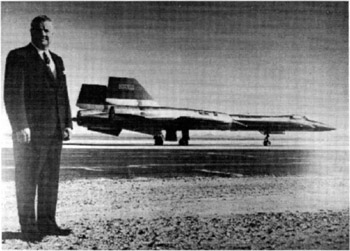
Imagine the thrill Clarence L. "Kelly" Johnson (Fig. 1.1), founder and Chief Engineer of the Lockheed "Skunk Works," felt the first time the YF-12 (forerunner of the SR-71) flew faster than 2000 mph, or the satisfaction Harry Hillaker, Chief Designer of the F-16, felt when his creation became the most numerous jet fighter in the U.S. Air Force and in nine other air forces around the world. Aeronautical engineers live for the opportunity to design an aircraft and then, after years of work, to see it fly. The purpose of this textbook is to teach you how aircraft designers create the aeronautical marvels we take for granted. In the process, you will learn the basic concepts of aeronautical science and develop a working knowledge of the equations that govern aircraft behavior. You will come to understand how an aircraft is shaped and optimized by countless design decisions so that it will be able to perform a specific mission. You will also learn why an aircraft designed for a particular mission looks and performs the way it does. The basic concepts, theories and analysis methods you will learn will provide a solid basis for more advanced studies in aeronautical or aerospace engineering.


Figure 1.1: Kelly Johnson and the YF-12 (courtesy of National Air and Space Museum, NASM A-2065, Smithsonian Institution).

Throughout this text, the emphasis will be on design. The governing equations and...

UNLIMITED FREE
ACCESS
TO THE WORLD'S BEST IDEAS

SUBMIT
Already a GlobalSpec user? Log in.

This is embarrasing...

An error occurred while processing the form. Please try again in a few minutes.

Customize Your GlobalSpec Experience

Category: Aerospace Services
Finish!
Privacy Policy

This is embarrasing...

An error occurred while processing the form. Please try again in a few minutes.