Architectural Acoustics

Character:
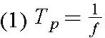
| where T p | = period of one complete vibration (s) |
| f | = frequency (Hz) |
| where ? | = wavelength (ft) |
| c | = speed of sound in air (ft/s) |
| f | = frequency (Hz) |
Magnitude:
| where L i | = sound intensity level (decibels, abbreviated dB) |
| l | = sound intensity (watts/meter squared, abbreviated W/m 2) |
| l 0 | = reference sound intensity (W/m 2, usually taken as 10 ?12 W/m 2 or the equivalent 10 ?16 W/cm 2) |
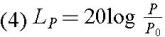
| where L P | = sound pressure level (dB) |
| P | = sound pressure (newtons/meter squared, abbreviated N/m 2, or pascals, abbreviated Pa) |
| P 0 | = reference sound pressure (N/m 2, always taken as 0.00002 N/m 2 |
| Note | L P may be considered equal to L l in most architectural acoustics situations. |
| where L w | = sound power level (dB) |
| W | = sound power (W) |
| W 0 | = reference sound power (W, usually taken as 10 ?12 W) |
| Note | L w is used by testing laboratories to rate a sound source independently of its environment. |
Noise Reduction:
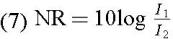
| where NR | = noise reduction, or the difference in sound levels between two conditions (dB) |
| L 1 | = sound level under one condition, usually taken as the higher value (dB) |
| L 2 | = sound level under another condition (dB) |
| where NR | = [see formula (6)] |
| l 1 | = sound intensity under one condition (W/m 2) |
| l 2 | = sound intensity under another condition (W/m 2) |