Civil Engineering License Review, Fifteenth Edition
Including essay and multiple-choice exam problems, this review book offers a detailed discussion of the Civil Engineering/Professional Engineer Exam and how to prepare for it.
 TABLE OF CONTENTS
 This is a review of the field known variously as engineering economics, engineering economy, or engineering economic analysis. Since engineering economics is straightforward and logical, even people who have not had a formal course should be able to gain sufficient knowledge from this chapter to successfully solve most engineering economics problems.
There are 35 example problems scattered throughout the chapter. These examples are an integral part of the review and should be examined as you come to them.
The field of engineering economics uses mathematical and economics techniques to systematically analyze situations which pose alternative courses of action. The initial step in engineering economics problems is to resolve a situation, or each alternative in a given situation, into its favorable and unfavorable consequences or factors. These are then measured in some common unit usually money. Factors which cannot readily be equated to money are called intangible or irreducible factors. Such factors are considered in conjunction with the monetary analysis when making the final decision on proposed courses of action.
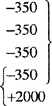
A cash flow table shows the "money consequences" of a situation and its timing. For example, a simple problem might be to list the year-by-year consequences of purchasing and owning a used car:
| Year | Cash Flow | |
|---|---|---|
| Beginning of first year 0 | ?$4500 | Car purchased "now" for $4500 cash. The minus sign indicates a disbursement. |
| End of year 1 |
 | |
| End of year 2 | ||
| End of year 3 | ||
| End... |