
CDIP Sensor Interface Chips
Description
CDIP Sensor Interface Chips are specialized integrated circuits designed to facilitate the interaction between sensors and electronic systems. These chips are responsible for converting non-electrical signals from various sensors into electrical signals that can be processed by electronic circuits. They typically include components such as sensor-excitation circuitry, programmable gain amplifiers, and analog outputs, which are essential for accurate data acquisition from sensors.
Working Principle
CDIP Sensor Interface Chips operate by receiving input signals from sensors, which may include temperature, pressure, or light intensity, and converting these signals into a form that can be processed electronically. The chips often incorporate analog-to-digital converters (ADC) and digital-to-analog converters (DAC) to handle signal conversion and conditioning. This process includes gain and offset adjustment, as well as linearity correction, ensuring that the output signals accurately represent the sensor inputs. The integration of these functions into a single chip enhances signal integrity and reduces the need for external components, making the system more efficient and compact.
Applications
CDIP Sensor Interface Chips are used in a variety of applications where precise sensor data is crucial. Specific examples include:
- Accelerometers and strain gauges, where they help in measuring mechanical stress and movement.
- Piezoresistive pressure sensors and load cells, which require accurate signal conversion for pressure and weight measurements.
- Thermistors and other bridge-type sensors, where they facilitate temperature monitoring and control.
Advantages over other Sensor Interface Chips
One of the key advantages of CDIP Sensor Interface Chips is their ability to self-calibrate, which allows them to achieve high accuracy even when used with sensors that may not be ideal. This feature reduces the need for manual calibration and enhances the reliability of the sensor data. Additionally, the integration of multiple functions such as ADC, DAC, and EEPROM within a single chip reduces the overall system size and cost, making them a cost-effective solution for complex sensor applications.
Limitations
CDIP Sensor Interface Chips, like other integrated sensor solutions, may face limitations in terms of performance when the VLSI fabrication technology is not optimized for sensor production. This can result in suboptimal sensor performance, which may need to be compensated for through sophisticated electronic means. Additionally, the integration of multiple functions into a single chip can sometimes lead to increased complexity in design and troubleshooting.
Considerations
When selecting CDIP Sensor Interface Chips, several factors should be considered:
- Initial Costs: While these chips can reduce system costs by integrating multiple functions, the initial investment in high-quality chips may be significant.
- Operating Expense: The self-calibrating feature can reduce ongoing maintenance costs, but the complexity of the chips may require specialized knowledge for operation and troubleshooting.
- Durability and Accuracy: The chips are designed to provide high accuracy and reliability, but their performance can be affected by environmental factors and the quality of the sensors used.
- Replacement and Maintenance Costs: The integration of multiple functions into a single chip can simplify maintenance, but any failure may require replacing the entire chip, which could be costly. Regular calibration and testing are recommended to ensure long-term performance.
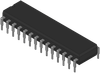
from Rochester Electronics
8251 - Programmable Communication Interface, NMOS, CDIP28 [See More]
- Package Type: DIP; CDIP; CDIP28
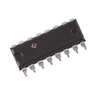
from DigiKey
IC V TO I CONVRTR/XMTR 16-CDIP [See More]
- Package Type: CDIP; "16-CDIP (0.300"", 7.62mm)"
- Operating Temperature: -40 to 85

from Rochester Electronics
8255A - Prog Peripheral Interface [See More]
- Package Type: DIP; CDIP; CDIP40
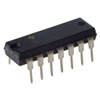
from DigiKey
IC CURRENT TRANSMITTER 14CDIP [See More]
- Package Type: CDIP; "14-CDIP (0.300"", 7.62mm)"
- Operating Temperature: -40 to 85

from Rochester Electronics
Interface Circuit, PDSO14 [See More]
- Package Type: DIP; CDIP; CDIP16
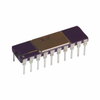
from DigiKey
IC LVDT SIGNAL COND 20-CDIP [See More]
- Package Type: CDIP; "20-CDIP (0.300"", 7.62mm)"
- Operating Temperature: -40 to 85
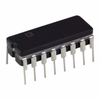
from DigiKey
IC SGNL COND 4-20MA TX 16-CDIP [See More]
- Package Type: CDIP; "16-CDIP (0.300"", 7.62mm)"
- Operating Temperature: -40 to 85
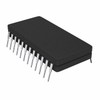
from DigiKey
IC LVDT SGNL COND UNVRSL 24CDIP [See More]
- Package Type: CDIP; "24-CDIP (0.600"", 15.24mm)"
- Operating Temperature: -55 to 125