
LQFP Sensor Interface Chips
Description
LQFP (Low-profile Quad Flat Package) Sensor Interface Chips are designed to facilitate the connection between sensors and other electronic components. These chips serve as a bridge, converting sensor signals into a format that can be easily processed by other devices or systems. They typically include features such as sensor-excitation circuitry, programmable gain amplifiers, and analog outputs, which help in managing and processing the data received from various sensors.
Working Principle
LQFP Sensor Interface Chips operate by receiving raw data from sensors and performing necessary signal conditioning tasks such as gain and offset adjustment, linearity correction, and temperature drift management. These chips often include components like digital-to-analog converters (DAC), analog-to-digital converters (ADC), and electrically-erasable programmable read-only memory (EEPROM) to enhance their functionality. The integration of these components allows the chips to provide high accuracy data from sensors, even if the sensors themselves are not ideal. This makes them particularly useful in applications where precise data acquisition is critical.
Applications
LQFP Sensor Interface Chips are used in a variety of applications, including but not limited to:
- Accelerometers for motion detection in consumer electronics.
- Strain gauges in industrial machinery for stress analysis.
- Piezoresistive pressure sensors in automotive systems for monitoring tire pressure.
- Load cells in weighing systems for accurate weight measurement.
- Thermistors in HVAC systems for temperature regulation.
Advantages over other Sensor Interface Chips
One of the key advantages of LQFP Sensor Interface Chips is their ability to self-calibrate, which ensures high accuracy data acquisition. This feature is particularly beneficial in environments where sensor performance may degrade over time or due to external factors. Additionally, the integration of multiple components such as DACs, ADCs, and EEPROMs within a single chip reduces the need for additional external components, simplifying the design and reducing overall system costs.
Limitations
Despite their advantages, LQFP Sensor Interface Chips may have limitations such as sensitivity to environmental conditions like temperature and humidity, which can affect their performance. Additionally, the complexity of integrating these chips into existing systems may require specialized knowledge and expertise, potentially increasing development time and costs.
Considerations
When selecting LQFP Sensor Interface Chips, several factors should be considered:
- Initial Costs: The integration of multiple functionalities within a single chip can lead to higher initial costs compared to simpler sensor interface solutions.
- Operating Expense: The efficiency and accuracy of these chips can lead to reduced operating expenses over time, as they minimize the need for frequent recalibration and maintenance.
- Durability: The robust design of LQFP packages offers good protection against physical damage, enhancing the durability of the chips.
- Accuracy: The self-calibrating feature and integrated signal conditioning components ensure high accuracy in data acquisition.
- Replacement and Maintenance Costs: While the initial investment may be higher, the reduced need for maintenance and the longevity of the chips can lead to lower replacement and maintenance costs in the long run.
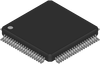
from Rochester Electronics
Interface Circuit, CMOS [See More]
- Package Type: QFP; LQFP; LQFP80
- Features: RoHS
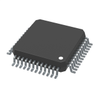
from DigiKey
AS6501-FLQM LQFP48 LF T&RDP [See More]
- Package Type: LQFP; 48-LQFP
- Pins: 48
- Operating Temperature: -40 to 125

from Rochester Electronics
3.3V, E1/T1/J1, Short-Haul, Octal Line Interface Unit [See More]
- Package Type: QFP; LQFP; LQFP144
- Features: RoHS

from DigiKey
TDC-GPX2 QFN64 TRA [See More]
- Package Type: LQFP; 64-LQFP
- Pins: 64
- Operating Temperature: -40 to 125
- Features: RoHS

from Rochester Electronics
ISDN U HDLC Interface 1-Line 160Kbps 5V 44-Pin LQFP T/R [See More]
- Package Type: QFP; LQFP; LQFP44
- Features: RoHS
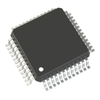
from DigiKey
IC CCD SIGNAL PROC 10BIT 48-LQFP [See More]
- Package Type: LQFP; 48-LQFP
- Pins: 48
- Operating Temperature: -20 to 75

from Rochester Electronics
Interface Circuit [See More]
- Package Type: QFP; LQFP; HLQFP48
- Features: RoHS
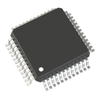
from DigiKey
IC SENSOR THERMAL [See More]
- Package Type: LQFP; 48-LQFP
- Pins: 48
- Operating Temperature: 0 to 70

from Rochester Electronics
MCZ33789 - Airbag System Basis Chip With Power Supply And Psi5 Sensor Power Supply And Psi5 Sensor Interface [See More]
- Package Type: QFP; LQFP; HLQFP64
- Features: RoHS
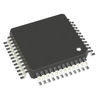
from DigiKey
MSIG (MIXEDSIGNAL) RDC-IC 48LQFP [See More]
- Package Type: LQFP; 48-LQFP
- Pins: 48
- Operating Temperature: -40 to 85

from Rochester Electronics
Interface Circuit [See More]
- Package Type: QFP; LQFP; LQFP64-10x10
- Features: RoHS

from DigiKey
RDC-IC 48LQFP -40/+85C [See More]
- Package Type: LQFP; 48-LQFP
- Pins: 48
- Operating Temperature: -40 to 85
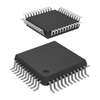
from DigiKey
IC DRIVER BUS ISO 9141 44TQFP [See More]
- Package Type: LQFP; 44-LQFP
- Pins: 44
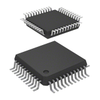
from DigiKey
IC TDC 2 CHANNEL 44TQFP [See More]
- Package Type: LQFP; 44-LQFP
- Pins: 44
- Operating Temperature: -40 to 85
- Features: RoHS
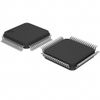
from DigiKey
IC SENSOR FOR ABS/TC/ESC 64LQFP [See More]
- Package Type: LQFP; 64-LQFP
- Pins: 64