
Network / Fieldbus Input Level Controllers
Last Updated: April 1, 2025
Description
Network/Fieldbus Input Level Controllers are devices designed to manage and control the level of materials, such as liquids or solids, within a system. They integrate with network or fieldbus systems to facilitate communication between various components, ensuring that the level of material is maintained within specified parameters.
Working Principle
Fieldbus technology operates by unifying all process signals into a single feed for a controller, allowing for the connection of numerous digital and analog signals simultaneously. These controllers often incorporate PID control capabilities due to their microprocessors, which enable local data processing and relieve the master controller. This setup is beneficial as it allows for efficient data handling and control functions near the devices themselves, rather than relying solely on a central PLC.
Applications
Network/Fieldbus Input Level Controllers are used in various industrial processes where precise level monitoring and control are crucial. For example, they are essential in chemical processing plants where maintaining the correct level of reactants in a reactor is critical for safety and efficiency. They are also used in water treatment facilities to control the levels of water in different stages of the treatment process.
Advantages over other Level Controllers
One of the primary advantages of Network/Fieldbus Input Level Controllers is their ability to handle a large number of signals simultaneously, which is not typically possible with traditional level controllers. This capability allows for more comprehensive monitoring and control of complex systems. Additionally, the integration of PID control functions within the fieldbus devices provides localized processing, which can enhance the responsiveness and accuracy of the control system.
Limitations
A significant limitation of fieldbus network communication is the rate at which data can be transmitted. While this can be mitigated through sound system design and programming, it requires significant expertise and resource investment. Additionally, the accuracy of the feedback device used in the control system can limit the overall performance, particularly in terms of static linearity and dynamic responsiveness.
Considerations
When considering the implementation of Network/Fieldbus Input Level Controllers, several factors should be taken into account. Initial costs can be high due to the complexity of the system and the need for specialized components and expertise. Operating expenses may also be significant, particularly if the system requires frequent updates or maintenance. Durability and accuracy are critical, as these factors will affect the long-term reliability and performance of the system. Replacement and maintenance costs should also be considered, as they can impact the overall cost-effectiveness of the solution.

from Florite International, Inc.
The 900 Series is an economic one loop microcomputer-based instrument incorporating user selectable digital and analog inputs, as well as analog and relay outputs. Other 900 Series features include .005% high accuracy PID, batch, and dose control functions. Additionally, the 900 Series encompasses... [See More]
- Type: DC Voltage Inputs; Current Loop (Transmitter) Excitation; Resistive/ Potentiometer Inputs; Switch / Relay Input; Frequency Inputs; Serial / Digital Input; Fieldbus / Network Input; Screw Terminal
- Control: Limit; Linear; Feedforward; PID
- Controller Type: Batch; Flow; Laboratory; Pressure
- Features: PLC; Multi-Function; Datalogger; Is a Chart Recorder; Rate Indication/ Control; Totalizing (Length or Roll Diameter) Indication/ Control

from Florite International, Inc.
The Florite Model 990X is an innovative, technically superior, high quality and reliable microcomputer-based controller suitable for any commercial or industrial application. The instruments user configurable screw-terminal channels enable any mix of up to eight inputs and or outputs regardless of... [See More]
- Type: DC Voltage Inputs; Current Loop (Transmitter) Excitation; Resistive/ Potentiometer Inputs; Switch / Relay Input; Frequency Inputs; Serial / Digital Input; Fieldbus / Network Input; Screw Terminal, DA15
- Control: Limit; Linear; Feedforward; PID
- Controller Type: Batch; Flow; Laboratory; Pressure
- Features: PLC; Multi-Function; Datalogger; Is a Chart Recorder; Rate Indication/ Control; Totalizing (Length or Roll Diameter) Indication/ Control
from Florite International, Inc.
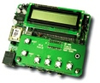
The Model N920 is an embedded version of the 900 Series instrument incorporating user selectable digital and analog inputs, as well as analog and relay outputs. Other Model N920 features include .005% high accuracy PID, batch, and dose control functions. Additionally, the Model N920 encompasses rate... [See More]
- Type: Switch / Relay Input; Frequency Inputs; Serial / Digital Input; Fieldbus / Network Input; 3.5mm Plug
- Control: Limit
- Controller Type: Batch; Flow
- Features: PLC; Datalogger; Is a Chart Recorder; Rate Indication/ Control; Totalizing (Length or Roll Diameter) Indication/ Control
from Florite International, Inc.
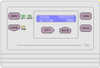
The 700 Series is an economic one loop microcomputer-based instrument incorporating a digital input, as well as a relay output. Other 700 Series features include rate metering, dual totalizing, easy menu navigation, multiple audio/visual alarm functions, a serial RS-232 port, LWAN (modem)... [See More]
- Type: Switch / Relay Input; Frequency Inputs; Serial / Digital Input; Fieldbus / Network Input; 3.5mm Plug
- Control: Limit
- Controller Type: Flow; Laboratory
- Features: PLC; Multi-Function; Rate Indication/ Control; Totalizing (Length or Roll Diameter) Indication/ Control