
Ethernet / Networkable Level Controllers
Last Updated: April 1, 2025
Description
Ethernet/Networkable Level Controllers are devices designed to monitor and control the level of liquids or solids within a container or system. These controllers are equipped with Ethernet capabilities, allowing them to connect to a network for data communication and remote monitoring. They provide real-time level data and can send control signals to maintain desired levels.
Working Principle
Ethernet/Networkable Level Controllers operate by integrating sensors that detect the level of a substance within a tank or vessel. These sensors send data to the controller, which processes the information and communicates it over an Ethernet network. This network connectivity allows for seamless integration with other control systems and enables remote monitoring and control. The use of Ethernet simplifies the integration process and enhances the controller's ability to manage and adjust levels efficiently, making them highly useful in industrial settings where precise level management is crucial.
Applications
Ethernet/Networkable Level Controllers are used in various industrial applications. For example, they are essential in chemical processing plants where maintaining specific liquid levels in reactors is critical for safety and product quality. They are also used in water treatment facilities to monitor and control water levels in tanks and reservoirs, ensuring efficient operation and compliance with environmental regulations.
Advantages over other Level Controllers
One significant advantage of Ethernet/Networkable Level Controllers is their ability to integrate with existing network infrastructures, allowing for centralized monitoring and control. This capability reduces the need for additional wiring and simplifies system architecture. Additionally, Ethernet communication supports high-speed data transfer, enabling real-time monitoring and quick response to level changes, which is a considerable improvement over traditional level controllers that may rely on slower communication methods.
Limitations
Despite their advantages, Ethernet/Networkable Level Controllers have limitations. They require a stable network infrastructure to function effectively, which can be a challenge in remote or harsh environments where network connectivity is unreliable. Additionally, the initial setup and configuration of these controllers can be complex, requiring skilled personnel to ensure proper integration with existing systems.
Considerations
When considering Ethernet/Networkable Level Controllers, it is essential to evaluate the initial costs, which can be higher due to the need for network infrastructure and skilled installation. Operating expenses may be lower in the long run due to reduced wiring and maintenance costs. Durability and accuracy are generally high, but regular maintenance is necessary to ensure optimal performance. Replacement and maintenance costs should also be considered, as network components may require periodic updates or replacements to maintain system reliability.
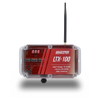
from BinMaster, Inc.
The All-In-One LTX-100 Gateway is a compact, scalable industrial gateway that simplifies sensor communication and data transmission across wireless networks. Designed to reduce system complexity, the LTX-100 enables Modbus, LoRa, Ethernet, 4-20 mA, HART, and optional cellular connectivity in a... [See More]
- Interface: Network
- Type: Current Loop (Transmitter) Excitation
- Inputs: 8

from Florite International, Inc.
The 900 Series is an economic one loop microcomputer-based instrument incorporating user selectable digital and analog inputs, as well as analog and relay outputs. Other 900 Series features include .005% high accuracy PID, batch, and dose control functions. Additionally, the 900 Series encompasses... [See More]
- Interface: Digital Front Panel; Computer Programmable; Network
- Control: Limit; Linear; Feedforward; PID
- Controller Type: Batch; Flow; Laboratory; Pressure
- Features: PLC; Multi-Function; Datalogger; Is a Chart Recorder; Rate Indication/ Control; Totalizing (Length or Roll Diameter) Indication/ Control

from Florite International, Inc.
The Florite Model 990X is an innovative, technically superior, high quality and reliable microcomputer-based controller suitable for any commercial or industrial application. The instruments user configurable screw-terminal channels enable any mix of up to eight inputs and or outputs regardless of... [See More]
- Interface: Digital Front Panel; Computer Programmable; Network; Web
- Control: Limit; Linear; Feedforward; PID
- Controller Type: Batch; Flow; Laboratory; Pressure
- Features: PLC; Multi-Function; Datalogger; Is a Chart Recorder; Rate Indication/ Control; Totalizing (Length or Roll Diameter) Indication/ Control