
PID Control Level Controllers
Last Updated: April 1, 2025
Description
PID Control Level Controllers are devices used to maintain the desired level of a fluid within a vessel by adjusting the input or output flow rates. They achieve this by continuously monitoring the fluid level and making precise adjustments to maintain the setpoint level.
Working Principle
PID Control Level Controllers operate based on the principles of proportional, integral, and derivative control. They continuously measure the difference between the desired setpoint and the actual fluid level (error) and adjust the control inputs to minimize this error. The proportional component addresses the present error, the integral component accounts for past errors to eliminate steady-state errors, and the derivative component predicts future errors to prevent overshoot. This combination allows for precise and stable control of fluid levels, making PID controllers highly effective in maintaining consistent process conditions.
Applications
PID Control Level Controllers are widely used in various industries. In water treatment facilities, they regulate the water level in storage tanks to ensure a consistent supply. In chemical process plants, they maintain the levels of reactants in reactors to optimize reaction conditions. These controllers are also used in food and beverage industries to control the level of liquids in mixing and storage tanks, ensuring product consistency and quality.
Advantages over other Level Controllers
PID Control Level Controllers offer several advantages over other types of level controllers. They provide precise control by continuously adjusting the control inputs based on real-time feedback, which reduces the risk of overflow or interruption in downstream processes. Unlike simple on/off controllers, PID controllers can handle complex control tasks with minimal oscillation and overshoot, leading to more stable and efficient operations.
Limitations
One limitation of PID Control Level Controllers is their complexity in tuning. Achieving optimal performance requires careful adjustment of the proportional, integral, and derivative parameters, which can be time-consuming and requires expertise. Additionally, PID controllers may not perform well in systems with significant time delays or non-linear dynamics without additional tuning or compensation strategies.
Considerations
When considering the implementation of PID Control Level Controllers, several factors should be taken into account. Initial costs can be higher compared to simpler control systems due to the need for advanced sensors and control algorithms. Operating expenses may also be higher due to the need for regular maintenance and calibration to ensure accuracy. However, the durability and precision of PID controllers can lead to long-term cost savings by reducing waste and improving process efficiency. Replacement and maintenance costs should be factored into the overall cost-benefit analysis, as well as the potential need for specialized training for personnel involved in tuning and maintaining the system.
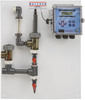
from Iwaki America and Walchem, IWAKI America Inc
Walchem's WDIS Series controller will reliably and economically control your water treatment disinfection process.The controller includes four standard sensor input options (free chlorine/bromine, chlorine dioxide, ozone and peracetic acid) or can be configured to use a variety of other types of... [See More]
- Control: Limit; Linear; PID; Nonlinear
- Features: Multi-Function; Datalogger
- Controller Type: Laboratory
- Form Factor: Chassis
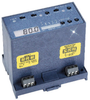
from OMEGA Engineering, Inc.
The LVCN-50 Series proportional controller is both a proportional and an on/off controller. It can easily program up to three continuous process setpoints while viewing a numerical display and bar graph. The controller can be applied universally and is an excellent choice for use with the LVU-300... [See More]
- Control: Limit; PID
- Type: DC Voltage Inputs
- Form Factor: Chassis; DIN
- Control Signal: Current Loop Output; Switched Output

from Florite International, Inc.
The 900 Series is an economic one loop microcomputer-based instrument incorporating user selectable digital and analog inputs, as well as analog and relay outputs. Other 900 Series features include .005% high accuracy PID, batch, and dose control functions. Additionally, the 900 Series encompasses... [See More]
- Control: Limit; Linear; Feedforward; PID
- Features: PLC; Multi-Function; Datalogger; Is a Chart Recorder; Rate Indication/ Control; Totalizing (Length or Roll Diameter) Indication/ Control
- Controller Type: Batch; Flow; Laboratory; Pressure
- Form Factor: Board (optional feature); Chassis; Rack; Stand-Alone; Wall Mount