
Steam Level Controllers
Last Updated: April 1, 2025
Description
Steam level controllers are devices used to monitor and regulate the level of steam within a system. They ensure that the steam level remains within a specified range, preventing overflow or depletion, which can affect the efficiency and safety of the system.
Working Principle
Steam level controllers operate by using sensors to detect the level of steam within a vessel or system. These sensors send signals to a control unit, which then adjusts the input or output of steam to maintain the desired level. This regulation is crucial as it helps in maintaining the system's pressure and temperature, ensuring optimal performance and safety. The controllers are useful because they automate the monitoring process, reducing the need for manual intervention and minimizing the risk of human error.
Applications
Steam level controllers are widely used in various industrial applications. For example, they are essential in boiler systems where maintaining the correct steam level is critical for efficient operation and safety. They are also used in food processing industries to ensure the precise control of steam levels in cooking and sterilization processes, as well as in pharmaceutical manufacturing where steam purity and consistency are vital.
Advantages over other Level Controllers
One of the main advantages of steam level controllers over other types of level controllers is their ability to handle high-temperature and high-pressure environments typical of steam systems. They offer precise control and can be integrated with digital control panels for enhanced monitoring and automation, reducing the likelihood of human error and increasing operational efficiency.
Limitations
A limitation of steam level controllers is their dependency on accurate sensor readings. If the sensors are not properly calibrated or maintained, it can lead to incorrect steam level readings, potentially causing system inefficiencies or safety hazards. Additionally, they may require specific configurations to handle the unique properties of steam, such as its high temperature and pressure.
Considerations
When selecting steam level controllers, several factors should be considered. Initial costs can vary depending on the complexity and capabilities of the controller. Operating expenses may include energy consumption and maintenance costs, which can be mitigated by choosing controllers with high efficiency and low maintenance requirements. Durability is crucial, as the controllers must withstand harsh conditions. Accuracy is also important to ensure the system operates within safe and efficient parameters. Replacement and maintenance costs should be factored into the overall cost of ownership, with regular maintenance being essential to ensure long-term reliability and performance.
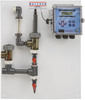
from Iwaki America and Walchem, IWAKI America Inc
Walchem's WDIS Series controller will reliably and economically control your water treatment disinfection process.The controller includes four standard sensor input options (free chlorine/bromine, chlorine dioxide, ozone and peracetic acid) or can be configured to use a variety of other types of... [See More]
- Media: Liquid; Gas; Steam
- Control: Limit; Linear; PID; Nonlinear
- Controller Type: Laboratory
- Features: Multi-Function; Datalogger
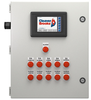
from Cleaver-Brooks
Level control is provided for the DA tank while the surge tank receives feed control, with a bias to limit the valve position according to surge tank level. The system accepts a 4-20 ma input signal from each of the DA and Surge level transmitters. Alarms for both tanks include High-High-, Low-,... [See More]
- Media: Liquid; Steam
- Features: PLC; Datalogger
- Control: Limit
- Form Factor: Stand-Alone