
277/480 Three Phase Uninterruptible Power Supplies (UPS)
Description
277/480 Three Phase Uninterruptible Power Supplies (UPS) are designed to provide continuous, reliable power to critical systems by maintaining a stable power supply even during interruptions or fluctuations in the main power source. These systems are particularly suited for environments that require high power capacity and reliability.
Working Principle
Three-phase UPS systems operate by converting incoming AC power to DC power, which is then stored in batteries. This stored energy is converted back to AC power through an inverter to supply the load. The on-line or double-conversion type ensures that the load is continuously powered by the inverter, providing a seamless transition during power failures. This continuous operation is crucial for maintaining power quality and preventing disruptions in sensitive equipment. The UPS also conditions the power, reducing issues like voltage sags, swells, and harmonics, which can affect the performance of connected devices.
Applications
277/480 Three Phase UPS systems are commonly used in environments where power reliability is critical. Specific applications include:
- Data Centers: Ensuring continuous operation of servers and networking equipment.
- Medical Facilities: Providing backup power for life-supporting systems and critical medical equipment.
- Industrial Processing: Maintaining power for automated manufacturing processes to prevent costly downtime.
- Telecommunications: Supporting communication infrastructure to ensure uninterrupted service.
Advantages over other Three Phase Uninterruptible Power Supplies (UPS)
One of the key advantages of 277/480 Three Phase UPS systems is their ability to handle higher power loads, making them suitable for large-scale applications. They also offer better power conditioning capabilities, reducing the need for additional power quality equipment. Additionally, systems with low input Total Harmonic Distortion (THDi) can reduce the need to oversize generators and other input components, leading to cost savings in infrastructure.
Limitations
Despite their advantages, 277/480 Three Phase UPS systems can be more complex and costly to install and maintain compared to single-phase systems. They require a more sophisticated setup and may involve higher initial investment and operational costs. Additionally, their size and weight can be a limitation in environments with space constraints.
Considerations
When considering a 277/480 Three Phase UPS, it is important to evaluate the initial costs, which can be significant due to the complexity and capacity of these systems. Operating expenses should also be considered, as they can vary based on the efficiency and maintenance requirements of the UPS. Durability and reliability are crucial, as these systems are often used in critical applications. Regular maintenance and timely replacement of components, such as batteries, are necessary to ensure optimal performance and longevity.
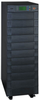
from Tripp Lite by Eaton
Tripp Lite's SU80KTV (80kVA) SmartOnline Modular 3-Phase Intelligent, True On-Line UPS System provides 100% system availability with N+1 modular architecture and 1+1 parallel capability. In an N+1 configuration, the SU80KTV features four self-contained, redundant 20kVA power modules that can be... [See More]
- Voltage: 277/480
- Volt-Amp Rating: 80
- Technology: On-line (Double-conversion)
- Watt Rating: 64