
Color Sensors Information
Last revised: January 16, 2025
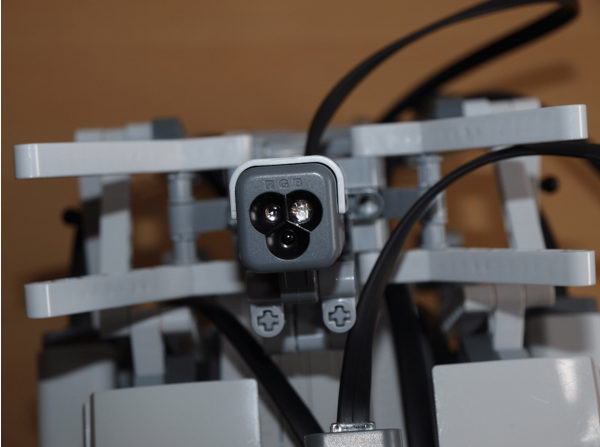
Color sensors register items by contrast, true color, or translucent index. True color sensors are based on one of the color models, most commonly the RGB model (red, green, blue). A large percentage of the visible spectrum can be created using these three primary colors.
Many color sensors are able to detect more than one color for multiple color sorting applications. Depending on the sophistication of the sensor, it can be programmed to recognize only one color, or multiple color types or shades for sorting operations.
Types of Color Sensors
Some types of color sensors do not recognize colors, per se, instead focusing on light wavelengths. These devices can be configured to locate wavelengths from near infrared (colors in the 750 nm to 2500 nm wavelength range), far infrared (colors in the 6.00 to 15.00 micron wavelength range), and UV (colors in the 50 to 350 and 400 nm wavelength range), in addition to the visible range. Sensors that read the visible range are the most common type of color sensors. They measure color based on an RGB color model (red, green, blue). A large percentage of the visible spectrum (380 nm to 750 nm wavelength) can be created using these three colors.
Applications
Color sensors are generally used for two specific applications: true color recognition and color mark detection. Sensors used for true color recognition are required to "see" different colors or to distinguish between shades of a specific color. They can be used in either a sorting or matching mode. In sorting mode, output is activated when the object to be identified is close to the set color. In matching mode, output is activated when the object to be detected is identical (within tolerance) to the color stored in memory. Color mark detection sensors do not detect the color of the mark, rather, they "see" differences or changes in the mark in contrast with other marks or backgrounds. They are sometimes referred to as contrast sensors.
Features
Color sensors shine light onto the object to be monitored and measure either the direct reflection or the output into color components. Many color sensors have integral light sources to achieve the desired effect.
These integral light sources include:
- LEDs
- lasers
- fiber optics
- halogen lamps
Color Sensors FAQs
What are the key differences between RGB and CMYK color sensors in terms of their applications in engineering?
Here are some insights into the key differences between RGB and CMYK color sensors in terms of their applications in engineering:
Color Space and Application Domain
RGB Color Sensors: RGB stands for Red-Green-Blue, and this color space is commonly used in applications involving digital displays and camera sensors. It is an additive color model where the primary colors are combined in various ways to produce a broad spectrum of colors. RGB sensors are often used in devices like smartphones and tablets to adjust display images based on ambient light conditions.
CMYK Color Sensors: CMYK stands for Cyan-Magenta-Yellow-blacK and is primarily used in printing applications. It is a subtractive color model, which means it works by subtracting varying percentages of cyan, magenta, and yellow from white light to produce colors. This model is more suited for applications where physical media, such as paper, is involved.
Color Model Characteristics
RGB: As an additive model, RGB is ideal for applications where light is emitted directly, such as screens and displays. It is the basis for most digital color representations and is widely used in computer graphics.
CMYK: Being a subtractive model, CMYK is used where light is reflected off surfaces, such as in printing. It is designed to work with inks and pigments, making it suitable for applications that require physical color reproduction.
Precision and Industrial Use
Both RGB and CMYK color spaces are smaller than the CIE standard color space, which means they cannot capture all colors visible to the human eye. This limitation makes them less suitable for precise industrial color measurement, where exact color matching is crucial.
What are the applications of RGB color sensors in consumer electronics?
RGB color sensors have several applications in consumer electronics, particularly due to their ability to detect and adjust colors based on ambient light conditions. Here are some key applications:
Display Adjustment in Smartphones and Tablets
RGB color sensors are integrated into smartphones and tablets to analyze the RGB components of ambient light. This analysis helps in adjusting the display images or performing backlight dimming based on the surrounding brightness levels. This ensures optimal visibility and color accuracy in varying lighting conditions.
Television Displays
In televisions, RGB sensors are used to monitor changes in display color caused by device aging. For example, in OLED displays, the blue pixels tend to shift color more quickly than the red and green elements as they age. RGB sensors help maintain consistent color output over the lifetime of the TV by informing the display electronics of these changes.
Color Filtering and Ambient Light Sensing
RGB sensors are often mounted underneath glass panels in devices to provide an accurate color reference of the lighting conditions. This information is used by display drivers to alter the RGB balance of active pixels, compensating for the filtering effect of tinted glass and ambient light conditions, such as excess red or other colored light.
These applications highlight the importance of RGB color sensors in enhancing the user experience by ensuring accurate color representation and display performance in consumer electronics.
What are the challenges in integrating RGB sensors into consumer electronics?
Integrating RGB sensors into consumer electronics presents several challenges, primarily due to design and environmental factors. Here are some key challenges:
Optical Window Design
Conventional RGB sensors require a transparent optical window to accurately detect visible light. However, the trend in consumer electronics, such as smartphones and tablets, is to use dark optical windows for aesthetic reasons. This design choice makes it difficult for RGB sensors to precisely detect colors, as less visible light penetrates through, and the light that does pass through can be mixed with infrared (IR) rays, affecting accuracy.
Ambient Light Interference
RGB sensors must accurately sense ambient light conditions to adjust display settings effectively. However, ambient light can vary significantly, and the presence of tinted glass or other materials can filter and alter the perceived color balance. This requires sophisticated algorithms to compensate for these effects and maintain accurate color representation.
Device Aging
In devices like televisions, RGB sensors are used to monitor changes in display color due to device aging. For example, in OLED displays, blue pixels may shift color more quickly than red and green pixels. RGB sensors must detect these changes to ensure consistent color output over the device's lifetime, which can be technically challenging.
These challenges highlight the complexity of integrating RGB sensors into consumer electronics while maintaining accurate color detection and display performance.
How do RGB sensors compensate for ambient light variations?
RGB sensors compensate for ambient light variations through several mechanisms, primarily involving the analysis and adjustment of the RGB components of ambient light.
Display Adjustment
RGB sensors are integrated into devices like smartphones and tablets to analyze the RGB components of ambient light. This analysis helps in adjusting the display images or performing backlight dimming based on the surrounding brightness levels. This ensures optimal visibility and color accuracy in varying lighting conditions.
Color Filtering and Ambient Light Sensing
RGB sensors are often mounted underneath glass panels in devices to provide an accurate color reference of the lighting conditions. This information is used by display drivers to alter the RGB balance of active pixels, compensating for the filtering effect of tinted glass and ambient light conditions, such as excess red or other colored light.
Challenges with Optical Windows
Conventional RGB sensors require a transparent optical window to accurately detect visible light. However, the trend in consumer electronics is to use dark optical windows for aesthetic reasons, which can make it difficult for RGB sensors to precisely detect colors. This requires sophisticated algorithms to compensate for these effects and maintain accurate color representation.
These methods highlight the complexity and sophistication involved in ensuring that RGB sensors can effectively compensate for ambient light variations, thereby enhancing the user experience by maintaining accurate color representation and display performance.
What are the specific challenges faced by RGB sensors in detecting colors through dark optical windows?
Integrating RGB sensors into consumer electronics with dark optical windows presents specific challenges, primarily due to the reduced transmission of visible light and interference from infrared (IR) rays. Here are the key challenges:
Reduced Light Transmission
Dark optical windows, which are often used for aesthetic reasons in devices like smartphones and tablets, allow less visible light to pass through. This reduction in light transmission makes it difficult for RGB sensors to accurately detect colors, as they rely on capturing the full spectrum of visible light to function effectively.
Infrared Interference
The light that does permeate through dark optical windows can be mixed with IR rays. This mixing can affect the accuracy of color detection, as RGB sensors are primarily designed to detect visible light, not infrared. This requires additional filtering or compensation techniques to ensure accurate color sensing.
These challenges necessitate the development of sophisticated algorithms and sensor designs to compensate for the effects of dark optical windows, ensuring that RGB sensors can still provide accurate color detection and adjustment in consumer electronics.
What are the latest advancements in color sensor technology?
Improved Dynamic Range and Sensitivity
New color sensors have been developed with enhanced dynamic range and sensitivity, making them suitable for high-end consumer and industrial applications. These advancements allow for more accurate color detection and measurement in various lighting conditions.
Integration in Consumer Electronics
Manufacturers are increasingly integrating color sensors into smartphones, tablets, and other display-equipped devices. These sensors analyze the RGB components of ambient light to adjust display images or perform backlight dimming, even through dark optical windows, which are commonly used for aesthetic reasons.
True Color Sensors
True color sensors, such as CFO sensors, are based on precise color recognition principles. They use a light source, typically a white light LED, to illuminate the specimen via fiber optics, allowing for accurate color detection and measurement.
These advancements highlight the ongoing efforts to improve color sensor technology for better performance in both consumer and industrial applications.
Color Sensors Media Gallery
Resources
Electronics360—Ultra-Miniature Color, Ambient Light, Proximity Sensor Debuts
Electronics360—Color Sensor Adjusts Brightness on Smartphones, Tablets
Electronics360—Rohm Rolls Color Sensor for Smartphones
Engineering360—CCD Image Sensors Information
GlobalSpec—Embedded Media Processing
Image credit:
Oliverlyc / CC BY-SA 3.0
- AC Input
- Analog Current
- Analog Voltage
- Color Mark Detection
- DC input
- Digital Output
- Fiber Optic
- Four
- LEDs
- More Than Four
- Near IR
- One
- Parallel Interface
- Pulse
- RGB (Visible)
- Selectable Output Options
- Serial Interface
- Switch or Relay Contact
- Teach / Learning Method Programming
- Three
- Timing Options
- True Color Recognition
- Two
- UV