The Pipeline
The Cortex-M3 processor has a three-stage pipeline. The pipeline stages are instruction fetch, instruction decode, and instruction execution (see Figure 6.1).
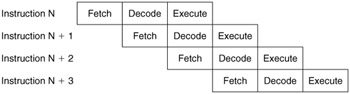 Figure 6.1: The Three-Stage Pipeline in the Cortex-M3
 Some people might argue that there are four stages because of the pipeline behavior in the bus interface when it accesses memory, but this stage is outside the processor, so the processor itself still has only three stages.
When running programs with mostly 16-bit instructions, you will find that the processor might not fetch instructions in every cycle. This is because the processor fetches up to two instructions (32-bit) in one go, so after one instruction is fetched, the next one is already inside the processor. In this case, the processor bus interface may try to fetch the instruction after the next or, if the buffer is full, the bus interface could be idle. Some of the instructions take multiple cycles to execute; in this case, the pipeline will be stalled.
In executing a branch instruction, the pipeline will be flushed. The processor will have to fetch instructions from the branch destination to fill up the pipeline again. However, the Cortex-M3 processor supports a number of instructions in v7-M architecture, so some of the short-distance branches can be avoided by replacing them with conditional execution codes. [1]
Due to the pipeline nature of the processor and to ensure that the program is compatible with Thumb codes, when the program counter is read during instruction execution, the read value will...


 TABLE OF CONTENTS