A Millwrights Guide to Motor/Pump Alignment, Second Edition

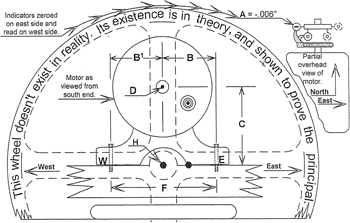
One of the most common problems in coupling/shaft alignment is the movable unit becoming bolt bound during the alignment process. Although it s a rather moot point here, this bolt binding will most likely occur on one or more of the rear feet of the movable unit. Another example of this same phenomenon is where a movable unit was prematurely doweled. To salvage this expensive down time and labor without going through the whole alignment process again is the problem at hand. Under conditions such as are described in FIGURE (1) there are formulas that can be used to all but eliminate the binding problem, and even improve conditions where dowels are installed.
| Note | In a simple bolt bound situation, it s usually possible for the unit to be wagon-wheeled to the point of over-compensation, then bumped back a little to regain alignment. However, when installed dowels are involved this overcompensate and bump back routine is less likely to work, but a calculated shim swap from one side of the movable unit to the other can still improve the existing misalignment. |
From FIGURE (1) assume the following dimensions: A= ?.006", B=9", B 1=9", C=9", and F=18". The ?.006" at A indicates the motor needs to be moved .003" EAST. Repeated attempts and failures at moving the motor east have confirmed it to be bolt bound and will not move east. Slotting the appropriate holes in the motor feet, plugging, re-drilling, and tapping...