Ordinary Differential Equations in Theory and Practice

6. Infectious Diseases I

6. Infectious Diseases I

We shall develop a simple, but instructive model for describing certain epidemics. Most actual epidemic problems have their own characteristics, which makes attempts to construct a generic model futile. See, e.g., [17]. Investigation of a (restricted) class of epidemic diseases centres around a specific theme. Here we shall make the following assumptions:

  • The infectious disease is caused by a pathogen, say a virus, that spreads very fast in the atmosphere, e.g. by wind.

  • The viruses reproduce themselves in infected individuals only.

  • The incubation time is negligible, so every individual who contracts a virus becomes infective immediately afterwards.

  • Every infected individual recovers after some time.

  • The population remains at a fixed level in the time interval and the region under consideration.

Modelling such an infectious disease implies that we must prescribe relations for the time dependent behaviour of:

  • x 1 (t): density of viruses,

  • x 2 (t): concentration of infected people as a percentage of the total (constant) number of inhabitants.

The fact that x 1 does not depend on position is an implication of the assumption that the spread of viruses is fast, so that the virus concentration is uniform in space. In the subsequent section a model is studied in which the diffusion of pathogens, and thus of the disease, is a dominant factor.

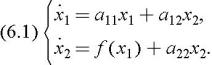
A model consistent with the assumptions listed above is given by the ODE


The terms on the right-hand side are explained as follows:

UNLIMITED FREE
ACCESS
TO THE WORLD'S BEST IDEAS

SUBMIT
Already a GlobalSpec user? Log in.

This is embarrasing...

An error occurred while processing the form. Please try again in a few minutes.

Customize Your GlobalSpec Experience

Category: Water Disinfection Systems
Finish!
Privacy Policy

This is embarrasing...

An error occurred while processing the form. Please try again in a few minutes.