Spectrum and Network Measurements

Chapter 1: Introduction to Spectrum and Network Measurements
1.1 Signals and Systems

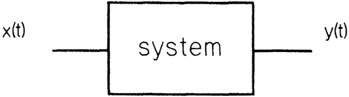
An electrical system normally has one or more input ports and one or more output ports. Figure 1-1 shows a system with a single input and a single output. Electrical devices such as filters, attenuators, and amplifiers fall into this category. Shown at the input is a signal, x( t) and at the output a signal, y( t).


Figure 1-1: A simple system having one input, x( t), and one output, y( t).

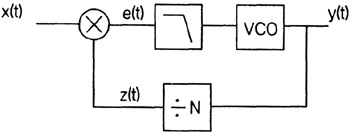
A more complex system (a phase lock loop) is shown in Figure 1-2. Although there is still only one input and one output, there are several blocks or subsections of the system, each having its own input and output. (Each block of the system may be considered as another system.) A design engineer thinks in terms of the individual blocks and signals while designing the system. Measurement instrumentation is used in the design phase when the engineer checks the performance of the individual blocks and signals. The signals and system blocks may also be measured in production, and later, when the system is maintained in the field.


Figure 1-2: A phase lock loop is a complex system with multiple blocks and multiple signals.

Network measurements characterize the circuit blocks of the system while spectrum measurements characterize the signals present. For example, the phase noise or spurious frequency components of the output, y( t) might be a critical parameter in the performance of the...

UNLIMITED FREE
ACCESS
TO THE WORLD'S BEST IDEAS

SUBMIT
Already a GlobalSpec user? Log in.

This is embarrasing...

An error occurred while processing the form. Please try again in a few minutes.

Customize Your GlobalSpec Experience

Category: IC Phase-locked Loops (PLL)
Finish!
Privacy Policy

This is embarrasing...

An error occurred while processing the form. Please try again in a few minutes.