Spectrum and Network Measurements

Chapter 13: Two-Port Networks

Two-pott network theory provides the theoretical basis for making network measurements. Two-port network theory can be expanded to N-port theory for networks having more than two ports while one-port measurements are essentially a subset of two-port measurements. The simplest of two-port measurements is the gain or transfer function of the device. This assumes a fairly simple model of the device under test. More complete two-port models such as impedance parameters provide a better view of device behavior, while scattering parameters present a two-port model which is consistent with transmission line theory and measurements.

13.1 Sinusoidal Signals

The standard forcing function for network analysis is the sinusoid, either the sine or cosine function. This stimulus is appropriate if we make the assumption that the network being measured is a linear, time-invariant system. Applying a sinusoid to the network's input and measuring the amplitude and phase of the network's output (both as a function of frequency) adequately characterizes the network. Selecting the cosine representation, the input forcing function (or stimulus) is

(13-1)

which is equal to the real part of an exponential function:

(13-2)

This can be verified easily by use of Euler's identity;

(13-3)

Splitting the exponential gives

(13-4)

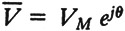
In a linear system, the output signal will always be the same frequency as the input signal (with no other frequencies present). The Re[ ] and the e j2 ?ft term is dropped to produce the vector or phasor form of the previous equation:

(13-5)

This is...

UNLIMITED FREE
ACCESS
TO THE WORLD'S BEST IDEAS

SUBMIT
Already a GlobalSpec user? Log in.

This is embarrasing...

An error occurred while processing the form. Please try again in a few minutes.

Customize Your GlobalSpec Experience

Category: Network and Protocol Analyzers
Finish!
Privacy Policy

This is embarrasing...

An error occurred while processing the form. Please try again in a few minutes.