
Advanced / Nonlinear Control Level Controllers
Last Updated: April 1, 2025
Description
Advanced or nonlinear control level controllers are sophisticated devices designed to manage and regulate the level of materials or media within a system. These controllers utilize complex algorithms and control strategies beyond traditional PID (Proportional, Integral, Derivative) loop control to achieve precise and efficient control over nonlinear processes.
Working Principle
Advanced nonlinear control level controllers operate by employing various control strategies such as adaptive gain, neural networks, and fuzzy logic. These strategies allow the controllers to handle nonlinearities, stochastics, and time-varying characteristics within a system. For instance, gain scheduling can be used to switch between multiple linear controllers to manage a nonlinear system effectively. Self-tuning regulators adjust controller parameters based on ongoing estimates of the system model, ensuring optimal performance. These controllers are particularly useful in filtering noise or pulsations and maintaining control over large disturbances, which are common in nonlinear processes.
Applications
Nonlinear control level controllers are particularly beneficial in processes that exhibit significant nonlinear behavior. A specific example is the control of pH levels in chemical processes, where the relationship between the input and output is highly nonlinear. These controllers are also used in systems where precise control is required despite the presence of noise or large disturbances, such as in fluid flow analysis and environmental control systems.
Advantages over other Level Controllers
Nonlinear control level controllers offer several advantages over traditional linear controllers. They are capable of handling complex, nonlinear processes that standard PID controllers may struggle with. For example, in processes with significant noise or large disturbances, nonlinear controllers can maintain effective control, whereas linear controllers might fail to do so. Additionally, the use of adaptive algorithms allows these controllers to adjust to changing system dynamics, providing more robust and reliable performance.
Limitations
Despite their advantages, nonlinear control level controllers have limitations. They can be more complex to design and implement compared to linear controllers. The tuning process for these controllers can be challenging and may require specialized knowledge or tools. Additionally, the computational requirements for running advanced algorithms can be higher, potentially leading to increased costs and the need for more sophisticated hardware.
Considerations
When considering the implementation of nonlinear control level controllers, several factors should be taken into account. Initial costs may be higher due to the complexity of the controllers and the need for advanced hardware. Operating expenses could also be elevated due to the computational demands of the control algorithms. However, the increased accuracy and ability to handle complex processes may justify these costs. Durability and maintenance costs will depend on the specific hardware and software used, but regular updates and tuning may be necessary to maintain optimal performance.
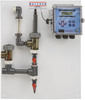
from Iwaki America and Walchem, IWAKI America Inc
Walchem's WDIS Series controller will reliably and economically control your water treatment disinfection process.The controller includes four standard sensor input options (free chlorine/bromine, chlorine dioxide, ozone and peracetic acid) or can be configured to use a variety of other types of... [See More]
- Control: Limit; Linear; PID; Nonlinear
- Features: Multi-Function; Datalogger
- Controller Type: Laboratory
- Form Factor: Chassis