
Metrology Force and Load Sensors
Last Updated: April 1, 2025
Description
Metrology force and load sensors are devices designed to measure the force or load applied to them. These sensors convert the physical force exerted on them into an electrical signal that can be quantified and analyzed. They are essential in providing precise measurements of force, which is critical in various engineering and industrial applications.
Working Principle
The fundamental working principle of metrology force and load sensors often involves the use of strain gauges. When a force is applied to the sensor, it deforms slightly, causing strain on the built-in strain gauges. These gauges are electrical resistors whose resistance changes proportionally with the applied force. This change in resistance is then transformed into an electrical output, which can be measured and calibrated to determine the force or weight exerted on the sensor . This principle is useful because it allows for highly accurate and reliable measurements of force, which are crucial in applications where precision is paramount.
Applications
Metrology force and load sensors are used in a wide range of applications. For example, they are integral in weighing machines and load cells used in industrial and retailing applications . They are also employed in automotive and aerospace industries to measure forces in engines and other components. Additionally, these sensors are used in geotechnical and structural monitoring applications, where high accuracy and long-term stability are required .
Advantages over other Force and Load Sensors
Load cells, a type of force and load sensor, offer several advantages over other types of sensors. They provide unparalleled precision and accuracy in measuring force and weight, making them essential in critical applications . Their robust construction ensures high reliability, allowing them to withstand harsh environmental conditions. Furthermore, load cells are versatile, available in various shapes and sizes to cater to a wide range of applications and load capacities .
Limitations
One limitation of certain force measurement technologies, such as using motor current to calculate force, is the potential for large errors and measurement uncertainties due to power losses and different operating modes of the machine . Additionally, some sensors may be limited by the stiffness of the carrier material, affecting their ability to measure small force fluctuations accurately .
Considerations
When selecting metrology force and load sensors, several considerations should be taken into account. Initial costs and operating expenses can vary depending on the type and complexity of the sensor. Durability is a crucial factor, as sensors need to withstand environmental influences such as temperature, vibration, and humidity . Accuracy is paramount, especially in applications requiring precise measurements. Replacement and maintenance costs should also be considered, as these can impact the long-term cost-effectiveness of the sensor.
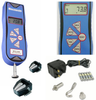
from Mecmesin Corporation
It can be used handheld or fixed to a manual or motorised test stand for excellent testing performance, providing consistently accurate force measurement. For improved accuracy and additional functionality, have a look at the Advanced Force Gauge. [See More]
- Application: Metrology
- Accuracy: 0.25
- Force Rating: 2.25 to 562
- Output: RS-232 / RS-422 / RS-485
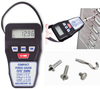
from Mecmesin Corporation
The Compact Force Gauge+ is a lightweight, pocket-sized alternative to the analogue spring balance, and includes RS232 output for easy data transmission to peripheral devices. Powered by AA batteries, the CFG+ can be used handheld or fixed to a manual or motorised test stand for basic tension and... [See More]
- Application: Metrology
- Accuracy: 0.50
- Force Rating: 11.24 to 112
- Force Measured: Tension; Compression
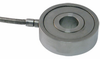
from Mecmesin Corporation
The donut sensor, otherwise known as a thru-hole loadcell, is designed for applications where the load or force component needs to pass through the centre of the loadcell. Size, made-to-order. High accuracy. Tension and compression. Applications include measuring tension in bolts, clamping forces... [See More]
- Application: Metrology
- Package: Donut / Washer
- Force Measured: Tension; Compression
- Device: Sensor / Transducer
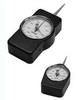
from Mecmesin Corporation
The cheapest and simplest way to measure low forces below 1000gf. These handheld gauges offer a very quick and easy method of measuring forces between 1 and 1000 grams force. Each gauge is equipped with a slave pointer to indicate the peak reading - suitable for measuring very basic tests. For... [See More]
- Application: Metrology
- Accuracy: 2.00
- Force Rating: 0.0110 to 2.2
- Force Measured: Tension; Compression
from Mecmesin Corporation
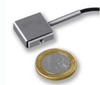
Combining accuracy and size, Junior S-Beam loadcells are ideal for tension and compression applications where space is extremely limited. Dedicated fixtures can be fitted via threaded holes. Key Features. Miniature design. Peak hold of maximum reading at fast rate 5000Hz when used with AFTI Display... [See More]
- Application: Metrology
- Accuracy: 0.25
- Force Rating: 0.2248 to 112
- Force Measured: Tension; Compression
from Mecmesin Corporation
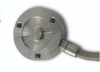
Ideal for compression only applications that require a compact design. Mecmesin 'SMART' miniature and sub-miniature loadcells are designed to fit into places other loadcells cannot. Key Features. Peak hold of maximum reading at fast rate 5000Hz when used with AFTI Display and Advanced Force Gauge. [See More]
- Application: Metrology
- Accuracy: 1.00
- Force Rating: 11.24 to 11240
- Force Measured: Compression
from Mecmesin Corporation
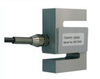
SMART' S-Beam loadcells provide a versatile solution to general force measurement applications where space is not restricted. Dedicated fixtures can be fitted via threaded holes. Key Features. Peak hold of maximum reading at fast rate 5000Hz when used with AFTI Display and Advanced Force Gauge. [See More]
- Application: Metrology
- Accuracy: 0.25
- Force Rating: 22.48 to 5620
- Force Measured: Tension; Compression