
USB Force and Load Sensors
Last Updated: April 1, 2025
Description
USB Force and Load Sensors are devices designed to measure the amount of force or load applied to an object. These sensors convert the mechanical force into an electrical signal that can be easily read and analyzed through a USB interface. This allows for straightforward integration with computers and other digital systems for data collection and analysis.
Working Principle
USB Force and Load Sensors operate based on the principle of strain gauges. When a force is applied to the sensor, it deforms slightly, causing a change in the resistance of the strain gauges embedded within the sensor. This change in resistance is then converted into an electrical signal, which is transmitted via USB to a computer or data acquisition system. This process allows for precise measurement of force or load, making these sensors highly useful in applications where accuracy is critical .
Applications
USB Force and Load Sensors are used in a variety of applications. In the automotive industry, they are integrated into brake pedal designs to detect pre-movement force, capturing driver intent before the pedal moves and enhancing safety by anticipating braking actions . They are also employed in industrial weighing systems, material testing, and force monitoring, contributing to efficiency, safety, and quality control across various industries .
Advantages over other Force and Load Sensors
One of the primary advantages of USB Force and Load Sensors is their precision and accuracy, which are crucial in applications where exact measurements are necessary . Their robust construction ensures reliability and the ability to withstand harsh environmental conditions. Additionally, the versatility of these sensors, available in various shapes and sizes, allows them to cater to a wide range of applications and load capacities .
Limitations
A notable limitation of USB Force and Load Sensors is their sensitivity to temperature changes, which can affect measurement accuracy. While some technologies offer higher temperature resistance, others may require compensation for temperature fluctuations to maintain accuracy .
Considerations
When considering USB Force and Load Sensors, it is important to evaluate initial costs, which can vary depending on the sensor's specifications and capabilities. Operating expenses may include calibration and maintenance to ensure continued accuracy and reliability. Durability is generally high due to robust construction, but regular checks are necessary to prevent wear and tear. Accuracy is a significant advantage, but it can be affected by environmental factors such as temperature, requiring additional considerations for compensation mechanisms. Replacement and maintenance costs should also be factored into the overall cost of ownership, as these can impact long-term operational budgets.
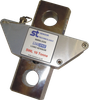
from Sensor Technology, Ltd.
The wireless Load Cell is a strain gauge based stainless steel tension type load cell. It has the capability of wirelessly transmitting its data to one of our compatible readouts and displays or recording its data locally. Its inbuilt 32MBit memory can hold up to 280 hours of data which can be... [See More]
- Output: USB
- Force Measured: Tension
- Force Rating: 2000 to 100000
- Package: Link
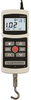
from OMEGA Engineering, Inc.
OMEGA ’s DFG55 advanced digital force gauges are designed for tension and compression force testing in numerous applications across virtually every industry. With capacities from 0.12 to 500 lb (0.5 to 2500 N) the gauges feature an industry-leading sampling rate of 7000 Hz, producing accurate... [See More]
- Output: Analog Voltage; RS-232 / RS-422 / RS-485; USB
- Accuracy: 0.10
- Force Rating: 0.1200 to 500
- Force Measured: Tension; Compression